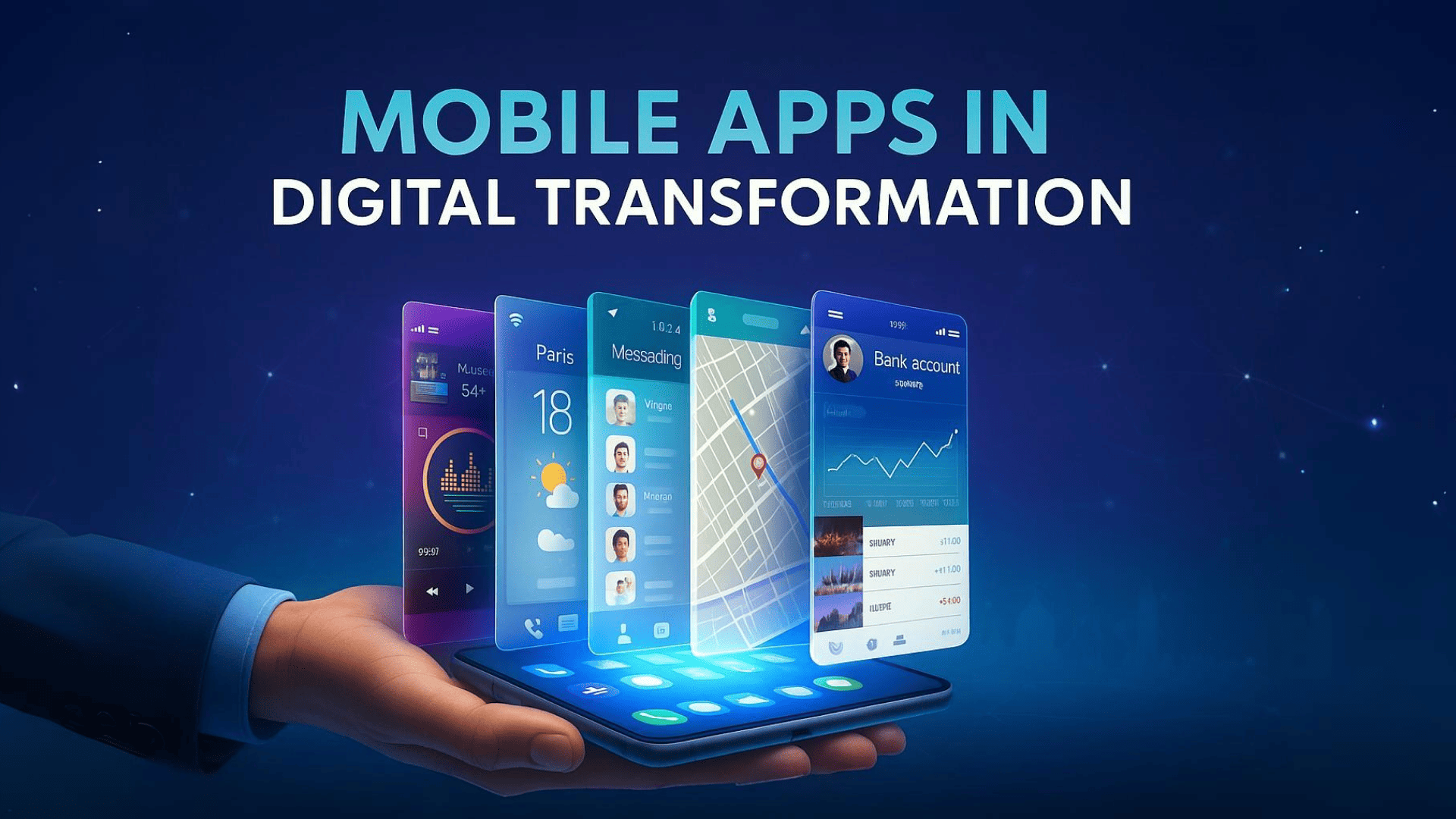
Businesses across industries are no longer relying only on traditional digital strategies because mobile apps in digital transformation have become the real driving force behind modern change. Organizations now seek speed, agility, and personalized experiences for customers, which mobile solutions deliver more effectively than older web models. By connecting processes, employees, and customers into one seamless ecosystem, mobile apps offer more than convenience, they create value that fuels long term growth.
As digital ecosystems expand, companies must recognize how mobility fits into broader innovation strategies. Whether it is enabling smarter ecommerce website development or enhancing customer support through CRM Mobile App Development, mobile adoption reshapes business at every touchpoint. Unlike simple tools, apps today hold intelligence, automation, and customer insights that directly influence competitiveness in crowded markets.
This blog explores ten important aspects showing why mobile apps in digital transformation are critical for organizations that want to remain future ready. From operational efficiency to stronger engagement, we break down practical reasons businesses should prioritize mobile first strategies.
1. The New Role of Mobile Apps in Business Evolution
The business world is evolving faster than ever, and mobile apps in digital transformation have emerged as central pillars of that change. Companies no longer see apps as simple addons. Instead, they recognize them as drivers of customer engagement, operational growth, and innovation.
With the rise of mobile app development, enterprises are reshaping entire workflows to match consumer expectations. Partnering with a trusted Mobile development company allows firms to build apps that are not just functional, but also aligned with long term goals. Apps now connect supply chains, sales teams, and customers into one unified ecosystem, helping leaders achieve better performance across all areas of business.
The real shift is that mobility is not optional anymore. Businesses that hesitate risk losing relevance. In contrast, those embracing mobile first approaches gain agility, reach new markets, and sustain a competitive edge in the digital economy.
2. Personalized Customer Experiences through Mobile Innovation
One of the strongest reasons businesses embrace mobile apps in digital transformation is their ability to deliver personalized customer experiences. People today expect apps to know their preferences, adapt to their habits, and provide relevant suggestions at the right moment.
For example, apps can use location data, purchase history, and behavior analytics to suggest products or services that customers are most likely to value. This level of personalization drives higher engagement and repeat usage. It also makes brands stand out in crowded marketplaces where attention is difficult to earn.According to Forbes, personalization is one of the main reasons mobile apps remain at the center of modern business strategies.
Working with a Custom mobile app development company gives businesses the expertise to design apps that blend technology and empathy. Tailored push notifications, intuitive interfaces, and smart recommendation systems are not luxuries anymore; in fact, they are competitive essentials. Customers notice when apps feel crafted around their needs, and this impression directly influences whether they continue to trust and use a brand.
3. Boosting Operational Efficiency with Connected Mobile Platforms
Mobile apps in digital transformation are not only about customer engagement, they also transform how internal teams work and collaborate. By digitizing processes, reducing manual tasks, and automating repetitive operations, businesses gain a stronger edge in efficiency.
For instance, apps can integrate with existing tools to track inventory, approve workflows, or monitor employee performance. These capabilities eliminate unnecessary paperwork and reduce human errors that often slow down growth. Mobile dashboards also provide instant access to insights that help managers act quickly.
When companies invest in both web development and website development alongside mobile platforms, the results are far more effective. The combination ensures smooth data flow between websites, apps, and backend systems. This connection helps businesses achieve scalability while still keeping operations organized, secure, and responsive to customer needs.
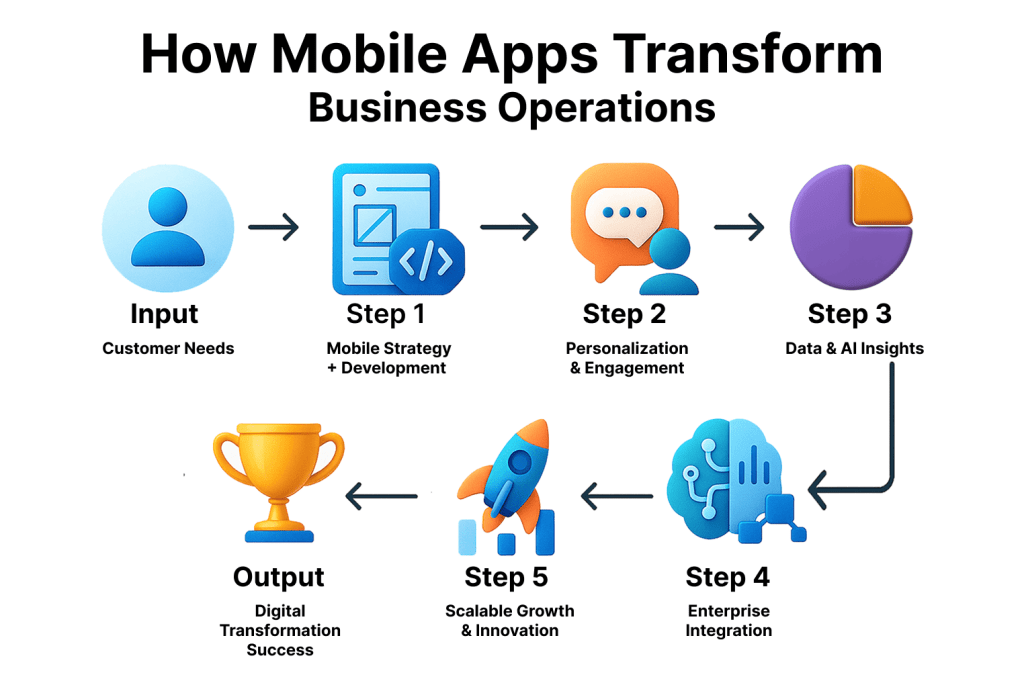
4. The Mobile Edge in Ecommerce Transformation
The ecommerce sector has experienced one of the largest impacts from mobile apps in digital transformation. Customers prefer browsing, comparing, and purchasing through apps because they offer speed and ease that traditional platforms often lack.
Features like one click checkout, secure payment gateways, and personalized product feeds make shopping experiences smoother. Shoppers no longer want long forms or complex processes, they expect convenience at every stage. When businesses align ecommerce website development with mobile strategies, they deliver exactly what modern buyers expect.
Retailers who fail to adapt often see cart abandonment rates rise. On the other hand, companies investing in mobile first ecommerce see repeat customers and higher lifetime value. In this way, mobile integration becomes a direct contributor to sales growth and stronger brand loyalty.
5. Driving Smarter Decisions with Data Driven Mobile Apps
Data has become the fuel for modern businesses, and mobile apps in digital transformation are the engines that make this fuel useful. Every interaction, every tap, and every purchase generates valuable insights that companies can harness.
Mobile dashboards can show real time reports, helping managers track performance and customer trends instantly. Predictive analytics can suggest future opportunities or warn about potential risks before they become costly. These insights support leaders in choosing strategies that align with market demands. As McKinsey points out, data-driven decision-making is one of the biggest advantages of digital transformation across industries.
By embedding intelligence into mobile systems, companies are also exploring AI-Powered Website Development as a way to unify both web and mobile experiences. This integration ensures data is not only collected but also analyzed and applied in ways that drive real impact.
6. Mobile Apps as a Core of Modern Enterprise Systems
Enterprises are no longer treating apps as optional utilities. Instead, mobile apps in digital transformation are becoming the backbone of enterprise systems. From customer engagement to supply chain management, mobile platforms integrate into every critical function of an organization.
For example, sales teams can access customer records instantly through mobile CRM systems, while managers approve budgets or track projects without waiting to be at their desks. This mobility brings speed and responsiveness, which are crucial for large organizations where even small delays can affect performance.
A strong example of this trend is CRM Mobile App Development, which allows businesses to maintain stronger relationships with customers. By keeping client data updated, accessible, and actionable on the go, enterprises achieve better service and improved decision making.
7. Innovation Beyond Websites: Bridging Mobile and Web Together
The conversation about mobile apps in digital transformation is not about replacing websites. Instead, it is about creating synergy where web and mobile experiences complement one another. Customers often begin their journey on a website and continue it inside an app, or sometimes the other way around.
Businesses that track Website Development Trends understand how mobile and web strategies work best when aligned. For instance, an ecommerce store may launch offers on its website while delivering personalized app notifications to encourage conversions. Similarly, following the Website Development Process Explained helps organizations design experiences that feel consistent across platforms.
At the same time, companies benefit from investing in Custom Website Development that works hand in hand with mobile strategies. This combination improves brand presence while also offering flexibility to introduce new features on either platform without disrupting user experience.
8. Security and Scalability as Mobile Priorities
When companies invest in mobile apps in digital transformation, two priorities always rise to the top: security and scalability. Customers expect their data to be protected, and businesses cannot afford reputational damage caused by breaches. At the same time, apps must scale to handle growing user bases and increasing functionality without slowing down.
Strong authentication, encrypted transactions, and compliance with regulations are now basic requirements. Businesses also need to consider ongoing updates and monitoring to keep threats under control. Without these safeguards, even the most innovative app will struggle to gain trust.
On the other hand, scalability ensures that apps remain reliable as businesses expand. Many organizations also look at Custom Web Application Development as a partner strategy, since combining mobile and web scalability ensures both platforms evolve together.
9. The Future of Platforms: Android and Beyond
The future of mobile apps in digital transformation is closely tied to the platforms that power them. Android continues to dominate global markets because of its flexibility, affordability, and broad device ecosystem. For businesses aiming to reach a wide audience, Android App Development remains a top priority. In fact, Statista reports that Android consistently leads in global market share, making it essential for organizations that want reach.
At the same time, companies are not ignoring iOS and cross platform frameworks. Many organizations prefer hybrid approaches where a single codebase supports multiple devices, reducing development costs and time. This strategy ensures apps reach more users without compromising quality.
Beyond platforms, emerging technologies like 5G, AI, and IoT are shaping what mobile apps can achieve. They promise faster connectivity, smarter interactions, and more immersive experiences. Together, these trends indicate that the mobile first shift will only accelerate, and businesses that delay adaptation risk falling behind.

10. Why Mobile First Transformation Cannot Be Ignored
Every business decision today carries weight, and mobile apps in digital transformation have become too central to be overlooked. The organizations that treat mobility as a priority consistently see stronger engagement, improved efficiency, and new opportunities for growth. Those who hesitate often find themselves struggling to keep up with faster, more agile competitors.
Companies focusing on website redesign or even exploring modern web development frameworks already understand that innovation is not about one platform, it is about building a connected digital ecosystem. By aligning mobile strategies with web systems, they create experiences that feel unified and future ready.
For businesses uncertain about the right path, it helps to study how to choose website development company partners who understand both mobile and web together. Trusted collaboration ensures that investment in apps is not wasted but instead becomes a powerful driver of transformation. In the end, mobile first strategies are no longer trends; instead, they are requirements for surviving and succeeding in a digital first economy.