
Key Takeaways
- Strong onboarding is one of the most important tips to boost your mobile apps because it helps users reach value faster and reduces early drop-offs.
- Performance issues like slow load times, crashes, and poor device compatibility can hurt retention, ratings, and long-term app growth.
- App Store Optimization, better screenshots, and well-timed review prompts can improve visibility and increase high-intent organic downloads.
- Retention improves when you track D1, D7, and D30 metrics, personalize re-engagement, and fix product friction before increasing ad spend.
- Long-term success depends on security, choosing the right development model, and continuous post-launch iteration based on user feedback and real KPIs.
Many applications get thousands of initial downloads but quickly fail when it comes to user retention, conversion, and monetization. Businesses frequently make the mistake of focusing all their energy and budget on the initial launch. They forget that long-term performance dictates true success. If you want to build a sustainable digital product, you need to apply important tips to boost your mobile apps long after they hit the app stores.
This comprehensive guide covers everything you need to know about driving sustainable growth. We will explore user experience improvements, performance optimization, security upgrades, app store visibility, and smarter development decisions. Every element plays a critical role in keeping your audience engaged and willing to spend money within your digital ecosystem.
At Code Neptune, teams often see that app growth depends less on launch speed and more on what happens after release. You have to treat your product as a living entity that requires constant care. Let us explore the most important tips to boost your mobile apps so you can transform casual downloaders into loyal, paying customers.
Why Important Tips to Boost Your Mobile Apps Matter After Launch
Acquiring new users is only the first step of the journey. A massive download count does not guarantee profitability if people abandon the platform within a few days.
Common Reasons Mobile Apps Lose Users in the First 30 Days
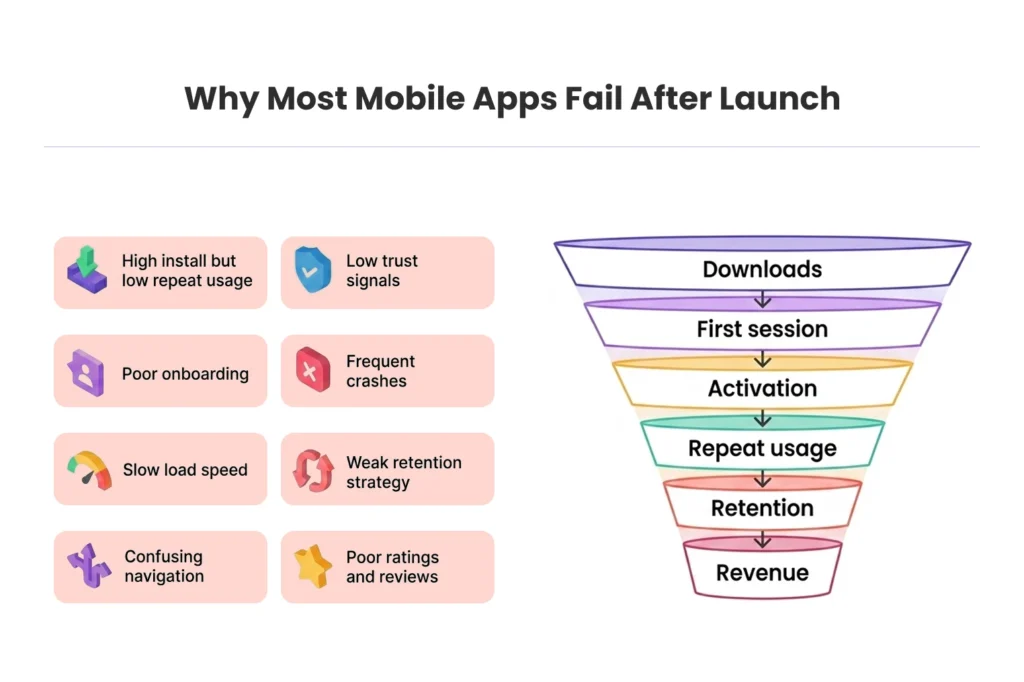
Most user churn happens within the first month of use. People download an application to solve a specific problem or entertain themselves. If the software asks for too many permissions upfront, requires a lengthy sign-up process, or crashes immediately, users will simply delete it. Poor onboarding is a massive conversion killer. Furthermore, ignoring mobile app performance optimization leads to slow load times and frozen screens. When users encounter friction, they look for alternatives.
How Poor Retention and Uninstalls Hurt Mobile App Growth
Losing users costs your business real money. You spend marketing dollars to acquire a customer. If they uninstall the software before making a purchase or viewing an ad, you lose that entire investment. High uninstall rates also signal to the Apple App Store and Google Play Store that your product offers poor value. This drops your organic ranking and makes future acquisitions even more expensive. Understanding the App development lifecycle explained by industry experts shows that post-launch retention strategies are just as vital as the initial coding phase.
Important Tips to Boost Your Mobile Apps With Strong First-Use Experience
First impressions matter immensely in the digital world. A strong first-use experience dictates whether a person will open the application a second time.
Reduce Time to First Value With Better Mobile App Onboarding
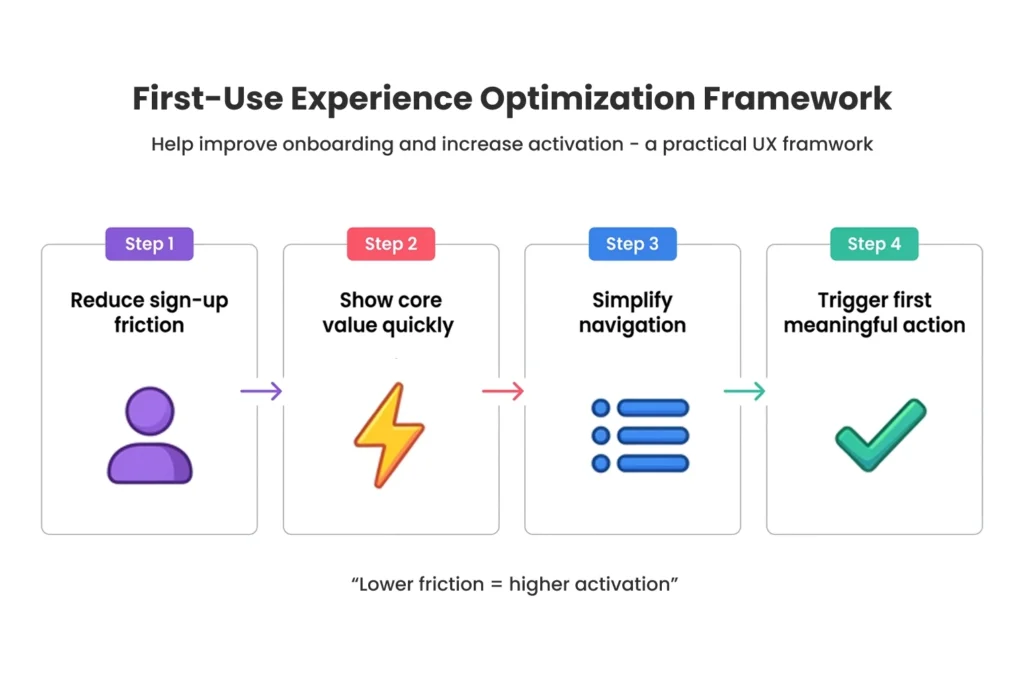
Time to first value measures how quickly a user experiences the core benefit of your product. You must shorten this window. Remove mandatory tutorials and let users explore the interface immediately. Ask for account creation only when absolutely necessary, such as during the checkout process. Using good mobile app UI/UX design tips helps you create intuitive layouts that guide the user naturally. By eliminating barriers, you increase the likelihood of them completing a meaningful action during their very first session.
Improve Mobile App Navigation and Build User Trust Faster
Trust is the foundation of engagement. Cluttered menus and confusing icons frustrate people. Keep your navigation simple and predictable. Use familiar design patterns so users do not have to learn a new system to navigate your content. This is especially true when Building MVP Mobile Apps, where the focus should remain entirely on core functionalities. A clean, responsive interface builds confidence. When actions happen instantly and navigation feels effortless, users feel comfortable sharing their data and engaging deeply with your platform.
Important Tips to Boost Your Mobile Apps With Better Performance
Running expensive advertising campaigns for a slow, buggy product is a waste of resources. You must fix foundational issues before inviting a massive audience.
Fix Load Speed and Crashes to Improve Mobile App Retention
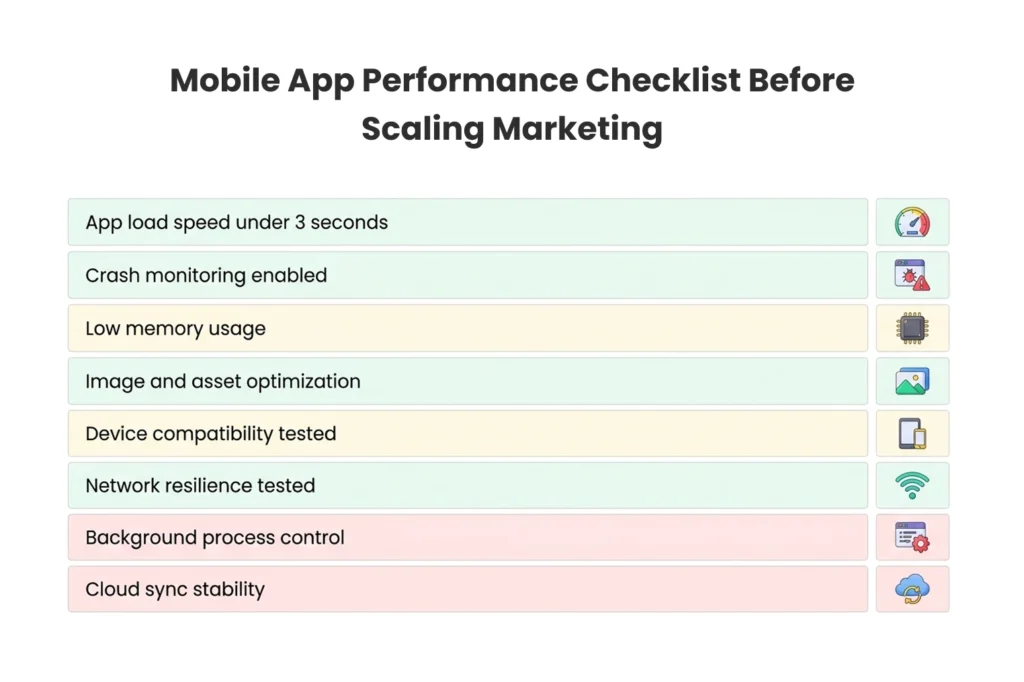
Speed is a feature. If your software takes longer than three seconds to load, a significant portion of your audience will leave. You need to identify memory leaks, optimize heavy images, and streamline database queries. Tools can help you track crash reports and pinpoint exact lines of code causing failure. Leveraging the Best tools for app development allows your engineering team to monitor system health in real time. Fixing these background resource drains ensures a smooth, uninterrupted experience for the end user.
Optimize Mobile Apps for Devices, OS Versions, and Networks
Your audience uses a wide variety of devices with different screen sizes, processing powers, and operating systems. A feature that works perfectly on a brand new iPhone might crash on an older Android device. You also need to account for users on slow mobile networks. Implementing Cloud-based app development strategies can help offload heavy processing tasks to the server, keeping the client-side software lightweight and responsive across all environments.
Important Tips to Boost Your Mobile Apps Through Better App Store Visibility
App Store Optimization remains one of the most cost-effective ways to acquire high-quality users without paying for expensive advertisements.
Improve App Store Screenshots and Descriptions for More Downloads
Your app store listing serves as your digital storefront. The title, subtitle, and keyword fields must contain highly relevant search terms. However, visuals drive the actual conversion. Update your screenshots to highlight core features rather than just showing splash screens. Add a short preview video that demonstrates the user interface in action. Many businesses hire professional mobile app development services just to audit and optimize their store listings because the return on investment is incredibly high.
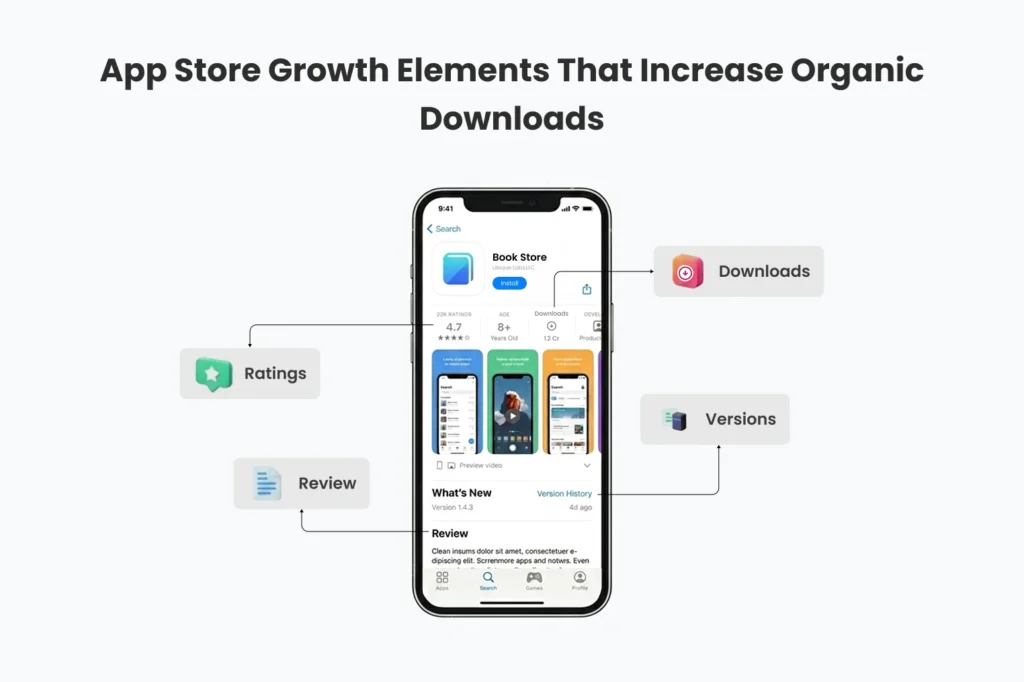
Use Ratings and Reviews to Boost Mobile App Trust and Visibility
Positive reviews heavily influence store algorithms and user trust. You need to ask for ratings strategically. Do not interrupt a user while they are completing a task. Instead, prompt them for a review right after they experience a moment of success, such as completing a level or finalizing a purchase. Companies specializing in custom mobile app development often build intelligent rating prompts that only trigger for highly active, satisfied users. This keeps your average star rating high and buries negative feedback.
Important Tips to Boost Your Mobile Apps Through Retention and Re-Engagement
Getting a user to return to your platform requires a proactive strategy. You cannot wait for them to remember you exist.
Use Personalized Notifications to Improve Mobile App Engagement
Push notifications are powerful but dangerous. Sending too many generic alerts will cause users to disable notifications entirely or delete the software. You must personalize your messaging based on user behavior. Send a discount code for an item left in a shopping cart, or remind them to complete a daily streak. Personalization is a core component of Mobile App Development for Startups, as early-stage companies must maximize the value of every single user. Contextual nudges feel like helpful reminders rather than annoying spam.
Track D1, D7, and D30 Retention to Boost Mobile App Performance
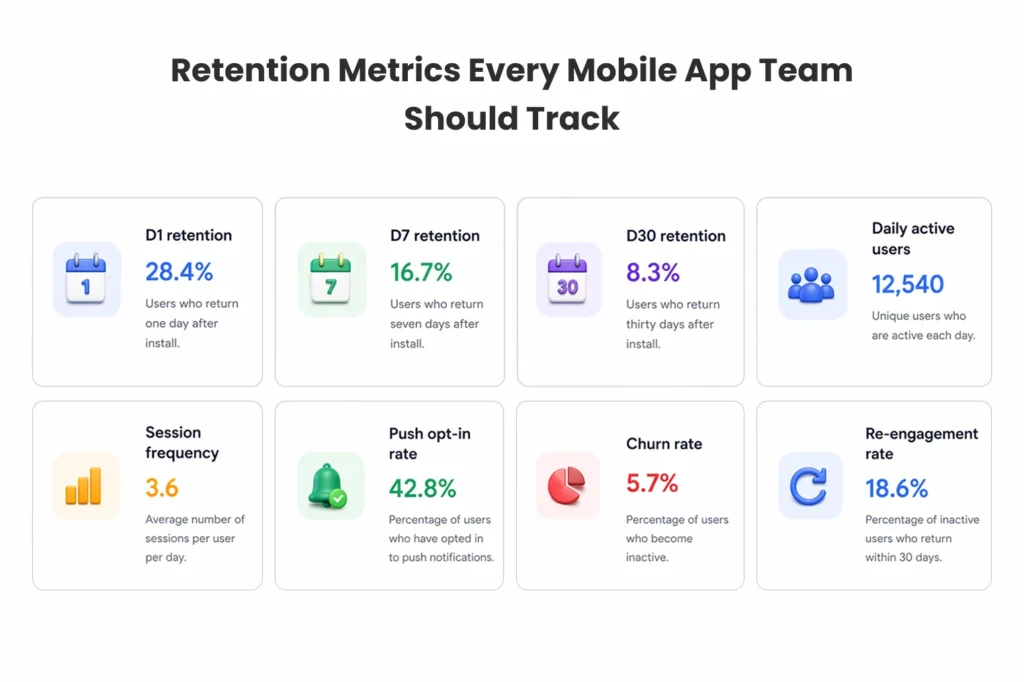
Before you scale your marketing budget, you must know your retention metrics. Track how many users return on Day 1, Day 7, and Day 30. If your Day 1 retention is terrible, your onboarding is broken. If Day 30 retention is low, your product lacks long-term value. Understanding these metrics is the key to successful mobile apps digital transformation. Fix the leaks in your product funnel before pouring more money into user acquisition campaigns.
Important Tips to Boost Your Mobile Apps With Stronger Security and Reliability
Security is no longer just a compliance requirement. It is a fundamental pillar of user trust and sustainable growth.
Protect User Data and Payment Flows in Mobile Apps
Consumers are highly aware of digital privacy risks. If they suspect their personal information or credit card details are unsafe, they will abandon your platform immediately. You must implement robust encryption for all data transfers. Secure your payment gateways and ensure session tokens expire appropriately. Following Mobile App Security Best Practices prevents devastating data breaches that can destroy your brand reputation overnight.
Prevent Permission Abuse and Authentication Risks in Mobile Apps
Asking for unnecessary permissions creates immediate suspicion. A flashlight application does not need access to a user’s contact list. Only request permissions when they are strictly required for a specific feature. Furthermore, weak authentication processes leave user accounts vulnerable to hijacking. Implementing multi-factor authentication and biometric logins protects your users. This is a massive advantage of native app development, which offers deep, secure integration with device-level hardware like fingerprint scanners and facial recognition.
Choose the Right Development Model to Support Important Tips to Boost Your Mobile Apps
The technical foundation you choose at the beginning will impact your budget, maintenance costs, and feature rollout speed for years to come.
When Native App Development Makes More Sense
Native applications are built specifically for one platform, using Swift for iOS or Kotlin for Android. This approach delivers the highest possible performance, the smoothest animations, and the best access to device hardware. If your product requires complex graphics, intense background processing, or strict security measures, native is the best path. However, it requires two separate codebases. Knowing how to choose a mobile app development company with strong native expertise is crucial for executing this model effectively.
When Hybrid App Development Helps Speed and Budget
If you need to launch quickly and have a limited budget, a hybrid approach might be better. Frameworks like React Native and Flutter allow you to write one codebase and deploy it across multiple platforms. This drastically reduces development time and maintenance costs. For many business utility products and content delivery platforms, hybrid app development offers more than enough performance while keeping financial overhead manageable.
Plan Mobile App Features, Budget, and Releases for Sustainable Growth
Successful digital products evolve through careful planning and disciplined execution rather than random feature additions.
Control App Development Cost by Prioritizing Core User Value
Users will always ask for new features, but you cannot build everything. Adding too many complex functionalities clutters the interface and increases maintenance costs. You must evaluate every feature request against your core value proposition. Does this new addition solve a real problem for the majority of your audience? Managing this balance is vital for controlling app development cost. Focus your engineering budget on improvements that directly drive engagement and revenue.
Use ROI-Focused Releases to Improve Mobile App Results Over Time
Many teams rush releases just to hit arbitrary deadlines. This results in buggy code and poor user experiences. Instead, plan your development cycles around return on investment. Prioritize updates that fix critical bugs, improve retention, or open new revenue streams. A reliable Mobile App Development Company will help you structure agile sprints that deliver measurable business value with every single release, ensuring steady, reliable growth over time.
Important Tips to Boost Your Mobile Apps With Smarter Post-Launch Iteration
The best digital products rely on continuous, data-driven improvement. You must listen to the data and adapt to user needs.
Track Mobile App KPIs That Matter More Than Downloads
Total downloads and page views look great on a presentation slide, but they do not pay the bills. You need to focus on actionable metrics. Track your daily active users, average revenue per user, customer acquisition cost, and crash-free session rates. These numbers tell you exactly how the product is performing financially and technically. By focusing on deep analytics, you can make informed decisions that actively drive profitability.
Use User Feedback to Improve Mobile Apps Every Month
Your users are your best testers. Read every app store review, monitor customer support tickets, and send out in-app surveys. Look for recurring complaints and areas of friction. Take this qualitative data and use it to shape your monthly updates. When users see that you are actively fixing the problems they report, their loyalty increases dramatically. Smarter iteration is the final piece of the puzzle for long-term digital success.

Final Thoughts on Important Tips to Boost Your Mobile Apps
Growth is not simply about acquiring a massive number of downloads. It requires building a sustainable system that keeps users engaged, satisfied, and willing to return. The most important tips to boost your mobile apps start with making better product decisions from the very beginning, focusing on value rather than just aggressive marketing tactics.
Long-term success depends heavily on rigorous performance optimization, disciplined retention strategies, uncompromising security, and continuous, data-driven iteration. By applying these principles, you can build a resilient digital product that thrives in a highly competitive market. If you are ready to take your digital product to the next level, start reviewing your core metrics today and map out a strategic optimization plan for your next release.
Frequently Asked Questions About Important Tips to Boost Your Mobile Apps
1. What are the most important tips to boost your mobile apps in 2026?
The most critical strategies include refining your user onboarding process, optimizing technical performance, and implementing smart retention campaigns. You must also focus heavily on app store visibility, robust security protocols, and rigorous post-launch data analytics to ensure continuous improvement.
2. How can I improve mobile app retention after launch?
You improve retention by delivering clear value during the very first session. Reduce friction during sign-up, use personalized push notifications to re-engage dormant users, and closely monitor your Day 1, Day 7, and Day 30 retention metrics to identify where people drop off.
3. Does app performance affect downloads and rankings?
Yes. Slow loading times and frequent crashes frustrate users, leading directly to negative reviews and high uninstall rates. The app store algorithms penalize products with poor engagement and low ratings, which severely reduces your organic visibility and download numbers.
4. Should I choose native or hybrid app development for better growth?
The right choice depends entirely on your specific business goals. Native development provides superior performance and security for complex platforms, while hybrid development allows for faster release cycles and lower maintenance costs, making it ideal for startups and simpler utilities.
5. What metrics matter most when trying to grow a mobile app?
Stop focusing on gross downloads. Instead, monitor your retention rate, user churn, crash-free sessions, customer lifetime value (LTV), customer acquisition cost (CAC), and feature adoption rates. These metrics indicate true business health.