The world of mobile innovation keeps moving forward, and iOS app development has become a core part of that transformation. With millions of iPhone and iPad users worldwide, businesses see Apple’s ecosystem as a golden opportunity to connect with premium audiences. Every brand, from startups to large enterprises, is now investing in custom built iOS apps that enhance user experience and boost brand loyalty.
Unlike other platforms, iOS apps focus on quality, performance, and security, which are essential for any modern business. Apple users expect perfection. From flawless interface design to fast performance, every detail matters. Whether a company wants to launch a shopping app, a productivity tool, or a smart CRM platform, the process begins with understanding how iOS apps can help achieve those business goals.
Choosing the right development partner also makes a huge difference. Teams experienced in custom mobile app development and Apple’s frameworks like Swift and SwiftUI can help turn your vision into a powerful digital product. These experts not only write code but also bring strategy and creativity to life through design and functionality.
Today, iOS app development stands at the intersection of technology and experience. It empowers companies to connect deeply with users through seamless apps built for both iPhones and iPads. In the coming sections, we’ll explore how iOS development works, what tools power it, and how businesses can use it to create meaningful customer engagement and measurable growth.
Understanding Apple’s App Ecosystem and Core Components
Behind every sleek Apple app lies a process that blends design precision with strong technical logic. iOS app development is not just about writing Swift code or uploading builds to the App Store. It’s a creative and technical journey that brings ideas to life inside the world’s most secure and polished mobile environment.
At its core, iOS apps rely on a few essential components, including the programming languages Swift and Objective-C, along with Xcode, the integrated development environment. In addition, Apple’s Human Interface Guidelines serve as a blueprint for design excellence. Each of these elements plays a critical role in how apps are designed, developed, and deployed for millions of users.
Design is one of the first steps that shapes any project. Developers collaborate with UI/UX specialists to ensure visuals align with usability. For instance, UI UX design services for SaaS products emphasize simplicity and speed, ensuring every tap, swipe, and scroll feels effortless.
Security and performance are equally vital. The iOS app development process includes continuous testing, debugging, and optimization for various screen sizes and iOS versions. Since Apple maintains strict app review standards, developers focus on reliability, speed, and user trust.
The environment also supports integrations with APIs, cloud systems, and machine learning models. Developers use frameworks such as Core ML or ARKit to add intelligent features like augmented reality or predictive behavior. You can explore the official Swift documentation to see how this language shapes modern apps.
The real strength of Apple’s ecosystem lies in unity. Hardware and software work together seamlessly, resulting in consistent performance and exceptional user experiences. That’s why many brands choose iOS apps for professional, secure, and high quality results.
Why Businesses Choose the Apple Platform for App Creation
When brands plan to launch a digital product, one of the biggest decisions is selecting the right platform. Many companies today choose iOS app development because it delivers unmatched quality, long term stability, and a premium audience base. The reputation of Apple’s ecosystem builds trust, encouraging users to keep apps installed longer.
Another strong reason is the user experience. Apple’s design standards and reliable hardware offer smooth interaction between apps and devices. As a result, users spend more time within iOS apps, which increases retention and conversion rates.
The App Store also remains one of the most secure and profitable marketplaces in the mobile industry. Although Apple’s review process is strict, it ensures user safety and app quality. In fact, enterprises investing in custom mobile app development for iOS often experience fewer post launch bugs and better ROI.
Security adds even more value. iOS app development offers encryption, sandboxing, and Face ID authentication, protecting sensitive data across industries like banking and healthcare. Combined with scalability and innovation, these features make iOS the preferred choice for serious digital investments.
Moreover, Apple’s consistent updates and frameworks keep the ecosystem evolving. Developers can quickly adapt to new versions, ensuring their apps remain future ready. Businesses featured on Apple’s App Store for Business often report improved performance and stronger user engagement.
In short, iOS apps combine innovation, quality, and reliability, setting the gold standard for modern business applications.
The IOS App Development Process: From Idea to App Store Launch
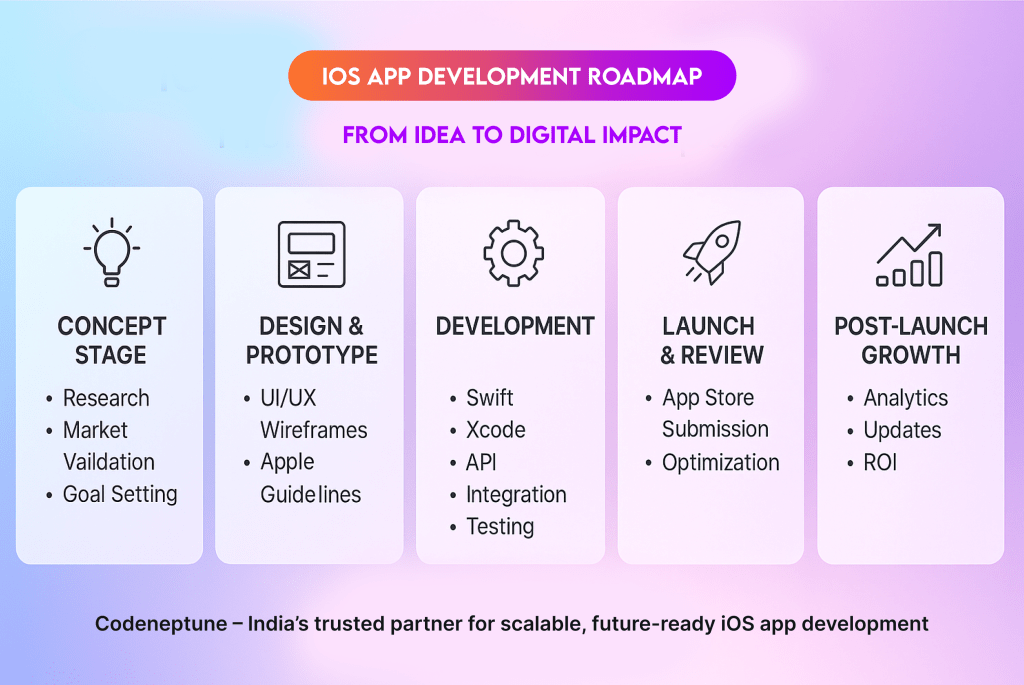
Transforming an idea into a live app involves strategy, creativity, and precision. The iOS app development process includes multiple stages, each adding value to the final product. It’s not just coding instead, it’s about crafting an experience that aligns with business goals and user expectations.
Everything starts with concept validation. Teams define user goals, target audiences, and technical possibilities. Developers refine ideas into practical, valuable solutions. Companies offering mobile app development services often conduct workshops to align teams and priorities.
Next comes design and wireframing. The UI and UX define how the app looks and feels. Designers follow Apple’s guidelines to ensure accessibility and usability. This stage directly influences how users perceive the app’s value and ease of use.
Then development begins. Engineers code using Swift or Objective-C in X code, integrating databases, APIs, and essential features. Teams focusing on native app development often build components like push notifications, secure payments, or GPS functionality.
Testing forms a major part of the process. Quality assurance ensures the app performs smoothly across devices without bugs or crashes. The iOS app development process places great emphasis on stability and performance optimization.
Once approved, the app is deployed on the App Store following Apple’s rules outlined in the App Store Review Guidelines. Post launch updates, analytics, and user feedback ensure continuous improvement. Collaborating with mobile app developers in Chennai helps maintain app stability and user satisfaction long after release.
Comparing iOS App Development with Android App Development
The debate between iOS apps and Android remains constant. Both lead the mobile world, yet serve distinct business needs. Choosing the right one depends on goals, budget, and audience.
iOS users often belong to premium markets with higher purchasing power, while Android reaches a broader audience globally. Businesses seeking engagement and loyalty frequently begin with iOS before expanding.
Technically, iOS apps offer consistency. Apple’s unified ecosystem simplifies testing and optimization, unlike Android’s diverse device landscape, which increases maintenance time.
Design principles differ too. Apple emphasizes minimalism and fluid transitions, while Android embraces customization. Both deliver value, but iOS app development ensures uniformity and smoothness across all Apple devices.
Security remains a standout factor. Businesses handling sensitive data, particularly in healthcare or education, prefer iOS apps because it provides a secure sandbox environment and strong privacy protection. It builds user trust and maintains privacy.
In conclusion, iOS app development delivers refined performance, while Android provides flexibility. Collaborating with a trusted mobile app development company ensures a balanced, cross platform approach that maximizes both quality and reach.
The Cost and Investment Behind iOS App Development
Cost is a key factor when planning iOS app development. While initial expenses may be higher, the long term gains are often greater. Apple’s ecosystem ensures fewer bugs, better retention, and stronger brand reputation.
The total app development cost depends on app complexity, design, backend, and integrations. Partnering with the top mobile app company guarantees skilled professionals and optimized project execution. Although premium, the outcome is usually smoother and more secure.
Apple’s audience values quality and aesthetics, so UI and UX play a major role. Investing in design directly influences engagement and brand perception. Maintenance is also efficient because Apple devices remain consistent in hardware and software.
Over time, the ROI of iOS app development outpaces its cost. Loyal users, stable performance, and high in app spending make it a solid business investment.
How iOS App Development Drives Business Growth and Digital Transformation
Across industries, iOS app development fuels innovation and transformation. For many brands, iOS apps are now a central part of digital identity and customer experience.
The strength of iOS apps lies in its blend of design precision and reliable performance. Through mobile apps digital transformation, companies reinvent how they serve customers, creating personalized, data driven experiences.
Enterprise mobility has also evolved through CRM mobile app development, enabling real time collaboration and automation. Secure, fast, and intuitive apps help teams work efficiently and stay connected.
Emerging technologies like AI and AR continue to redefine what’s possible. Smart, adaptive apps improve engagement and reinforce a brand’s reputation. As businesses grow, their iOS apps scale effortlessly to support new features and user demands.
In essence, iOS app development drives digital transformation by connecting business vision with innovation. It enhances productivity, builds loyalty, and strengthens customer relationships.

Conclusion – Building the Future with iOS App Development
Every forward thinking brand knows that success comes from innovation. iOS app development is more than coding rather, it serves as a strategic investment that builds digital growth and strengthens user trust.
The iOS apps journey helps brands evolve, expand, and engage. A well designed app becomes a powerful extension of a company’s identity, merging creativity with technology.
Businesses that invest early in iOS gain the advantage of setting trends, not following them. Partnering with a skilled Mobile App Development Company ensures flawless execution and sustained performance. Many have seen measurable results working with the top 10 mobile app development company in Chennai, strengthening both engagement and profitability.
Looking ahead, iOS app development will continue to shape industries. Companies embracing this change today are building the digital leaders of tomorrow. The future of mobile innovation belongs to those who combine imagination with precision, and iOS remains the platform where that balance truly thrives.