Key takeaways
- Laundry and cleaning app development helps businesses improve operational efficiency and customer retention.
- Real-time tracking and transparent pricing improve user trust and reduce order abandonment.
- Cross-platform frameworks help reduce maintenance costs and speed up deployment timelines.
- Cloud infrastructure and scalable backend systems support multi-city business expansion.
- Strong UI/UX design plays a major role in improving conversions and repeat bookings.
The demand for on-demand service platforms continues to grow as users expect faster pickup, delivery, scheduling, and transparent service experiences. Businesses entering this market are investing heavily in laundry and cleaning app development to streamline operations, improve customer retention, and reduce manual coordination challenges. A well-built application acts as the central hub for the entire business workflow, bridging the gap between service providers, delivery drivers, and end consumers.
Many modern platforms are no longer focused only on basic booking functionality. Instead, they prioritize dynamic route management, complete order visibility, flexible subscription models, precise delivery tracking, and deep service customization. From our perspective, companies exploring partnerships with a Mobile App Development Company are increasingly evaluating long-term scalability, complex operational workflows, and the overall customer experience before officially launching their digital products.
For startups and traditional laundry businesses alike, the biggest challenge is balancing consumer convenience with backend operational efficiency. This is where thoughtful product architecture, simplified booking flows, and real-time service visibility become critical. Customers want the ability to request a service with a few taps, while businesses require a robust dashboard to manage logistics without friction. Mastering this balance is the key to dominating the on-demand service sector.
Why Laundry and Cleaning Apps Are Expanding Rapidly
The global software market for cleaning and laundry services continues to expand because businesses are rapidly moving away from manual scheduling and disconnected communication systems. Relying on phone calls, handwritten ledgers, or disjointed spreadsheets often leads to lost orders, frustrated customers, and inefficient delivery routes.
Hospitality providers, residential cleaning businesses, and local laundromat operators are adopting comprehensive digital platforms to manage orders, track delivery timelines, handle staff coordination, and automate customer notifications in one centralized place. By unifying these tasks, business owners can focus more on scaling their operations and less on putting out daily fires.
Businesses investing in laundry and cleaning app development are primarily focused on achieving specific operational goals:
- Faster order processing and intake
- Reduced delivery delays and optimized routing
- Better customer communication and transparency
- Improved workforce management and driver coordination
- Subscription and repeat order retention strategies
Companies looking for custom mobile app development often prioritize operational flexibility because service models vary significantly across different regions, customer segments, and business types. A platform built for a dense urban environment may need vastly different logistics capabilities than one serving a sprawling suburban community.
Key Market Drivers
Several fundamental factors are accelerating market growth across the service sector. As consumer expectations shift toward instant gratification and digital-first interactions, businesses must adapt to survive. The primary drivers include:
- Heavy urban demand for convenience-based services
- The steady rise of app-based booking behavior across all demographics
- Rapid growth of subscription cleaning models for homes and offices
- Increased smartphone adoption globally
- Demand for contactless service management and digital payments
Businesses evaluating mobile app development services also focus heavily on long-term scalability instead of only launch speed. Rushing a product to market without a solid architectural foundation often leads to expensive rebuilds once the user base begins to grow.
Essential Features Required for Modern Laundry Platforms
Successful apps in this category focus heavily on operational clarity and customer trust. Basic booking systems are no longer enough to retain users in competitive digital markets. Users want to know exactly when their items will be picked up, how they will be treated, and when they will be returned.
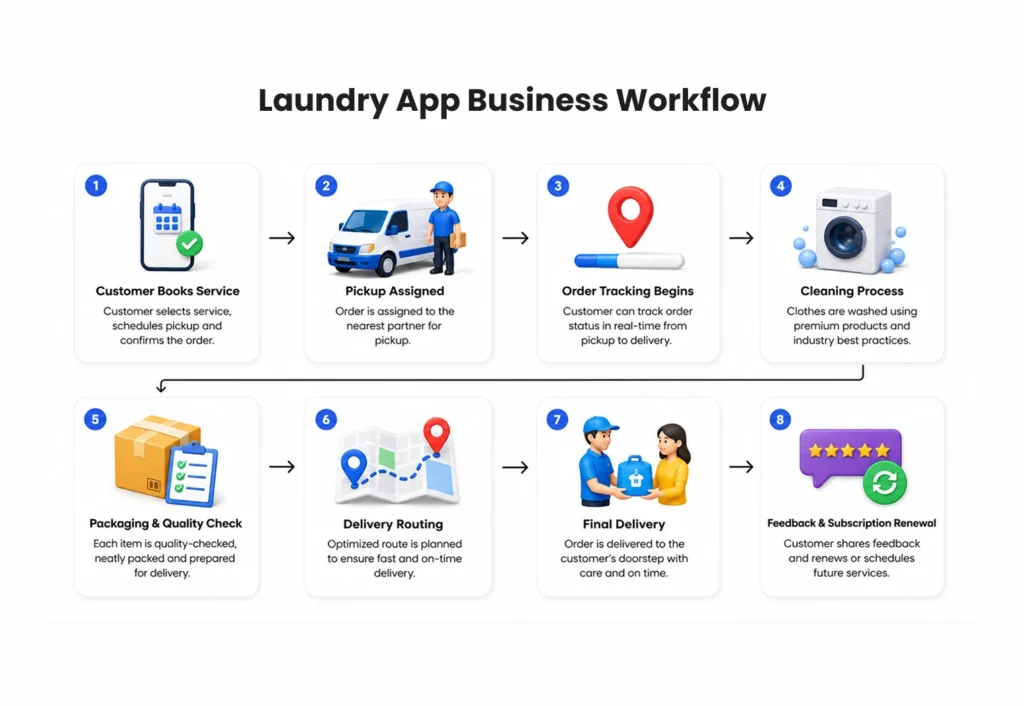
Modern laundry and cleaning app development projects typically include essential features such as:
- Real-time order tracking and status updates
- Flexible pickup and delivery scheduling
- Digital wallet and subscription support
- Automated push notifications and SMS alerts
- Multi-vendor management for franchise operations
- Service customization (e.g., specific detergent requests or fold types)
- Digital invoices and secure payment gateways
- Route optimization for delivery fleets
- Customer support chat for immediate issue resolution
Many service providers working with a mobile app development company in India choose a modular architecture so additional services can be introduced later without entirely rebuilding the platform. This approach ensures the software can grow seamlessly alongside the business.
Why UX Directly Impacts Conversion
Several case studies show that users abandon orders rapidly when pricing, timelines, or service categories are unclear. If a customer cannot easily determine how much a service will cost or when they will get their clothes back, they will simply exit the application and look for a competitor.
Businesses investing in mobile app UI/UX design tips often simplify their checkout flows, reduce unnecessary input fields, and provide highly visual order status tracking to improve overall trust.
This becomes especially important in service industries where customers naturally worry about delivery accuracy, clothing safety, or unexpected hidden costs. A clean, transparent interface acts as a digital assurance that their belongings are in professional hands.

Laundry and Cleaning App Development Case Studies
Real-world examples provide useful insight into how operational improvements directly affect user retention and overall profitability. By examining how other companies have navigated digital transformation, new entrants can avoid common pitfalls.
The UX-Focused Growth Model
One prominent case study highlighted a platform redesign that fundamentally improved pricing transparency and delivery communication. The original app suffered from high bounce rates because users found the service menu confusing and the checkout process too lengthy.
The development team simplified the booking process, removed redundant data entry steps, and added clearer order visibility. As a result of these targeted updates:
- Order completion speed increased significantly
- Checkout abandonment dropped to record lows
- Customer trust and repeat usage improved substantially
Businesses building similar solutions often review App development lifecycle explained resources before planning major product improvements to ensure their redesign strategies align with industry best practices.
The Multi-City Scaling Model
Another business focused on digitizing operations across multiple locations to support rapid geographic expansion. To achieve this, the platform actively centralized multiple operational facets:
- Vendor coordination across various cities
- Delivery management for dozens of drivers
- High-volume scheduling and dispatching
- Real-time updates for regional managers
The resulting app helped the company expand operations smoothly while maintaining consistent customer experiences across entirely different markets.
Teams exploring cross platform app development company solutions often choose frameworks that reduce maintenance costs while supporting Android and iOS deployments simultaneously. This allows them to scale quickly without managing two entirely separate codebases.
Technology Stack for Laundry Service App Development
Technology selection directly affects app performance, long-term scalability, maintenance costs, and launch timelines. Making the wrong choice early on can lead to sluggish performance and technical debt.
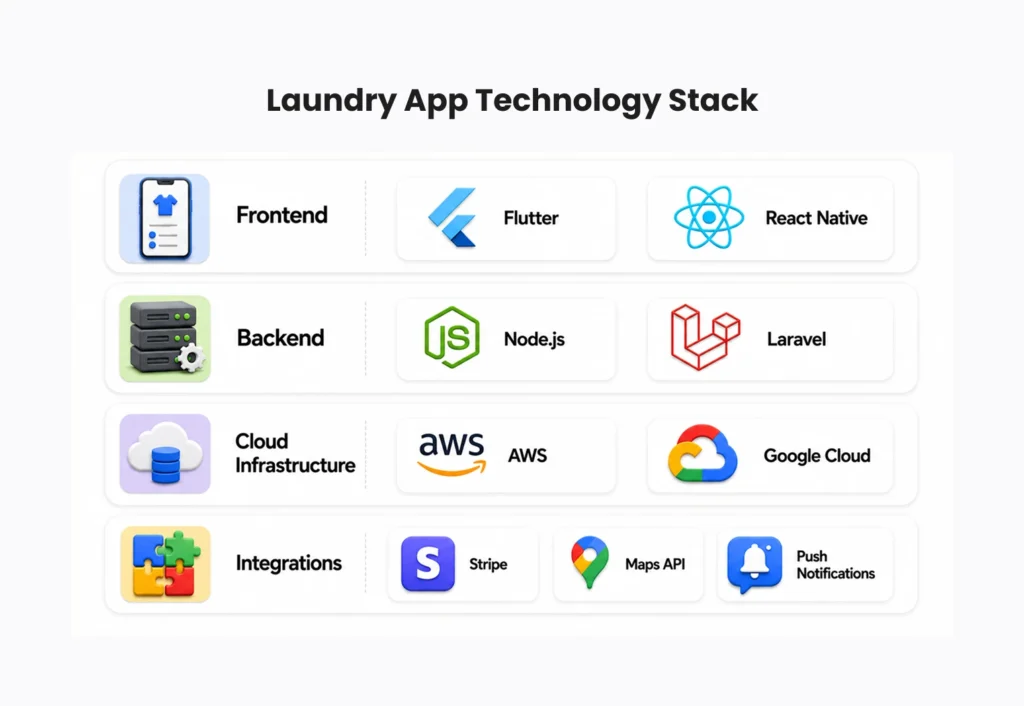
Most businesses entering laundry and cleaning app development rigorously evaluate:
- Cross-platform frameworks versus native development
- Backend scalability and server infrastructure
- Real-time database systems for instant status updates
- Cloud infrastructure for reliable hosting
- Secure payment gateway integrations
Many startups intentionally begin with an MVP-focused architecture before expanding features gradually based on actual user feedback.
Companies researching Building MVP Mobile Apps strategies usually prioritize rapid market testing, early customer validation, and phased scaling to minimize upfront financial risk.
Flutter and Cross Platform Adoption
Cross-platform frameworks continue gaining massive traction because they reduce development overhead while maintaining highly acceptable performance levels.
Businesses comparing frameworks often review Cross Platform App Development Explained materials before selecting technologies to ensure long-term scalability.
Similarly, organizations working with a flutter app development company in india frequently prioritize faster deployment cycles and lower maintenance complexity, as Flutter allows developers to write code once and deploy it across multiple operating systems.
Laundry App Development Cost Factors Explained
Development budgets vary widely depending on exact features, infrastructure complexity, third-party integrations, and custom design requirements. There is no one-size-fits-all price tag for a high-quality service application.
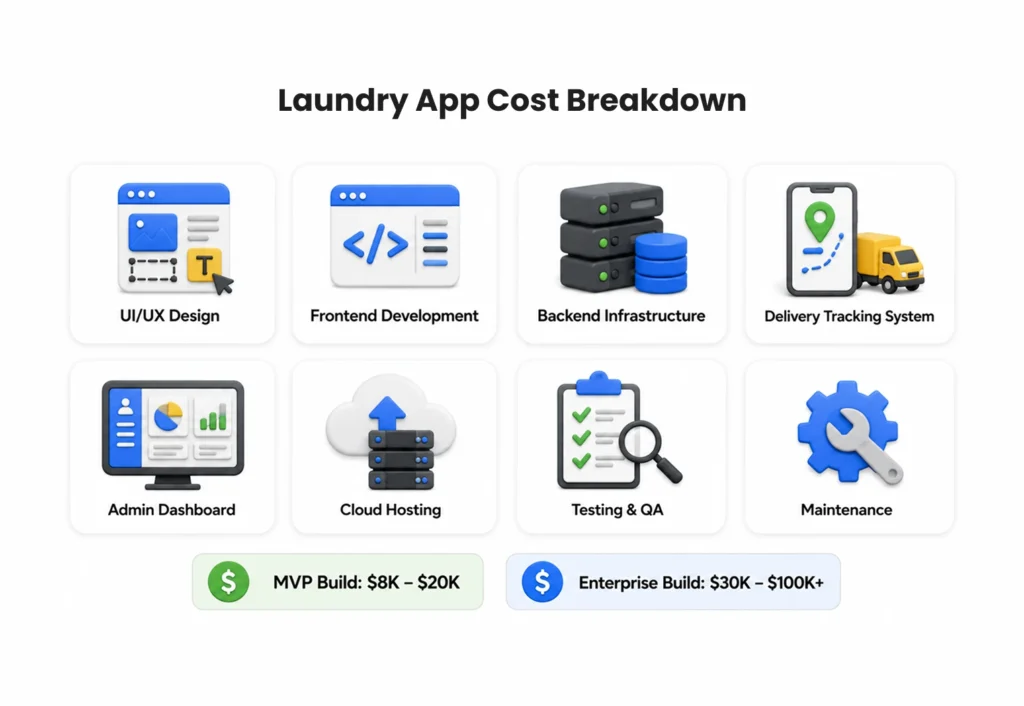
Typical cost variables include:
- Platform count (iOS, Android, Web)
- UI complexity and custom animations
- Real-time delivery tracking systems
- Vendor and admin control dashboards
- Custom subscription management rules
- Ongoing cloud hosting and database fees
- Post-launch maintenance requirements
Businesses researching app development cost frequently discover that complex operational workflows impact pricing far more than visual design alone.
Simple MVP platforms may launch with limited features to test the market, while enterprise-level systems require advanced logistics, automated dispatching, and predictive analytics capabilities.
Companies targeting high-volume operations also evaluate Cloud-based app development to adequately support rapid scalability during unexpected peak demand periods.
Operational Challenges in Laundry and Cleaning App Development
Laundry businesses face highly unique operational difficulties that directly influence app architecture decisions. Software must accommodate the physical realities of moving garments between homes and facilities.
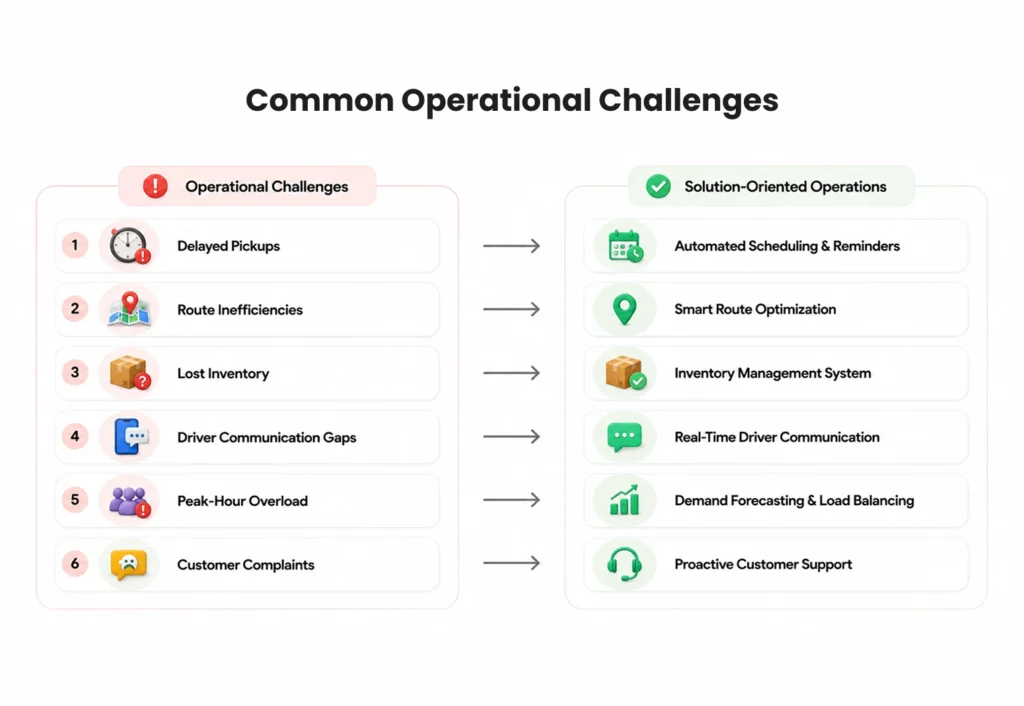
Some common issues include:
- Delivery coordination delays caused by traffic or routing errors
- Inventory mismatches and lost items
- Vendor communication gaps across different facilities
- Peak-hour scheduling conflicts
- Customer complaint management and resolution tracking
Businesses planning Mobile App Development for Startups often underestimate how much logistics complexity increases with geographic expansion. Moving from a single neighborhood to a city-wide operation requires a fundamentally different backend structure.
Performance and Reliability Considerations
Service apps must handle real-time status updates and simultaneous order processing without experiencing performance issues. A crashing app during a busy morning rush can severely damage a brand’s reputation.
Teams optimizing platforms usually explore:
- Server load balancing for high-traffic periods
- Offline sync handling for drivers in low-connectivity areas
- Push notification stability and reliability
- Route calculation efficiency using advanced mapping APIs
Companies investing in mobile app performance optimization often reduce user churn simply by improving the application’s responsiveness during the critical booking and tracking workflows.
Android vs iOS Strategy for Laundry Service Apps
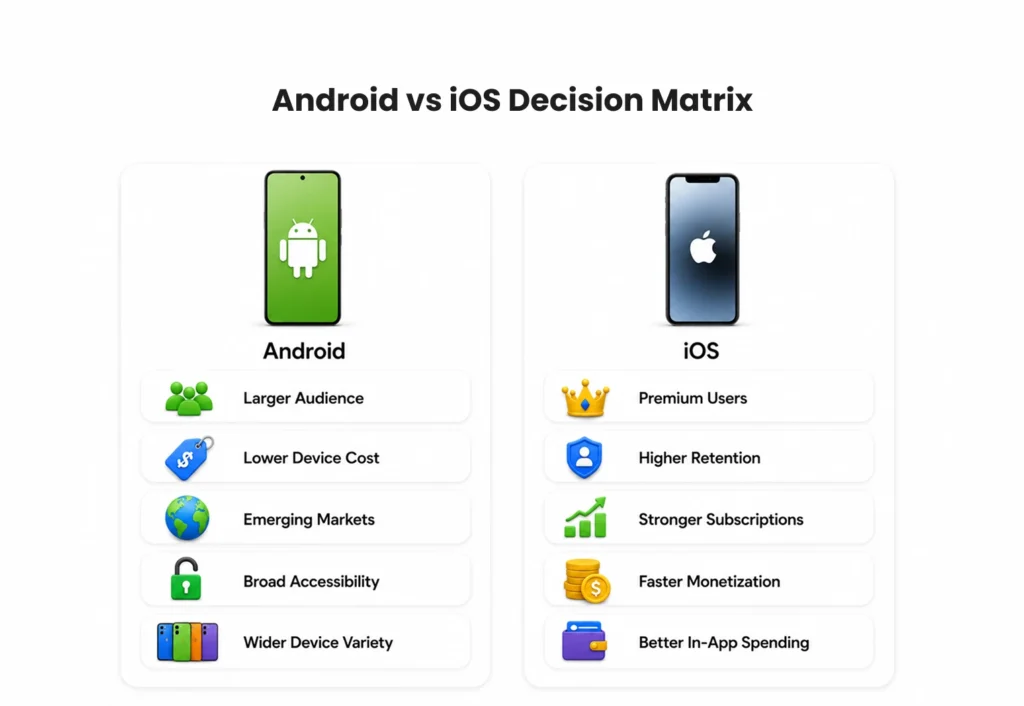
Audience demographics and regional device behavior strongly influence a company’s initial platform strategy.
Android currently dominates emerging markets due to device affordability and broad availability, while iOS adoption remains much stronger in premium, high-income service segments.
Businesses evaluating android app development often prioritize broad market reach and operational accessibility for their driver and vendor networks.
At the same time, companies seeking premium user retention may invest in iOS and Android app development company solutions for unified, simultaneous multi-platform experiences.
Organizations heavily compare native vs hybrid app development approaches before finalizing architecture decisions to ensure their choice aligns with their budget and performance needs.
Security Requirements for Laundry Service Mobile Apps
Laundry platforms store a massive amount of sensitive customer information, including home addresses, personal phone numbers, payment details, and predictable delivery schedules. Keeping this data safe is non-negotiable.
Security considerations usually include:
- Highly encrypted payment processing
- Secure, multi-factor authentication for administrators
- Strict role-based admin access
- API protection to prevent data scraping
- Automated data backup and recovery systems
Businesses reviewing Mobile App Security Best Practices often prioritize compliance early in the design phase to avoid severe operational and legal risks later.
Development teams also rely on the Best tools for app development to systematically improve threat monitoring, automated testing, and deployment reliability.
Future Trends in Laundry and Cleaning App Development
The service industry continues evolving rapidly toward smarter scheduling, full operational visibility, and integrated digital service ecosystems. Stagnant platforms will quickly lose ground to innovative competitors.
Emerging trends include:
- Subscription-first service models that guarantee recurring revenue
- Real-time delivery ecosystems utilizing gig-economy drivers
- Connected workforce systems for seamless internal communication
- Predictive scheduling based on user habits and historical data
- Multi-service platforms that bundle various home chores
Businesses studying Mobile app development trends are increasingly combining cleaning, laundry, housekeeping, and general home maintenance services into massive, unified applications.
Companies planning expansion into broader digital ecosystems may also thoroughly evaluate custom web application development for robust admin management, franchise control, and enterprise-level operations.
Choosing a Laundry and Cleaning App Development Partner
Selecting a competent technical partner involves much more than simply comparing hourly pricing estimates. A successful build requires a partner who genuinely understands the business model.
Businesses typically evaluate:
- Deep operational understanding of the service industry
- Real-world logistics and routing expertise
- High-end UI capabilities and design portfolios
- Thorough scalability planning and architecture strategy
- Reliable post-launch maintenance support
- Overall product strategy alignment
Organizations searching for the Best Mobile app development company in India often prioritize industry experience, strong references, and execution consistency over short-term cost savings.
Similarly, companies researching the best mobile app company usually heavily assess communication quality, technical architecture planning, and long-term support capabilities.
Understanding the deep Benefits of hiring a mobile app development company can dramatically help businesses avoid common project management pitfalls, budget overruns, and painful scaling issues in the future.

Planning for Long-Term Growth
The laundry services industry is becoming increasingly technology-driven as businesses seek better operational efficiency and long-term customer retention. Companies aggressively investing in laundry and cleaning app development are smartly focusing on highly scalable infrastructure, simplified user experiences, and tight delivery coordination rather than basic booking systems alone.
From simple MVP launches to massive multi-city operational platforms, the most successful products in the market are built entirely around reliability, pricing transparency, and granular operational control. Businesses entering this highly competitive space should thoroughly evaluate long-term scalability, shifting customer expectations, and backend workflow complexity before officially selecting their technologies or digital development partners.
FAQs About Laundry and Cleaning App Development
1. How much does laundry and cleaning app development cost?
Costs vary based on features, integrations, and scalability requirements. MVP applications may start with smaller budgets, while enterprise platforms require larger infrastructure investments.
2. Which framework is commonly used for service apps?
Cross-platform frameworks are widely adopted because they reduce development time and maintenance complexity while supporting both Android and iOS.
3. What features are most important for user retention?
Real-time tracking, transparent pricing, simplified booking flows, and timely delivery updates are among the most important retention drivers.
4. How long does development usually take?
A basic MVP may take a few months, while advanced platforms with logistics and multi-vendor systems require longer development cycles.
5. Is cloud infrastructure necessary for scaling?
Yes. Cloud-based systems help platforms manage traffic spikes, real-time updates, and geographic expansion more efficiently.