Key takeaways
- Supply chain management software development cost typically ranges from $10,000 for a basic MVP to $600,000+ for enterprise-grade platforms.
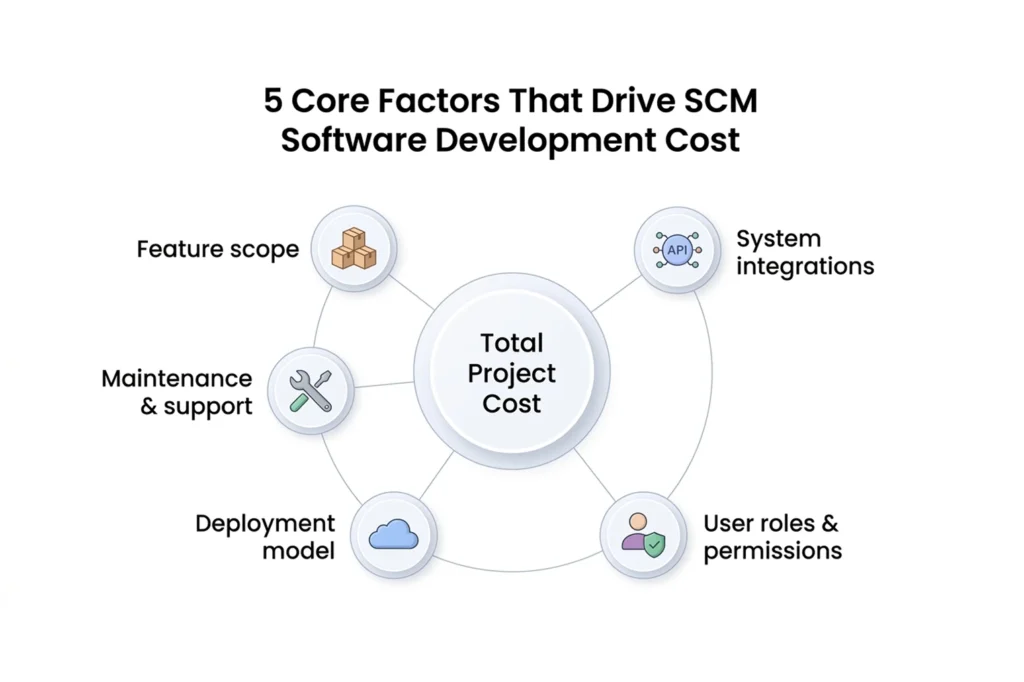
- Feature scope, system integrations, deployment model, and user roles have the biggest impact on total project cost.
- ERP, CRM, and legacy system integrations often consume a large portion of the development budget in complex SCM projects.
- Hidden costs such as data migration, staff training, maintenance, and API usage can significantly increase your long-term investment.
- Starting with an MVP and scaling in phases is one of the most effective ways to control supply chain software development costs.
Delayed shipments, poor warehouse visibility, disconnected systems, and inaccurate inventory decisions are real business pains that disrupt growth. Companies facing these challenges often look for digital solutions to regain control over their operations. Understanding supply chain management software development cost becomes the top priority for leadership teams evaluating a digital transformation.
In our development process, one of the first questions businesses ask is how much supply chain software should realistically cost before they commit to a long-term platform decision. The truth is that supply chain management software development cost varies significantly because features, integrations, deployment models, and scale all change the total budget. A simple dashboard for a small retailer will require a vastly different budget compared to a global enterprise system.
This comprehensive guide breaks down exactly what factors drive up pricing and where you can optimize your budget. You will learn about the different pricing tiers, hidden fees to avoid, and how to choose the right tech approach to ensure your investment delivers measurable returns.
What Determines Supply Chain Management Software Development Cost?
Several foundational elements shape the final price tag of your project. Before looking at specific numbers, it helps to understand what features and technical requirements consume the most development hours.
Core Features That Increase Supply Chain Software Cost
The number of modules you require directly impacts the scope of work. Common supply chain platforms include inventory management, order management, and supplier portals. Building features for warehouse coordination, shipment visibility, and procurement workflows takes considerable time. Each of these modules requires specific databases, user interfaces, and security protocols. If you try to build all of them at once, your initial budget will need to be substantial.
Why Integrations Raise SCM Development Costs
Businesses planning custom web application development for supply chain workflows often underestimate the cost of integration-heavy architecture. Connecting your new software to existing ERP, CRM, and accounting systems is rarely straightforward. You have to account for legacy systems, middleware, API dependencies, and sync complexity. If you have already reviewed broader app development cost factors, you will know that supply chain platforms usually sit at the higher end because of this operational complexity.
Supply Chain Management Software Development Cost by Project Complexity
To give you a clearer picture of potential budgets, we can categorize projects by their overall complexity and scale.
| Project Type | Target Audience | Estimated Cost Range | Estimated Timeline |
| Basic MVP | Startups, small D2C brands | $10,000 to $60,000 | 2 to 4 months |
| Mid-Market | Growing distributors | $40,000 to $200,000 | 4 to 8 months |
| Enterprise | Global logistics, manufacturing | $150,000 to $600,000+ | 9 to 18+ months |
Basic MVP for startups and small retailers
A basic Minimum Viable Product usually costs between $10,000 and $60,000 and takes 2 to 4 months to build. This version typically includes inventory tracking, basic order processing, and a simple management dashboard. It is a good fit for D2C brands or small warehouse operations. The same phased thinking used in Building MVP Mobile Apps also works well for supply chain platforms, especially when you need proof of value before scaling.
Mid-market and enterprise pricing ranges
For larger operations, mid-market solutions run from $40,000 to $200,000, while enterprise systems can range from $150,000 to $600,000 or more. These systems include multi-warehouse support, complex supplier workflows, advanced analytics, strict role permissions, and demand forecasting. They also require heavy compliance layers. Understanding the App development lifecycle explained helps decision-makers see why discovery, design, development, testing, and deployment all affect final pricing at this scale.
Custom vs SaaS vs Low-Code: Which Supply Chain Software Option Costs Less?
Choosing the right platform model will dictate both your initial capital expenditure and your ongoing operational costs.
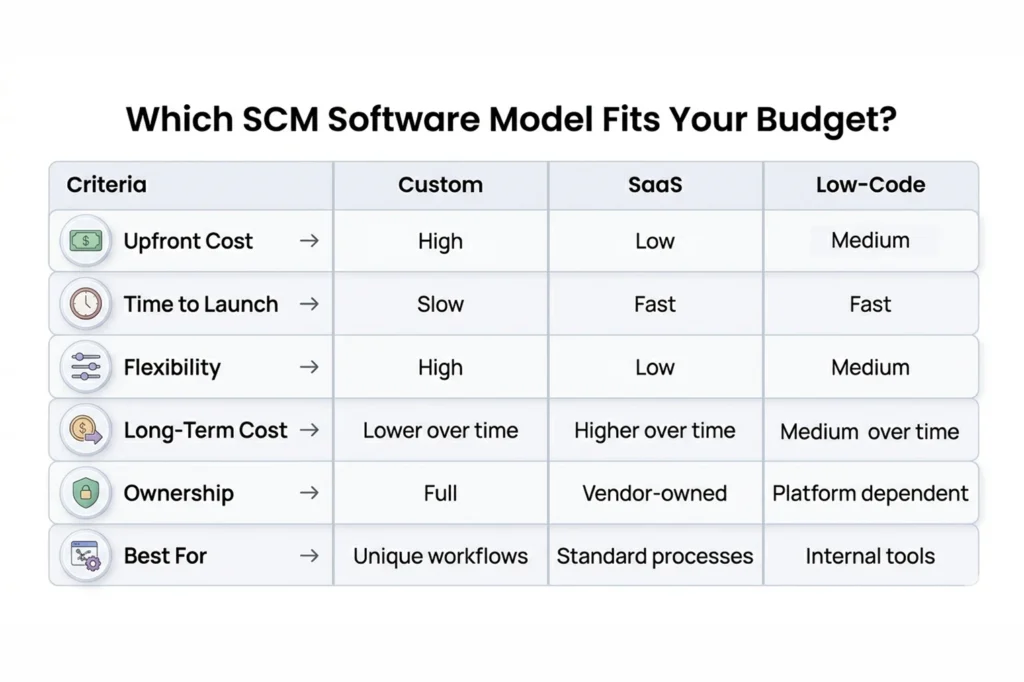
| Software Model | Upfront Cost | Ongoing Cost | Best For |
| Custom Build | High | Low (Maintenance) | Unique workflows, data ownership |
| SaaS | Low | High (Subscriptions) | Standard processes, fast launch |
| Low-Code | Medium | Medium | Internal tools, moderate scaling |
When Custom Supply Chain Software Delivers Better Value
Companies with non-standard operations usually lean toward custom mobile app development or custom platform builds to avoid process compromises. Custom software gives you complete ownership, better security control, and higher long-term ROI. You do not have to force your staff to change their existing processes to fit a rigid off-the-shelf product.
Where SaaS or low-code can lower upfront spend
If budget constraints are tight, SaaS or low-code platforms offer subscription models with a fast launch and lower initial costs. However, you face long-term vendor dependency and limitations on workflow depth. Teams that want faster deployment may prefer Cloud-based app development models because infrastructure and updates are easier to manage without an internal IT team.
Hidden Supply Chain Software Development Costs Most Businesses Miss
When budgeting for a new system, many companies only look at the cost of writing code. You must also prepare for the operational expenses that come with deploying the software.
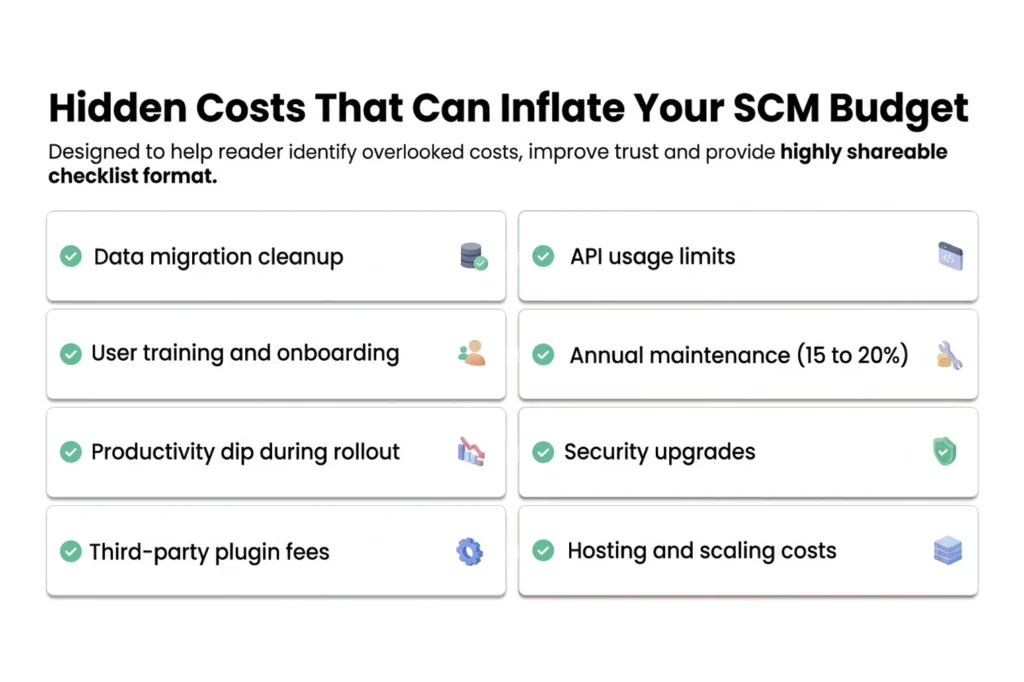
Data Migration and Training Costs in SCM Software Projects
Before you can use your new software, you need to handle spreadsheet cleanup and master data validation. Onboarding teams takes time, and you should expect a temporary productivity drop as staff learn the new interface. Rollout support is vital during the first few weeks of transition.
Maintenance, Security, and API Costs in Supply Chain Platforms
Many of the same risks discussed in Mobile App Security Best Practices apply here, especially when supplier data and operational records must be protected. You should budget 15 to 20 percent of the initial development cost for annual maintenance. Additional ongoing expenses include plugin fees, API usage limits, and hosting growth. As usage grows across warehouses and regions, mobile app performance optimization becomes critical for real-time dashboards and tracking reliability.
Supply Chain Management Software Development Cost by Industry
Different industries require different supply chain features, which alters the development budget.
| Industry | Key Features Required | Estimated Complexity |
| Retail & eCommerce | Order sync, returns, multi-channel | Medium |
| Manufacturing | Production scheduling, raw materials | High |
| Global Logistics | Route optimization, customs, tracking | Very High |
Retail and eCommerce Supply Chain Software Pricing
Retail businesses focus heavily on order sync, multi-channel inventory management, returns processing, and warehouse coordination. These features ensure that stock levels are accurate across storefronts and digital marketplaces.
Manufacturing and Logistics SCM Software Cost Factors
Manufacturing and global trade require much deeper logic. You will need production scheduling, raw material planning, route optimization, customs documentation, compliance tracking, and multi-currency support. Logistics-focused buyers should compare must-have logistics tracking software features before estimating build cost for route visibility or fleet coordination. Larger enterprises often treat supply chain modernization as part of broader mobile apps digital transformation across operations, warehousing, and field workflows.
How to Reduce Supply Chain Management Software Development Cost Without Cutting Essentials
You do not have to sacrifice quality to keep your budget under control. Smart planning can help you reduce initial expenditures.
Start with an MVP to Lower SCM Software Development Cost
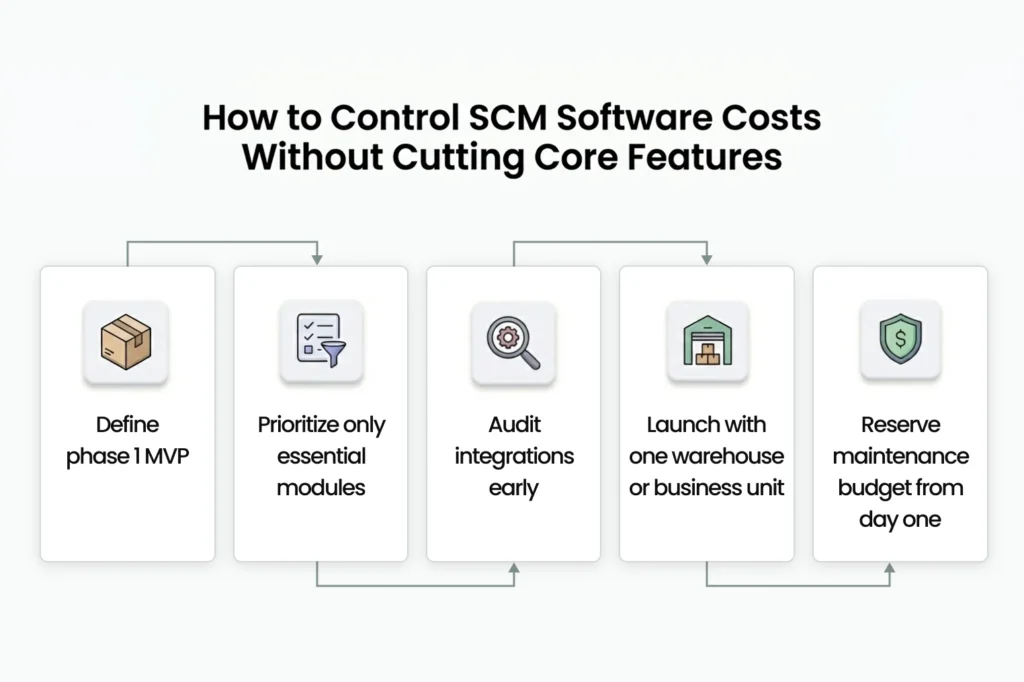
Focus on inventory and orders first. You can delay forecasting algorithms and complex automation until the core system is stable. Pilot the software in one warehouse before expanding to others. This phased approach minimizes risk and spreads out the financial impact.
Choose the Right Team Model to Control Supply Chain Software Budget
A structured vendor with strong mobile app development services can often reduce rework by planning integrations and rollout phases early. You might use a blended team structure with a local project manager and offshore builders. Lock in a fixed scope for phase one and always run a discovery phase before development begins. If you are comparing partners, this is also where how to choose mobile app development company becomes relevant because supply chain projects need technical depth, not just design capability.
Web vs Mobile Supply Chain Software Development Cost
Supply chain operations usually require both desktop and mobile access to function properly.
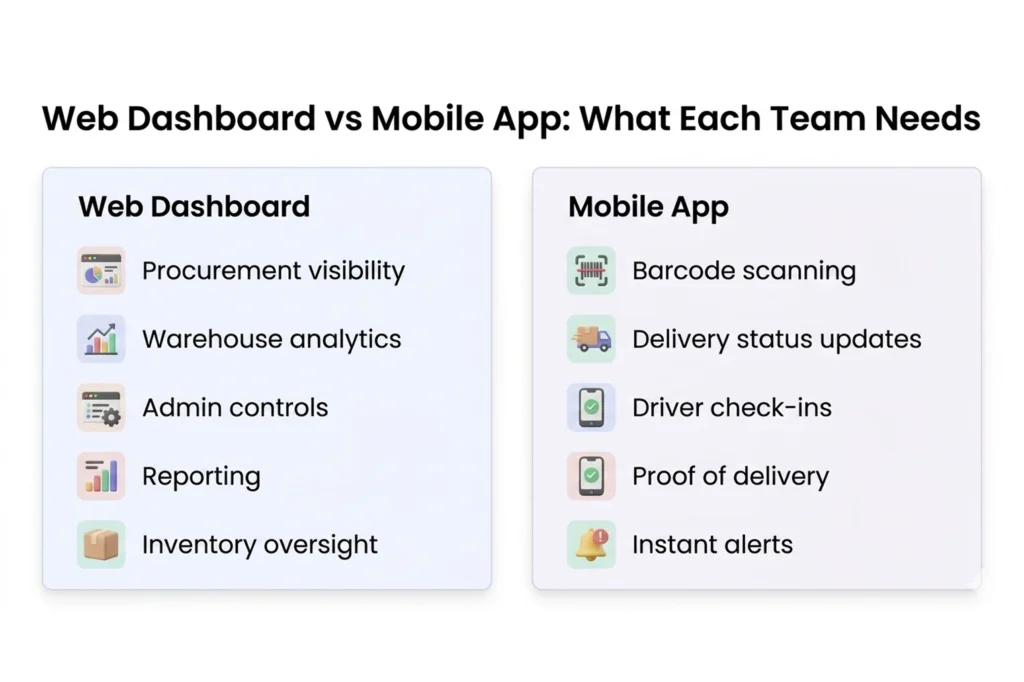
Web Dashboard Cost for Supply Chain Management Systems
Leadership teams still need robust browser-based dashboards, which is why Business website development often becomes part of the same transformation budget. These platforms include admin panels, warehouse dashboards, procurement visibility, and deep analytics.
Mobile App Cost for Warehouse and Logistics Teams
Many businesses work with a Mobile App Development Company when warehouse staff, drivers, or supervisors need real-time mobile access in the field. Mobile features include barcode scanning, delivery status updates, driver check-ins, proof of delivery signatures, and instant supervisor alerts.
Best Tech Approach for Scalable SCM Platforms
The technology stack you choose will dictate how well your platform handles growth over the next five to ten years.
When cloud architecture is the safer long-term choice
Cloud architecture is essential for multi-location scale. It provides better uptime, reliable disaster recovery, secure remote access, and elastic usage that scales during busy holiday seasons.
Why DevOps planning affects cost and release quality
Teams building multi-environment release pipelines often benefit from enterprise devops consulting because deployment mistakes in supply chain systems can disrupt live operations. Proper DevOps practices ensure smooth deployment pipelines, strict release control, easy rollback capabilities, active monitoring, and safe testing environments.
Is Supply Chain Management Software Development Worth the Investment?
Custom software requires a significant capital investment. You need to verify that it will generate enough value to justify the expense.
Signs custom software delivers stronger ROI than SaaS
Custom builds offer stronger ROI when you have highly unique processes or face multi-system complexity that SaaS products cannot handle. They also eliminate vendor lock-in pain and high recurring SaaS costs that eat into profit margins as you add more users. Custom software is also better for navigating strict compliance needs.
Final Thoughts: Plan Your SCM Budget Around Business Outcomes, Not Just Features
As we have explored, the total supply chain management software development cost is ultimately determined by project complexity, the number of integrations required, and the rollout model you choose. While a basic system might start around $10,000, enterprise solutions can easily exceed $600,000.
To keep your budget manageable, we highly encourage a phased implementation. Focus on a strong MVP that solves your immediate warehouse and inventory pains, and add complex forecasting modules later. Keep your attention focused on ROI, user adoption, and long-term maintainability. If you are ready to define your project scope, reach out to our team to schedule a technical discovery session today.
Frequently Asked Questions About Supply Chain Management Software Development Cost
1. How much does a basic supply chain system cost?
A basic MVP with core inventory and order tracking typically ranges from $10,000 to $60,000 depending on the development team’s location.
2. Why are enterprise supply chain systems so expensive?
Enterprise systems require massive data migration, complex integrations with legacy ERPs, strict security compliance, and custom features for multiple departments.
3. Should I build custom software or buy a SaaS product?
Buy SaaS if your processes are standard and you need a fast launch. Build custom if your workflows are unique, you want to own your data, and you want to avoid expensive monthly per-user fees.