First impressions are measured in milliseconds, and Website Loading Speed decides who stays, who bounces, and who buys, therefore your brand reputation often rises or falls with it.
Because attention is scarce, Website Loading Speed directly shapes conversion, search visibility, and trust, moreover it sets expectations your design, copy, and support must work hard to match.
However, slow pages waste paid traffic, reduce engagement, and inflate costs, consequently your ROI shrinks even when campaigns look healthy and your reporting says everything is totally fine.
Meanwhile, Website Loading Speed is a technical lever you can control, therefore smart teams prioritize it early in website development to protect revenue, delight visitors, and reduce future rework.
Additionally, shoppers expect near instant responses on mobile, and Website Loading Speed influences abandonment, retention, and lifetime value, as a result you need repeatable methods to test and optimise consistently.
Moreover, modern Core Web Vitals connect Website Loading Speed with user experience, therefore metrics like Largest Contentful Paint and Time to First Byte become daily health checks for your site.
Consequently, this guide explains practical wins, tooling choices, and workflows that move numbers, and it will keep the content clear, human, and tactical with no fluff or filler.
Finally, you will learn how to diagnose bottlenecks, set realistic targets, and ship improvements that stick, because Website Loading Speed rewards focus, discipline, and tiny daily improvements that compound.
Why Website Loading Speed Matters for Businesses
Website Loading Speed is no longer just a technical issue, it has grown into a business challenge that directly controls revenue, engagement, and brand loyalty. Studies show that even a one second delay can reduce conversions by several percentage points, which means slow websites hurt sales in ways most businesses underestimate.
From the perspective of search engines, Website Loading Speed is a ranking factor that influences how visible a site becomes on Google. Faster websites receive higher engagement signals, therefore Google rewards them with better organic reach. This makes speed not only an experience booster but also an SEO necessity.
Customers also link performance with trust. When a page loads quickly, visitors assume the brand is reliable, secure, and worth their attention. On the other hand, when a website lags, it leaves doubts about professionalism, which can push potential buyers away to faster competitors.
Brands investing in website development already know that design and usability mean little without speed, because performance decides whether users stay long enough to appreciate content. Similarly, businesses investing in mobile app development understand that app like experiences must respond instantly, otherwise user retention drops significantly.
Core Factors Affecting Website Loading Speed
Several technical and structural elements decide how fast a website loads, and understanding these factors helps businesses plan performance improvements that actually work. Hosting is usually the starting point. If your server is overloaded or located far from your audience, response times increase, and users feel the lag. Choosing the right hosting plan with a content delivery network shortens this delay, since files are served from locations closer to visitors.
Another factor is code quality. Bloated scripts, unnecessary plugins, and poorly structured stylesheets slow down processing. Developers who focus on clean, modular coding practices ensure that browsers render pages faster, while caching strategies reduce repeat loading times for returning users. In addition, images and videos make up a large part of page weight. When not optimized, they can add several seconds to Website Loading Speed. Compressing files without losing quality keeps websites both visually appealing and efficient.
Database queries also impact load times. A cluttered database with redundant entries slows down retrieval, which delays content delivery. Optimizing queries and implementing indexing can greatly improve performance.
Companies working on mobile app development often face similar challenges, since apps also rely on lightweight code and fast server communication. Likewise, teams investing in Website Development Trends like AI-driven personalization or motion graphics must balance innovation with performance, ensuring creative design does not harm speed.
How Website Loading Speed Shapes User Experience
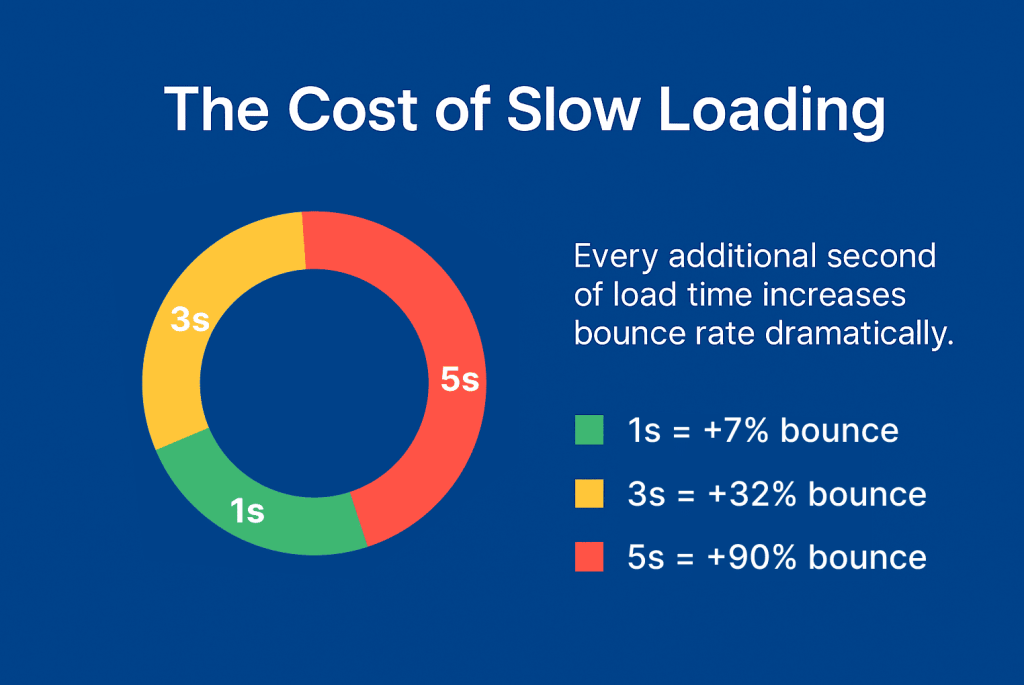
User experience is heavily shaped by Website Loading Speed, because people today expect near instant responses. When a site loads within two seconds, visitors tend to stay, browse, and even convert. But when pages take longer, frustration builds quickly, and bounce rates rise. This shows how speed directly connects to customer satisfaction.
On mobile devices, the effect becomes even more pronounced. Many users access sites while multitasking, and they will not wait for slow loading pages. A delay of even three seconds can push them to competitors, which results in lost opportunities and damaged trust. Speed also affects how users interact with design. Smooth navigation and seamless scrolling only matter if the foundation, which is loading time, is handled correctly.
Search engines also pay attention to this behavior. If users frequently leave a slow website, search rankings drop, limiting organic reach and reducing long term visibility. Therefore, Website Loading Speed becomes an indirect measure of trustworthiness for both people and algorithms.
Forward looking businesses that invest in Website Development Trends are beginning to treat speed as a core part of UX strategy rather than an afterthought. At the same time, detailed planning in Website Development Process Explained shows how performance must be integrated during each stage, from coding to testing.
Testing and Measuring Website Loading Speed
Improving Website Loading Speed begins with accurate testing, since you cannot fix what you cannot measure. Several tools make this process straightforward, each offering insights into performance bottlenecks. Google PageSpeed Insights is one of the most widely used because it provides both mobile and desktop scores, along with suggestions for improvements. GTmetrix and Lighthouse are also valuable options, offering detailed breakdowns of loading behavior, network requests, and coding inefficiencies.
Among the most important metrics are Largest Contentful Paint (LCP), which tracks how quickly the main content appears, and First Input Delay (FID), which measures responsiveness when users interact. Another useful metric is Cumulative Layout Shift (CLS), which detects visual stability issues that frustrate visitors. Together, these values paint a realistic picture of how fast and stable your website feels in real use.
Testing should not be treated as a one time step. Websites evolve with new plugins, themes, and content updates, which means load time can change overnight. Setting up automated monitoring helps catch slowdowns early before they affect user experience or rankings.
Businesses following a clear Website Development Process Explained often include speed audits as a standard step, ensuring performance is tested alongside design and functionality. Similarly, companies exploring Custom Website Development integrate tailored optimization strategies that are based on test results, giving them a competitive advantage.
Strategies to Improve Website Loading Speed
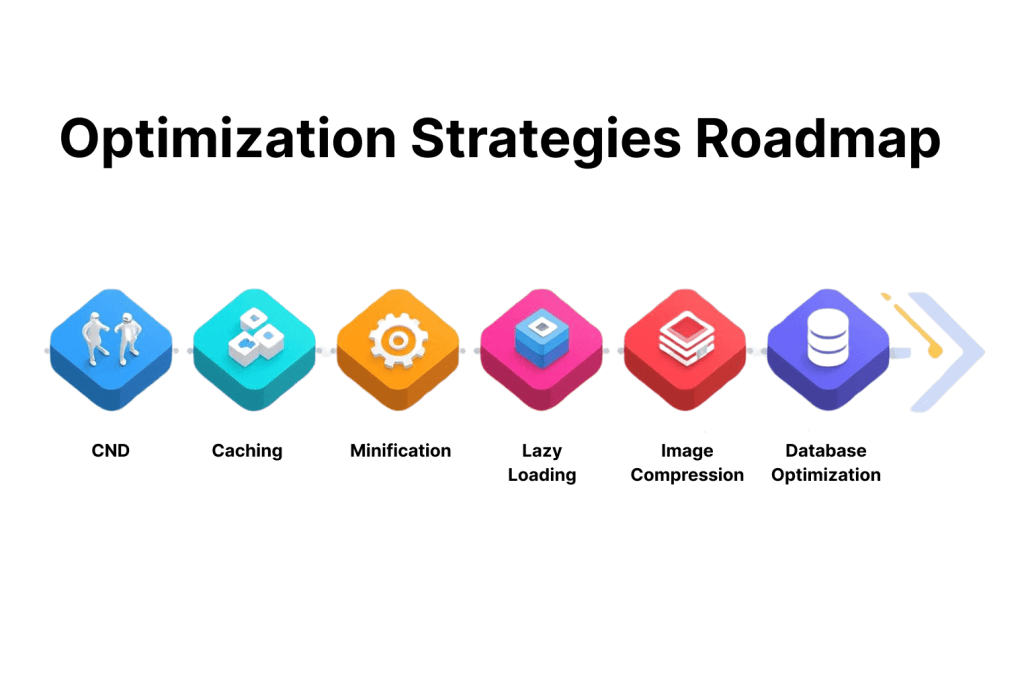
Once testing highlights issues, the next step is applying strategies that directly improve Website Loading Speed. One of the most effective methods is using a Content Delivery Network. A CDN distributes files across global servers, meaning visitors load your site from the nearest location, which reduces delays. Alongside this, enabling caching ensures that repeat visitors do not need to reload all resources, which significantly improves the browsing experience.
Another essential strategy is minification. This process removes unnecessary characters, spaces, and comments from code files like CSS, HTML, and JavaScript, resulting in lighter, faster loading pages. Lazy loading also plays a role by ensuring images and videos load only when users scroll to them, rather than burdening the initial page load.
Image and video optimization is equally important. Compressing files, choosing next gen formats like WebP, and resizing visuals for different devices prevent heavy downloads that slow down users. Combining these with database optimization and reducing third party scripts results in faster, more reliable performance.
Brands that invest in Custom Website Development often benefit from tailor made solutions where speed is a priority from the ground up. At the same time, businesses aligning with how to choose website development company can evaluate potential partners based on their ability to deliver fast, scalable websites that balance design with performance.
Mobile and App Specific Loading Speed
Website Loading Speed becomes even more critical when we shift focus to mobile devices and applications. Mobile users often browse while commuting, shopping, or multitasking, which means they have little patience for slow responses. A delay of just a few seconds often leads to app abandonment or switching to a competitor’s website. Speed on mobile directly influences conversion rates, app ratings, and even brand perception.
Optimizing for mobile requires more than just responsive design. Lightweight frameworks, adaptive images, and reduced server calls are necessary to ensure fast performance on smaller screens and varying network conditions. Even progressive web apps must strike a balance between rich features and fast load times.
For ecommerce brands, fast mobile websites can double engagement and reduce cart abandonment. Payment gateways, checkout forms, and product pages need instant response to keep customers committed to completing their purchases. Performance optimization here is not an option but a revenue driver.
Businesses exploring Mobile development company services often prioritize app performance because mobile first customers demand speed and reliability. Similarly, guides on website redesign frequently highlight the importance of optimizing for mobile, since improving speed can refresh not just appearance but also overall customer satisfaction.
Case for Continuous Optimization
Website Loading Speed is never a one time fix. Even after major improvements, websites evolve with new features, third party integrations, and content updates that can gradually slow performance. This makes continuous optimization essential for long term success. Businesses that monitor speed regularly often catch problems early, preventing sudden drops in user engagement or search rankings.
One key approach is setting benchmarks and reviewing them monthly. Tracking performance ensures that changes in design, hosting, or plugins are not silently hurting Website Loading Speed. For large organizations, automated monitoring tools can alert teams when certain thresholds are breached, allowing them to respond before users even notice.
Continuous optimization is not just about technology, it also aligns with business goals. Marketing campaigns, seasonal sales, or app launches drive heavy traffic, and a slow loading site can ruin otherwise successful initiatives. Making performance part of business planning ensures that growth does not come at the cost of speed.
Advanced Practices for Future Ready Performance
As technology evolves, businesses must prepare for future requirements that make Website Loading Speed even more critical. Traditional optimization methods like caching and compression remain vital, but advanced practices now give websites a competitive edge. One such practice is edge computing. By processing data closer to the user, it reduces latency and improves real time responsiveness. Combined with serverless architecture, it allows businesses to deliver content faster without relying heavily on centralized servers.
Artificial intelligence also plays a role. AI-driven optimization tools automatically adjust images, scripts, and delivery methods based on user behavior and device type. This ensures every visitor gets the fastest possible experience without manual adjustments. For global businesses, multi CDN strategies are becoming a trend, allowing websites to stay resilient while improving speed across diverse geographies.
Preparing for future search requirements is equally important. With Google’s increasing focus on Core Web Vitals, businesses that ignore advanced optimization risk falling behind competitors that adapt early. Fast websites not only meet user expectations but also secure better visibility in organic results.
Companies engaging in Website Redesign Guide projects should consider these advanced methods to future proof their platforms. Similarly, teams working with Custom Web Application development can integrate modern performance strategies during initial builds, ensuring scalability without sacrificing speed.
Comparing Website Loading Speed Across Frameworks
The choice of framework has a direct impact on Website Loading Speed, because every technology stack comes with its own strengths and weaknesses. Lightweight frameworks often deliver faster performance out of the box, while heavier ones require more fine tuning to achieve similar results. For example, static site generators typically load faster since content is prerendered, while dynamic frameworks handle flexibility but may add delays if not optimized correctly.
When businesses evaluate frameworks, they should consider both developer productivity and user performance. A framework that offers rapid coding but produces bloated scripts can harm long term results. On the other hand, frameworks designed with modular architecture and built in optimization features tend to perform better with less overhead. Choosing wisely ensures that speed remains a foundation, not a bottleneck.
Different industries also require different considerations. Ecommerce platforms need lightning fast load times during peak traffic, while enterprise sites focus on stability and scalability alongside performance. Testing frameworks under real world conditions helps decide which option aligns best with business objectives.
Companies adopting Top Web Development Frameworks often weigh speed alongside scalability, security, and community support. Similarly, businesses exploring Android App Development face the same balance between feature rich frameworks and streamlined performance, because users consistently demand responsiveness regardless of platform.
Beyond Websites: Apps and Web Speed
Website Loading Speed is not limited to traditional sites anymore. Modern businesses are increasingly relying on apps, progressive web applications, and hybrid platforms, all of which demand high performance. Users expect app like speed and responsiveness across devices, whether they are shopping on an ecommerce store or accessing enterprise dashboards. Slow loading applications lead to immediate frustration, often resulting in lower engagement and poor retention.
Progressive Web Apps (PWAs) are a strong example. They provide near native app experiences but depend heavily on optimized caching, lightweight coding, and background syncing to maintain fast responses. Similarly, hybrid applications must balance cross platform flexibility with speed, which means code optimization and streamlined APIs become critical. As companies expand into mobile first strategies, performance optimization across multiple channels is no longer optional.
Another key aspect is scalability. As apps gain more users, data transfer, server communication, and resource heavy features can slow performance if not planned in advance. Businesses that build for speed from the start are able to scale without compromising usability.
Forward looking companies investing in Custom Mobile App Development recognize that speed enhances customer loyalty as much as design does. Likewise, organizations diving into CRM Mobile App solutions depend on fast interactions because delayed responses reduce trust in systems meant to improve efficiency.

Conclusion
Website Loading Speed has become one of the most important elements of digital success. It not only defines how users interact with your platform but also influences search rankings, conversion rates, and long term brand trust. A website or application that loads within seconds communicates professionalism and reliability, while a slow experience can undo months of marketing efforts in a matter of clicks.
The journey toward improving speed is not a one time project but an ongoing process. From choosing the right hosting and frameworks to applying optimization techniques, every step plays a role in maintaining performance. Regular monitoring, continuous improvements, and the adoption of advanced practices ensure that websites remain competitive as user expectations and technologies evolve.
Businesses that prioritize Website Loading Speed often see higher engagement, stronger customer loyalty, and better ROI across digital campaigns. Whether it is part of a larger website development project or tied to growing web app development needs, performance should always remain a central focus.
In a digital space where milliseconds matter, treating speed as an asset rather than a technical afterthought sets the foundation for sustainable growth. The faster your website loads, the faster your business can move ahead of the competition.