Key takeaways
- In this woocommerce vs shopify comparison, WooCommerce offers full control while Shopify focuses on ease of use
- Shopify is ideal for fast launches and non-technical teams managing ecommerce stores
- WooCommerce provides better flexibility for customization, SEO, and content-driven growth
- Total cost varies as WooCommerce has variable expenses while Shopify has predictable monthly pricing
- The right platform depends on your business model, scalability needs, and technical resources
Choosing an ecommerce platform is a major decision that impacts your entire business. It affects your operational budget, store flexibility, search engine performance, and how easily your team can scale in the future. That is exactly why a thorough woocommerce vs shopify comparison matters before you commit to a platform that will shape your revenue for years to come.
For some businesses, the right choice is the one that gets them to live quickly with fewer moving parts. For others, it is the platform that provides full ownership, superior content control, and room for deep, specialized customization. If you are evaluating long-term growth, design flexibility, and total cost of ownership, this guide will help you make a clear and confident decision.
Many successful brands review platform options alongside their broader website development process to avoid expensive rebuilds later. Taking this holistic approach keeps the chosen platform perfectly aligned with marketing strategies, daily operations, and future technical integrations.
WooCommerce vs Shopify at a Glance
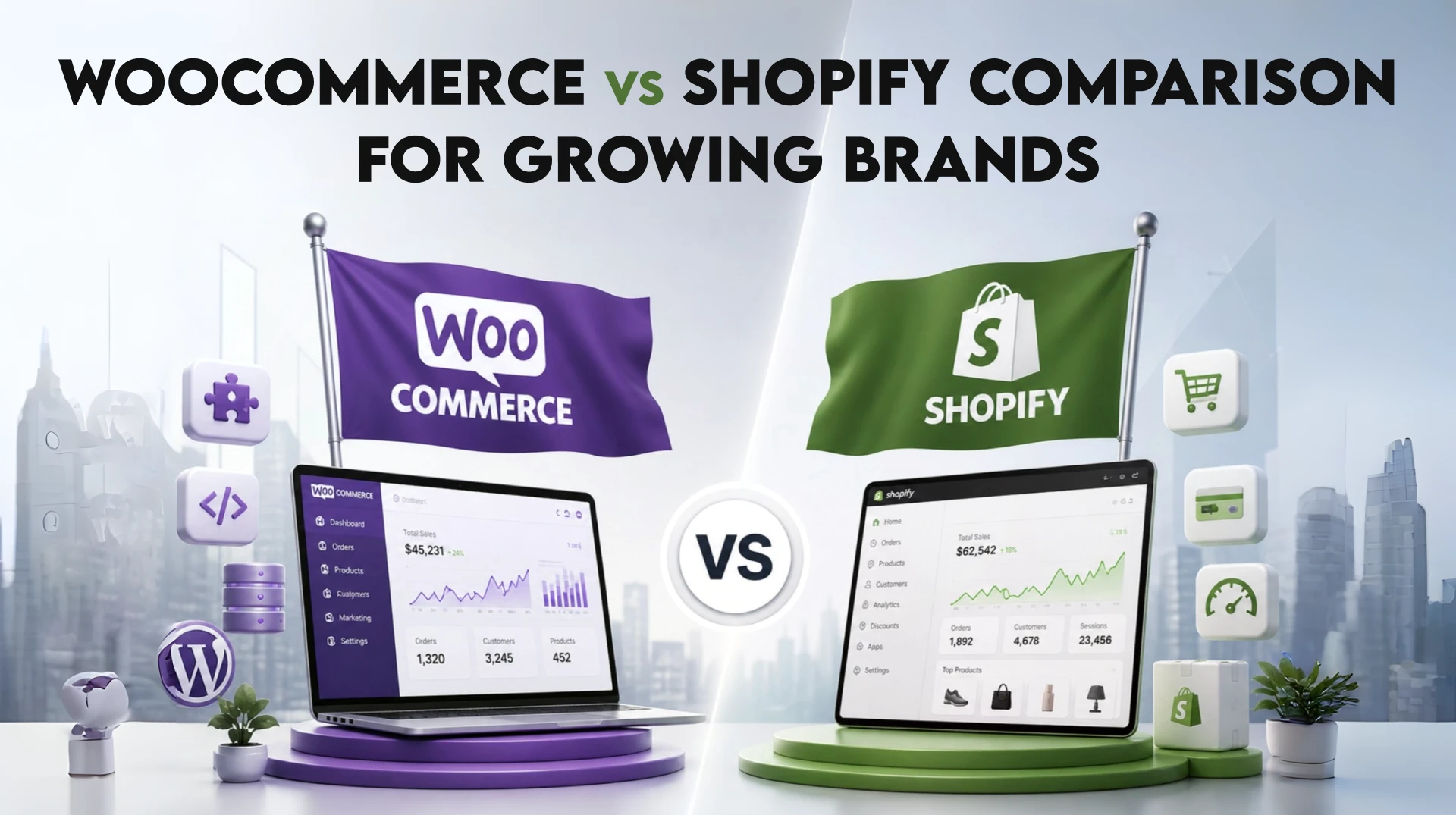
A quick woocommerce vs shopify comparison starts with understanding one core architectural difference. WooCommerce is an open-source WordPress plugin, while Shopify is a hosted Software-as-a-Service (SaaS) ecommerce platform.
This means WooCommerce gives you absolute control over hosting, custom design, and underlying code. Shopify provides a managed environment where hosting, security, and software updates are handled entirely for you. If your business is currently evaluating ecommerce website development, this distinction is critical because it directly impacts both launch speed and long-term digital ownership.
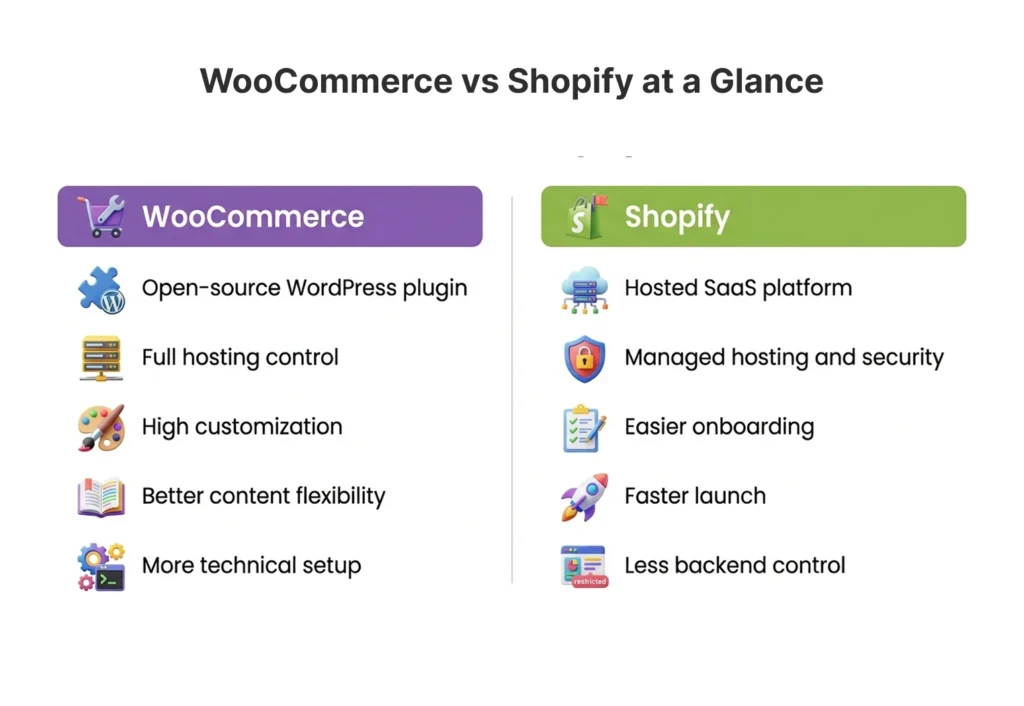
The Real Difference in Platform Ownership
At a practical level, this is a decision between absolute control and streamlined convenience.
WooCommerce works beautifully when your business wants a store that can evolve with highly unique workflows, advanced content strategies, and custom API integrations. It is frequently preferred when ecommerce website development services need to build features that go far beyond a standard digital storefront.
Shopify is built for a much smoother onboarding experience. It eliminates the need to manage dedicated servers, troubleshoot complex plugin conflicts, or apply regular security patches. If you need highly tailored workflows, custom checkout logic, or direct ERP connections, platform ownership becomes incredibly relevant during your custom website development planning phase.
Pricing Breakdown and True Costs
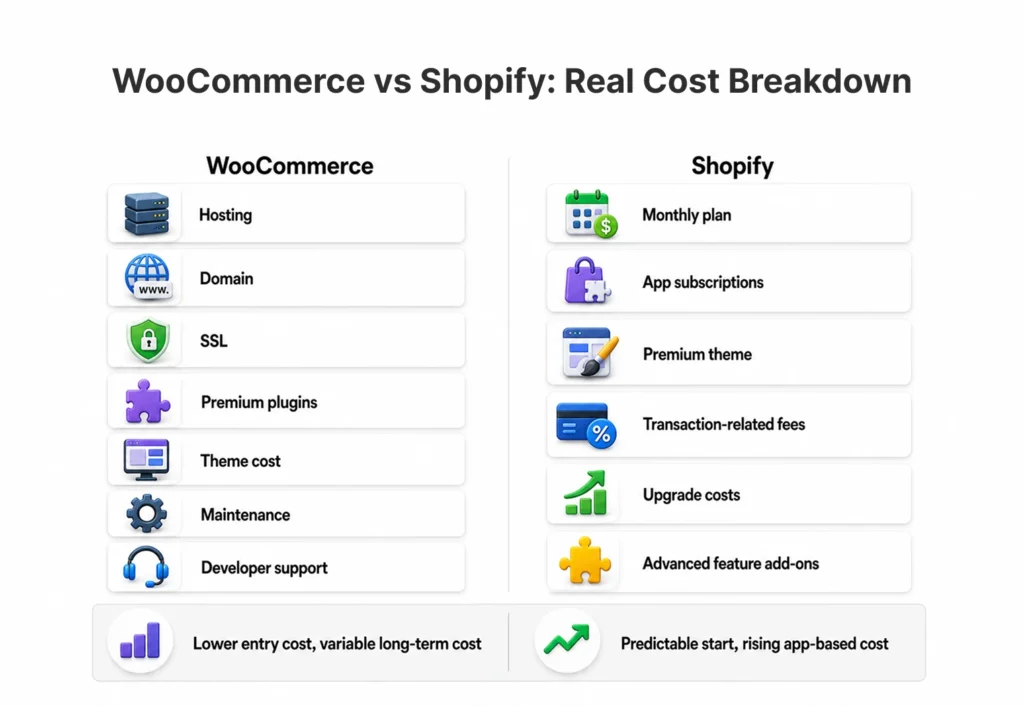
A strong woocommerce vs shopify comparison must look past entry-level pricing tiers.
WooCommerce appears cheaper initially because the core plugin is completely free. However, your real store costs will include premium hosting, essential paid plugins, advanced security tools, automated backups, and ongoing developer time.
Shopify features clear, predictable monthly pricing. Yet, premium app subscriptions and transaction-related fees can significantly raise your actual monthly spend as your sales volume grows. For businesses budgeting a major platform investment, it helps to compare these variables against a detailed Ecommerce Website Cost Breakdown instead of only looking at advertised starter plans. If you require deep design or logic changes, the most important question to ask is How much does a custom website cost, rather than just looking at the platform’s base subscription.
Ease of Use for Non-Technical Teams
If your team prioritizes fast onboarding, Shopify usually wins out. The dashboard is highly intuitive, enterprise-grade hosting is included, and many core store functions are ready immediately out of the box.
WooCommerce features a steeper learning curve because it depends on WordPress, dedicated hosting setup, and ongoing compatibility management. It requires more technical ownership. This matters immensely when choosing an ecommerce website development company in Chennai that can support platform-specific execution rather than just generic website delivery.
Customization and Total Flexibility
This is where WooCommerce often pulls ahead of the competition. In most real-world digital projects, WooCommerce allows unparalleled freedom. You can build custom checkout flows, unique product logic, and advanced content structures.
Shopify is highly customizable too, but you must work within a more controlled technical framework. For brands planning long-term product catalogs, complex membership models, or multi-step customized experiences, the woocommerce vs shopify comparison frequently shifts toward WooCommerce. That is why many modern teams carefully evaluate platform fit alongside their custom web application development requirements before finalizing their technology stack.
SEO Performance: WooCommerce vs Shopify Comparison
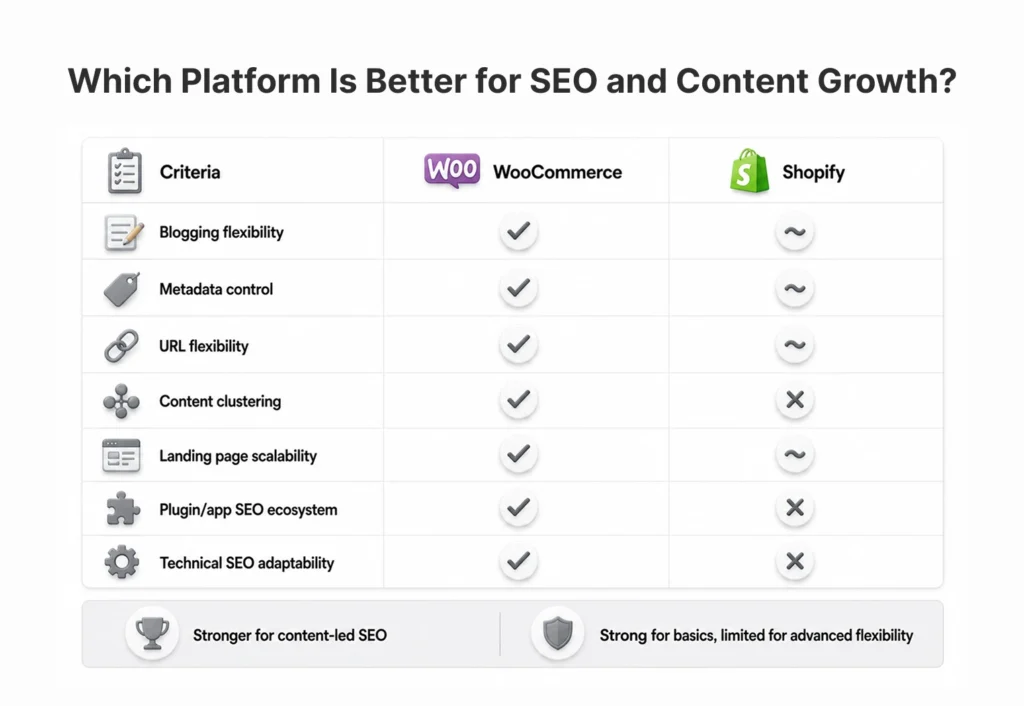
In a practical woocommerce vs shopify comparison, WooCommerce usually offers stronger search engine optimization control. Because WooCommerce runs natively on WordPress, it benefits from superior blogging flexibility and advanced metadata management.
If your business relies heavily on organic traffic, long-form educational content, and highly specific landing pages, WooCommerce feels much more natural. This is particularly relevant if your digital content roadmap includes publishing authority-building topics like website development trends, the best modern web development frameworks, or the future of ai-powered website development.
Performance and Speed in WooCommerce vs Shopify
Shopify consistently offers predictable, fast speed out of the box because the hosting infrastructure is heavily managed and standardized globally.
WooCommerce performance depends entirely on your hosting quality, theme weight, image optimization, and code cleanliness. A well-built WooCommerce store can be incredibly fast. Since website loading speed heavily impacts bounce rates and checkout completions, your platform choice should always be tied to practical frontend planning and utilizing the best tools for responsive web design.
Scalability in WooCommerce vs Shopify Comparison
Both platforms scale exceptionally well, but they handle high growth differently.
Shopify scales easily for operations because the infrastructure automatically expands to meet demand. As order volume surges, your team spends zero time on technical maintenance. WooCommerce scales just as well, but only when built on robust, managed infrastructure. If your business roadmap includes omnichannel flexibility or constant architectural evolution, you may need to study headless ecommerce architecture explained before committing to a final direction.
Design Flexibility in WooCommerce vs Shopify
Shopify makes it exceptionally easy to achieve a polished design with very little technical overhead. Its vast theme ecosystem allows you to launch an attractive storefront in days.
WooCommerce is better when your brand requires deep structural design freedom. If your website must blend editorial content, aggressive lead generation, and ecommerce into one seamless system, WooCommerce excels. The platform must fully support Responsive website development and custom website design without forcing awkward technical workarounds. This is where many brands also compare React vs WordPress for business website setups, depending on whether the final store needs to act more like a static site or a dynamic web app.
Support and Maintenance in WooCommerce vs Shopify
Shopify provides a centralized, highly managed support experience. You can reach out to their team 24/7.
WooCommerce support is highly distributed across your hosting provider, theme vendor, plugin creators, and the broader open-source community. That is why teams regularly evaluate their platform choice alongside a capable website development company or a specialized web development company in Chennai when their internal technical resources are limited.
When WooCommerce Is the Better Choice
Choose WooCommerce when your business demands full ownership of the digital environment. It is the best option for deep customization possibilities, better long-form content, and complex business rules. It excels for companies building more than a simple store, such as blended Business website development projects.
If you are currently reviewing execution partners, it helps to benchmark quotes against specialized ecommerce web development companies in chennai rather than choosing a partner based solely on general platform popularity.
When Shopify Is the Better Choice
Choose Shopify when your business needs to launch quickly with minimal day-to-day management. It provides a built-in hosted infrastructure and a much easier onboarding process for non-technical teams.
Shopify is the practical answer when speed and ease matter more than absolute backend freedom. If you need highly specialized local support to get started, partnering with an ecommerce website development company in Chennai can help you deploy a beautiful Shopify store in record time.
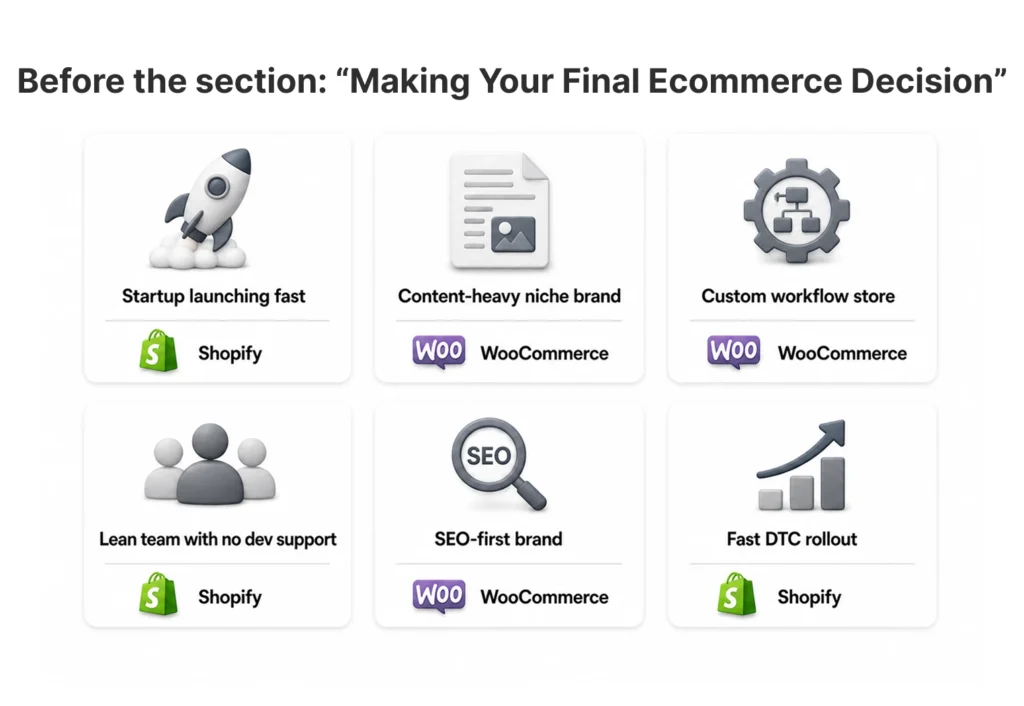
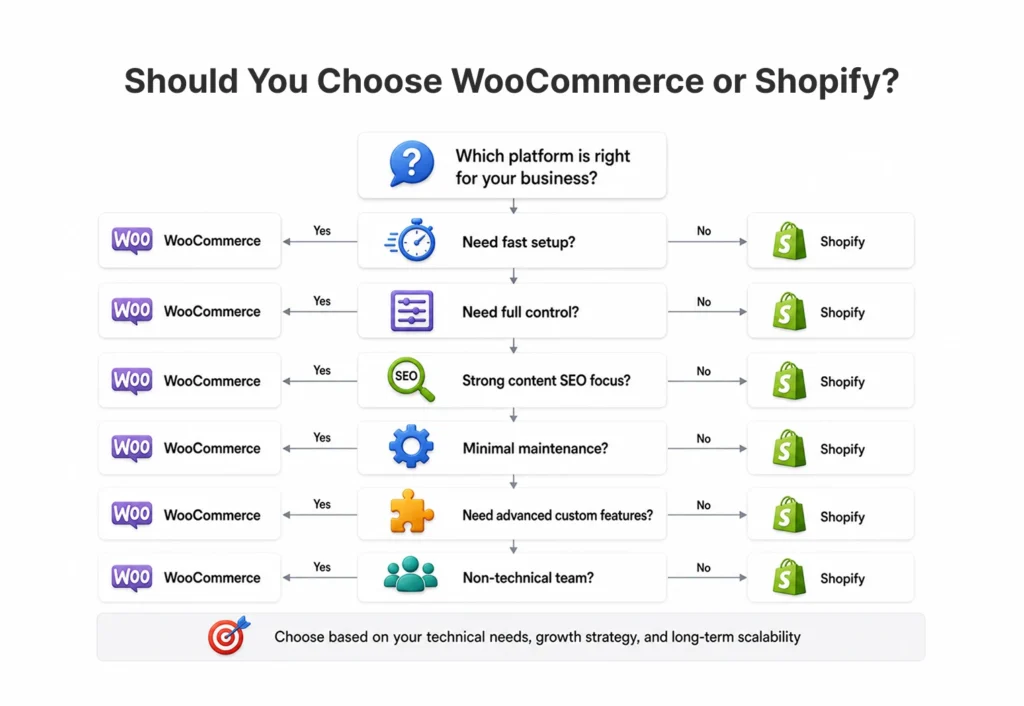
WooCommerce vs Shopify Comparison: Final Decision Guide
A truly useful woocommerce vs shopify comparison must conclude with your specific business context.

For brands making a serious platform decision, the best next step is mapping the platform directly to your business model, required integrations, and team capabilities. Partnering with professional web development services in chennai can prevent expensive mistakes and ensure your store is built correctly the first time. If your current store is vastly underperforming, this platform decision might also tie directly into a broader website redesign rather than just a simple data migration.
Frequently Asked Questions
1. Which is better for beginners, WooCommerce or Shopify?
Shopify is generally easier for beginners because hosting, platform security, and backend maintenance are fully managed for you. WooCommerce offers more control, but requires more setup and technical oversight.
2. Is WooCommerce cheaper than Shopify?
WooCommerce can be cheaper initially, but the real cost depends on hosting, premium plugins, custom design, and ongoing maintenance. Shopify offers clear baseline pricing, but app subscriptions and transaction fees can increase your monthly spend.
3. Which platform is better for SEO?
WooCommerce usually provides stronger SEO flexibility because it runs on WordPress, giving you advanced content and structural optimization control. Shopify has solid SEO basics, but features less structural flexibility for complex content strategies.
4. Can Shopify handle large ecommerce stores?
Absolutely. Shopify scales incredibly well for fast-growing stores, particularly when businesses prefer managed infrastructure. Larger brands frequently upgrade to Shopify Plus as their daily operations expand.
5. Is WooCommerce better for custom features?
In almost all cases, yes. WooCommerce is significantly more flexible for building custom workflows, tailored checkout logic, and implementing deep code-level changes.
6. Should I migrate from Shopify to WooCommerce?
You should only migrate if your business currently needs total ownership, stronger content-driven SEO, or highly advanced custom features.
7. What if my store needs more than standard ecommerce features?
If your store is moving toward app-like functionality, advanced user roles, or custom automated workflows, you will need to assess platform fit alongside your broader architecture decisions and evaluate the true Cost to develop a website beyond a standard retail setup.