
Key takeaways
- SEO-friendly website development tips starts with a clear site structure, logical navigation, and crawlable page hierarchy.
- Improving website loading speed through image compression, code minification, and Core Web Vitals optimization directly supports better rankings.
- Responsive design is essential because mobile-first indexing makes mobile usability a key part of search visibility.
- Strong UI UX design improves engagement signals like lower bounce rates, longer session duration, and better conversions.
- Technical SEO, internal linking, and content architecture should be planned during development, not added after launch.
Businesses invest heavily in websites, yet many struggle to gain visibility in search engines. The problem is rarely just content. Often, the issue lies in how the website is built, structured, and optimized from the very development stage onward.
From our perspective, following the right SEO-friendly website development tips ensures search engines can crawl, index, and rank your pages effectively. At the same time, users get a faster and smoother browsing experience that encourages ongoing engagement and reduces the likelihood of them leaving before exploring your content.
Many organizations begin improving their strategy when working with a reliable website development company, because development decisions made early on strongly influence long-term search performance. A poorly structured codebase, slow loading times, or a confusing navigation system can all quietly undermine even the best content strategy.
This guide covers the most impactful SEO-friendly website development tips across structure, speed, mobile optimization, user experience, and content architecture, so you can build a website that ranks well and performs consistently.
What Makes a Website SEO Friendly?
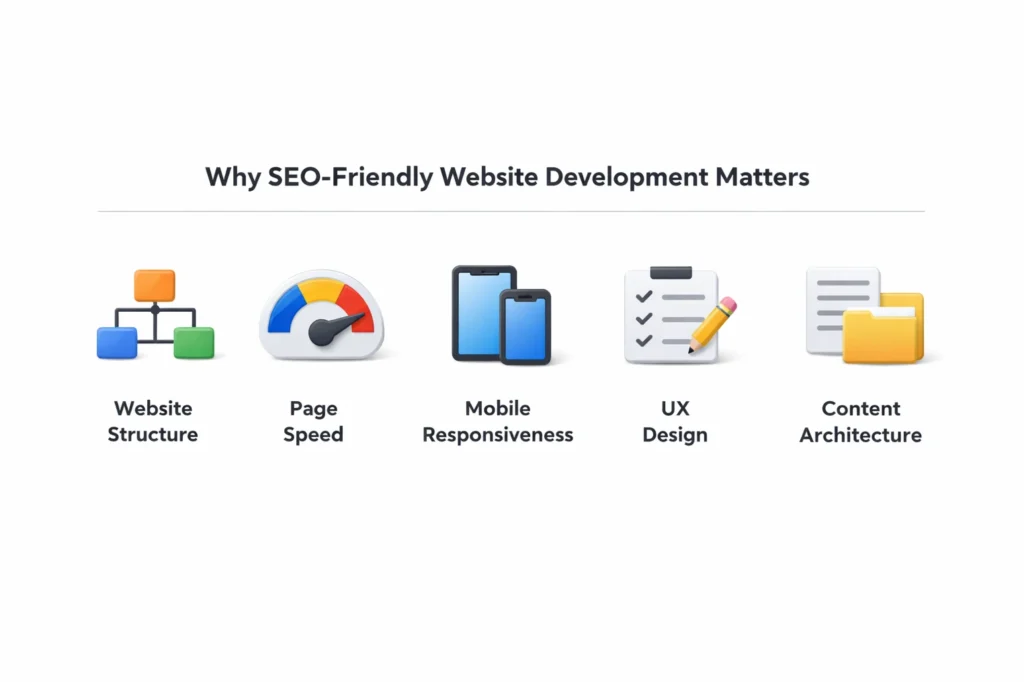
A search engine friendly website focuses on structure, speed, usability, and optimized content architecture. These elements help both search engines and users understand what your website is about and how to navigate it clearly.
Key foundations include logical navigation, mobile compatibility, optimized metadata, and structured internal linking. When implemented correctly, these principles create a strong base for long-term rankings that compound over time.
Businesses planning scalable platforms often explore custom website development solutions to ensure flexibility and technical performance from the beginning, rather than retrofitting SEO requirements after launch.
Core Elements of SEO Friendly Website Development
- Clean navigation hierarchy
- Optimized page structure with H1 to H3 tags
- Structured internal linking
- Image optimization with alt text
- Proper technical configuration
Understanding the website development process early helps prevent SEO problems that are costly and difficult to fix later.
Build a Search Engine Friendly Website Structure Using SEO-Friendly Website Development Tips
Search engines rely on clear architecture to crawl pages efficiently. Poor structure often leads to indexing problems and reduced visibility across organic search results.
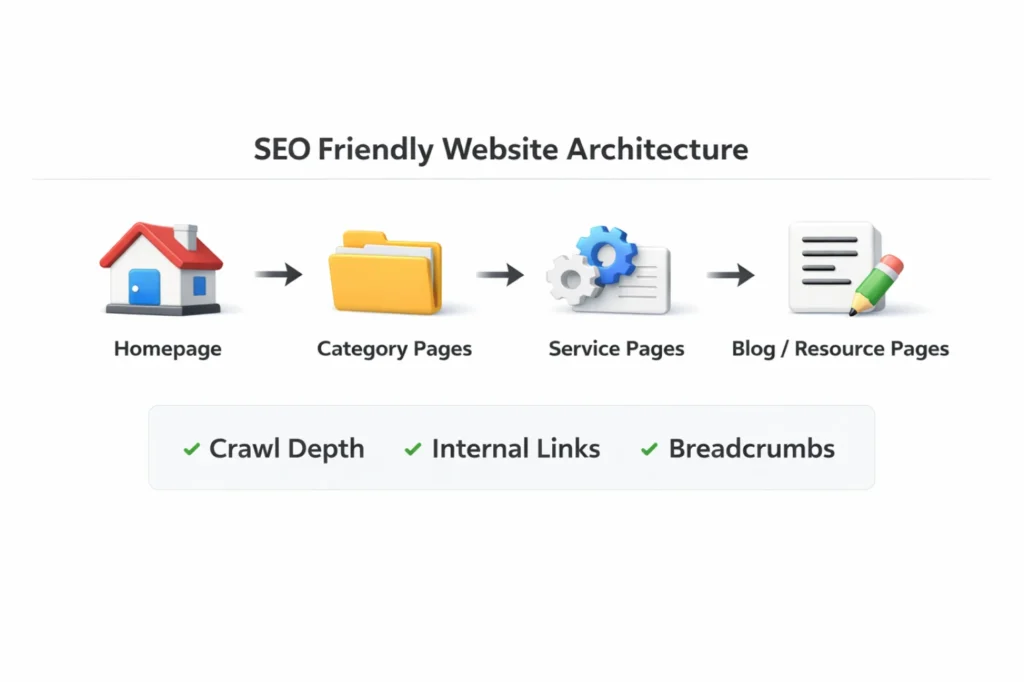
One of the most important SEO-friendly website development tips is organizing pages into logical categories with clear navigation paths. When search engine bots visit your site, they follow links from page to page. If those links are scattered or buried too deep, important pages may never get indexed properly.
Companies specializing in web development services typically design hierarchical structures that allow search engines to understand content relationships easily, which directly supports stronger rankings.
Best Practices for Website Architecture
- Create a simple navigation hierarchy
- Limit page depth to three clicks from the homepage
- Use keyword-focused URLs that describe the page content
- Implement breadcrumb navigation for both users and crawlers
A structured approach is common among experienced development teams because it improves both usability and search visibility simultaneously.
Improve Website Loading Speed Using SEO-Friendly Website Development Tips
Site speed has become a critical ranking factor. Slow websites increase bounce rates, reduce conversions, and send negative engagement signals to search engines.
Applying practical SEO-friendly website development tips for performance optimization helps improve both rankings and the overall user experience. Google’s Core Web Vitals measurements now directly factor page loading performance into ranking decisions, making this an area no development team can afford to overlook.
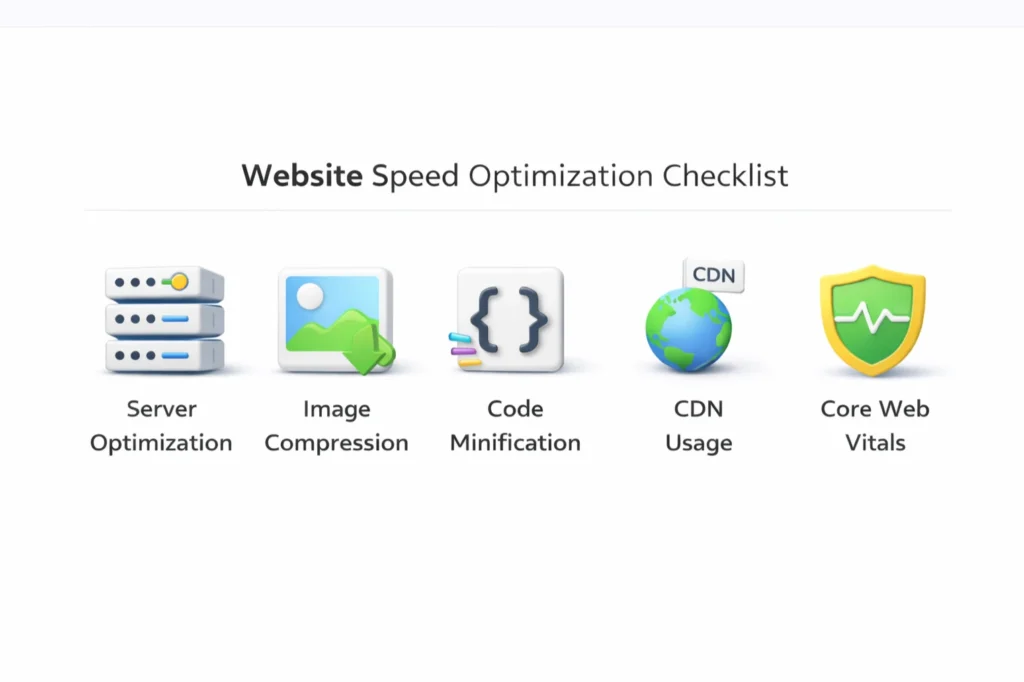
Developers focus on optimizing images, compressing files, and reducing unnecessary scripts to improve website loading speed across all devices and connection types.
Key Techniques to Improve Page Speed
- Image compression and lazy loading
- Code minification for CSS, JavaScript, and HTML
- CDN (Content Delivery Network) implementation
- Server response time optimization
Modern development teams rely on advanced web development tools and scalable web development frameworks to maintain consistent performance across devices. Testing tools like Google PageSpeed Insights and GTmetrix can help identify specific bottlenecks before they affect rankings.
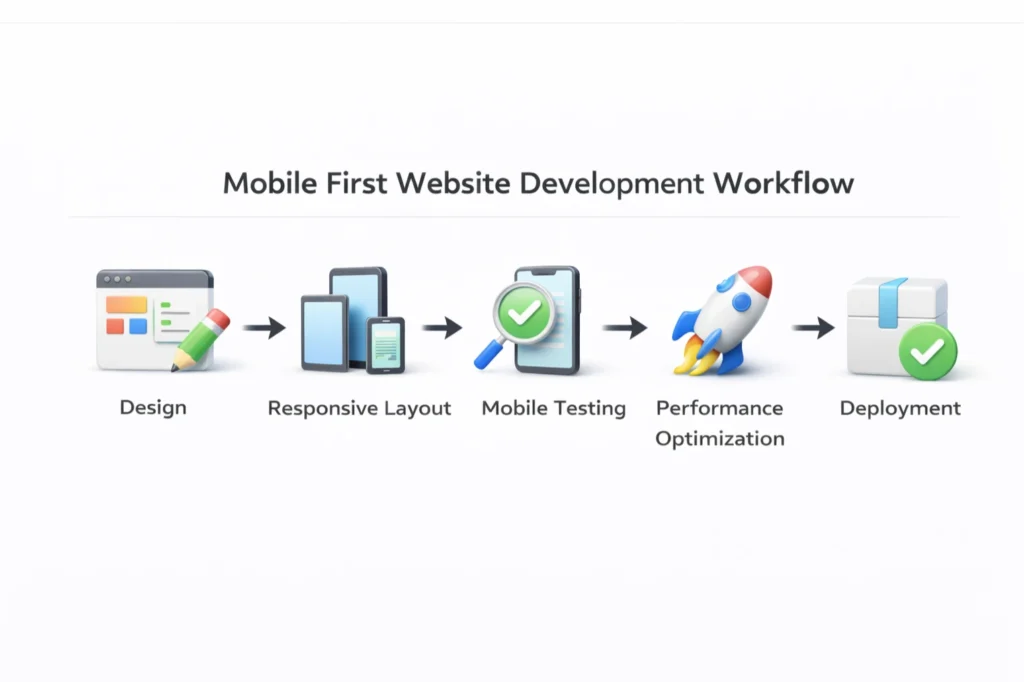
Responsive and Mobile-First Website Development
Google now prioritizes mobile indexing, meaning the mobile version of your website determines how it ranks in search results. This shift has made responsive design a non-negotiable part of any serious development strategy.
One of the most important SEO-friendly website development tips is ensuring responsive design adapts seamlessly across all screen sizes. Businesses investing in responsive website development typically experience higher engagement rates, lower bounce rates, and stronger overall rankings.
Mobile Optimization Best Practices
- Mobile-friendly navigation with accessible menus
- Adaptive layouts that adjust to different screen sizes
- Touch-friendly interface design for buttons and forms
- Optimized images and fonts for smaller displays
Teams offering user experience design services often collaborate closely with developers to ensure mobile usability standards are consistently maintained throughout the build process.
Optimize UI UX Design for SEO Performance and Engagement
User experience plays a direct role in SEO performance. Websites that are easy to navigate keep visitors engaged longer, which sends positive behavioral signals to search engines and contributes to better rankings over time.
Practical SEO-friendly website development tips often include improving layout clarity, navigation simplicity, and content readability. These improvements directly reduce bounce rates and increase the time users spend exploring your content.
Businesses implementing strong UI UX design principles typically see improved session duration, higher conversion rates, and more returning visitors.
UI UX Factors That Influence SEO
- Clear navigation flow that guides users intuitively
- Scannable content layout with visual spacing
- Visual hierarchy that directs attention to key information
- Fast interactive response to user actions
Adopting modern website UI UX practices and thoughtful custom website design creates intuitive experiences that encourage meaningful user interaction rather than passive scrolling.
Create SEO Optimized Website Content Structure With These SEO-Friendly Website Development Tips
Content organization plays a major role in how discoverable your pages become. Search engines analyze headings, internal links, and page hierarchy to determine topic relevance and decide which pages should rank for specific queries.
Following structured SEO-friendly website development tips allows businesses to present information in a way that both users and search engines can easily process and understand. Content that is logically organized around clear topics tends to rank more consistently than content scattered across poorly structured pages.
Companies building scalable platforms often combine custom web application development with structured content architecture to support both growth and discoverability.
Content Optimization Essentials
- Keyword-optimized headings at each structural level
- Semantic content hierarchy that groups related topics
- Image alt text optimization for accessibility and search
- Internal linking strategy that connects related pages meaningfully
These practices are widely used by organizations recognized among top web development firms because they deliver measurable improvements in both search visibility and user engagement.
SEO Considerations for Different Website Types
Different business models require different development approaches. Applying the right SEO-friendly website development tips ensures the website structure aligns with the organization’s specific goals and audience needs.
Website Types and SEO Focus
Business website development
Focus on service pages, local SEO signals, and lead generation flows that convert visitors into inquiries.
Corporate website development
Prioritize authority building, brand visibility, and structured information architecture that supports large content volumes.
Ecommerce website development
Requires optimized product pages, schema markup for rich results, and fast checkout experiences that reduce cart abandonment.
Many businesses implement significant improvements through website redesign projects when SEO performance has plateaued or technical debt has accumulated over time.
Common Website Development Mistakes That Affect SEO Rankings
Many websites fail to rank because SEO considerations were ignored during the development phase. Understanding these common errors is an important part of applying effective SEO-friendly website development tips before problems become entrenched.
Common issues include poor navigation structures, slow page performance, lack of mobile compatibility, missing metadata, and broken internal linking. These problems often compound quietly over time, steadily eroding organic traffic without obvious warning signs.
Common website development mistakes related to SEO are well-documented, and most can be avoided with proper planning. Developers often rely on the best tools for responsive web design and technical SEO auditing to identify and address these issues systematically during both development and ongoing maintenance.
Build Smarter, Rank Higher
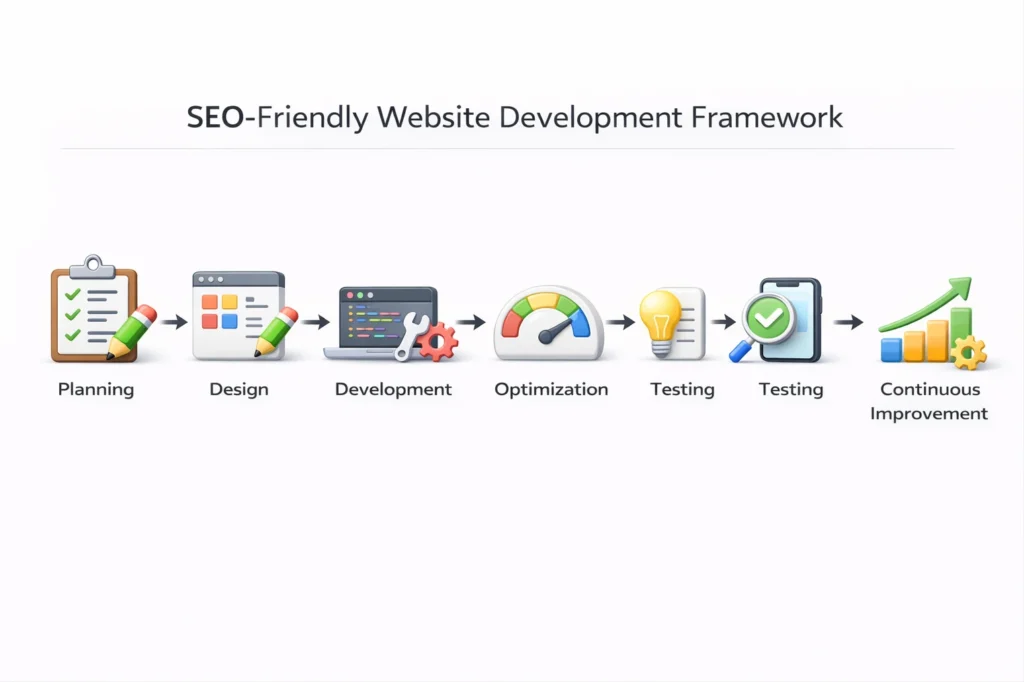
A successful website requires more than attractive design. Technical structure, performance optimization, and user experience all influence search visibility in ways that content alone cannot compensate for.
Implementing practical SEO-friendly website development tips helps businesses build websites that rank well, load quickly, and provide meaningful experiences that keep visitors returning. The investment made at the development stage pays dividends across every future content and marketing effort built on top of it.
Organizations planning long-term growth benefit from reviewing their development strategy regularly, ensuring the website continues supporting both marketing goals and evolving search engine requirements as the digital landscape shifts.

Choosing the Right Website Platform and Development Partner
Selecting the right technology stack and development team significantly impacts SEO performance from day one. A platform that limits technical flexibility can prevent important optimizations, while an inexperienced development team may overlook SEO requirements entirely during the build phase.
Many businesses researching SEO-friendly website development tips eventually evaluate partners based on expertise, scalability, and long-term technical support capabilities. The platform you choose determines how easily you can implement structured data, optimize page speed, and manage technical SEO configurations.
Decision-makers often review guides on how to choose a website development company before selecting a partner, and frequently compare agencies listed among the best website development companies to evaluate technical capabilities and support commitments.
Frequently Asked Questions About SEO-Friendly Website Development Tips
1. What is an SEO friendly website structure?
An SEO friendly structure organizes pages in a logical hierarchy with clear navigation, optimized URLs, and proper internal linking so search engines can crawl and understand the website easily.
2. How can I build an SEO friendly website?
Start with responsive design, optimize page speed, structure headings properly, and ensure the website architecture is easy to navigate. These SEO-friendly website development tips improve both search visibility and usability when applied consistently from the start.
3. Why is mobile responsiveness important for SEO?
Search engines use mobile-first indexing, meaning websites that perform well on mobile devices rank higher and provide better user engagement metrics across the board.
4. How does website speed affect SEO rankings?
Faster websites reduce bounce rates and improve user satisfaction. Search engines treat loading speed as an important ranking signal, particularly through Core Web Vitals measurements.
5. When should I consider a website redesign for SEO?
A redesign makes sense when your current website has accumulated significant technical debt, performs poorly on mobile devices, or consistently underperforms in organic search despite strong content efforts.