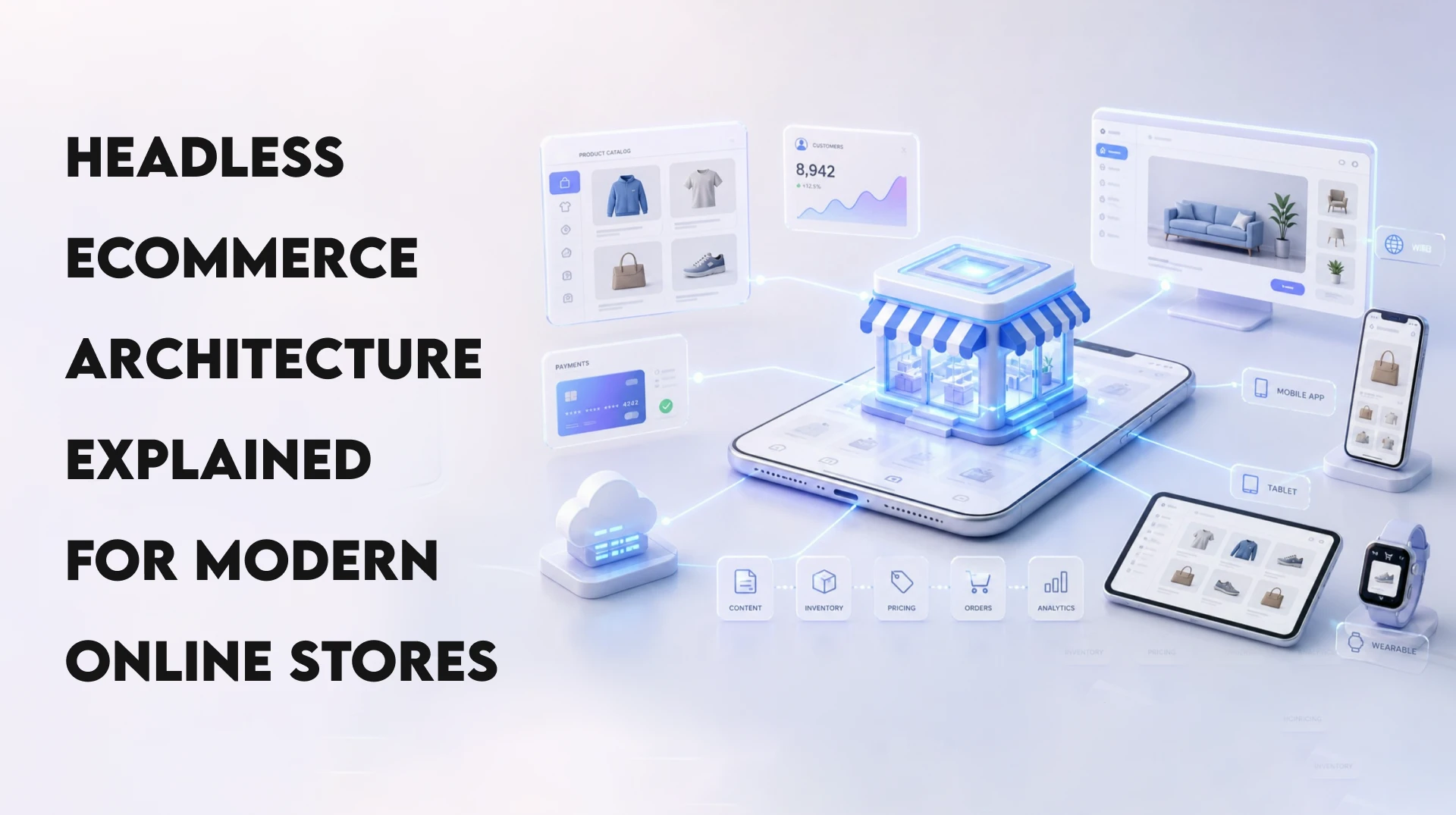
Dealing with slow storefront updates and poor flexibility in traditional platforms is a common struggle for growing brands. As businesses attempt to scale across mobile apps, web channels, marketplaces, and custom digital experiences, monolithic setups often become frustrating bottlenecks. Getting headless ecommerce architecture explained properly is the first step toward understanding why so many companies are migrating to decoupled systems.
Brands are increasingly exploring decoupled architectures to gain control over their customer journeys and backend operations. By separating the frontend presentation layer from the backend commerce engine, businesses can innovate faster without risking system stability.
If your team is evaluating a major digital transformation, understanding how these systems communicate and scale is critical. Throughout this guide, we will outline the core components, costs, and strategic benefits that shape our approach to modern commerce.
What Is Headless Ecommerce Architecture and Why Does It Matter?
Understanding this technological shift requires looking at how systems communicate and deliver content to users.
The Simple Meaning of Headless Commerce
Headless commerce fundamentally means separating the frontend storefront from the backend commerce engine. Unlike traditional models where everything is tightly bound together, a headless setup uses API-first communication to transfer data. This decoupling allows developers to update the user interface without altering the underlying database or checkout logic.
Why Modern Ecommerce Teams Are Reconsidering Monolithic Platforms
Legacy platforms often impose strict design limitations that hinder creative brand expression. They suffer from slow release cycles, meaning marketing teams must wait weeks for IT to deploy simple changes. This rigidity makes creating custom buying journeys incredibly difficult. For teams looking at modern ecommerce website development, finding a reliable website development company that understands decoupled frameworks is often the best path forward.
Headless Ecommerce Architecture Explained Through Core Components
To grasp how this architecture functions, you need to look at the distinct layers that make up the ecosystem.
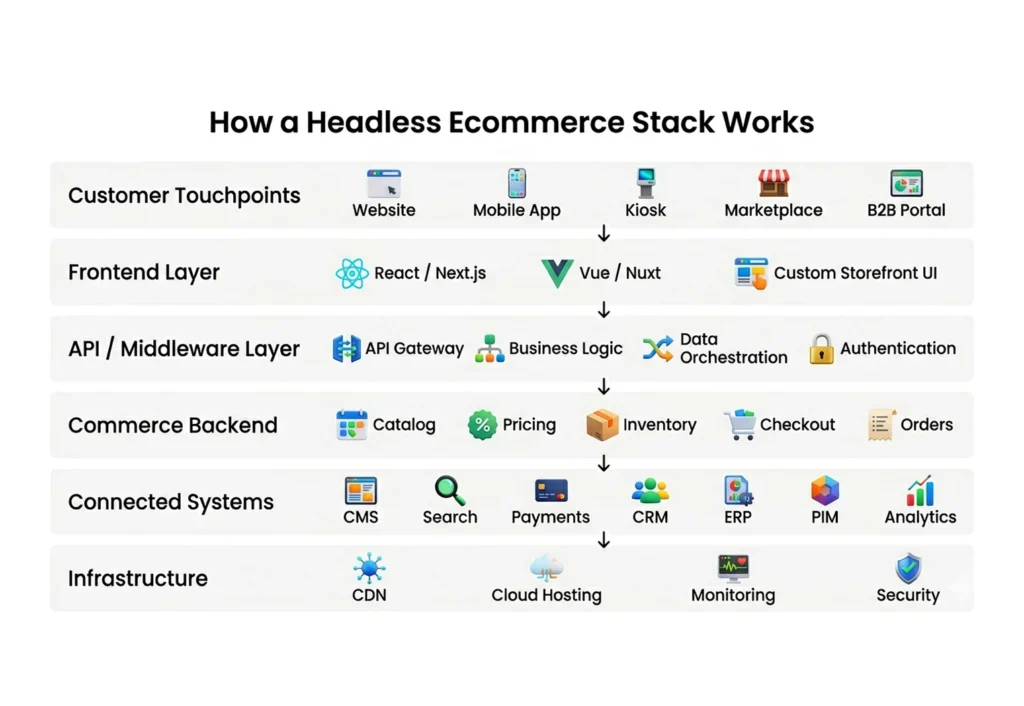
Frontend Layer, Commerce Engine, APIs, and CMS
The architecture relies on several interconnected pieces. The frontend frameworks dictate what the user sees, while the commerce backend handles transactions, inventory, and pricing. Middleware or API orchestration layers connect these two sides. Additionally, a headless CMS manages content, working alongside specialized systems for search, payments, checkout, order management (OMS), and product information management (PIM).
How Data Flows Between Customer Touchpoints and Backend Systems
When a customer interacts with your storefront, the frontend sends product data requests via APIs to the backend. Checkout events trigger real-time updates across the ecosystem, ensuring accurate inventory sync. This multi-channel delivery model ensures a seamless experience across all devices. Teams specializing in custom web application development often leverage advanced web development frameworks to ensure this data flow remains rapid and secure.
Traditional Ecommerce vs Headless Commerce: What Changes in Real Projects?
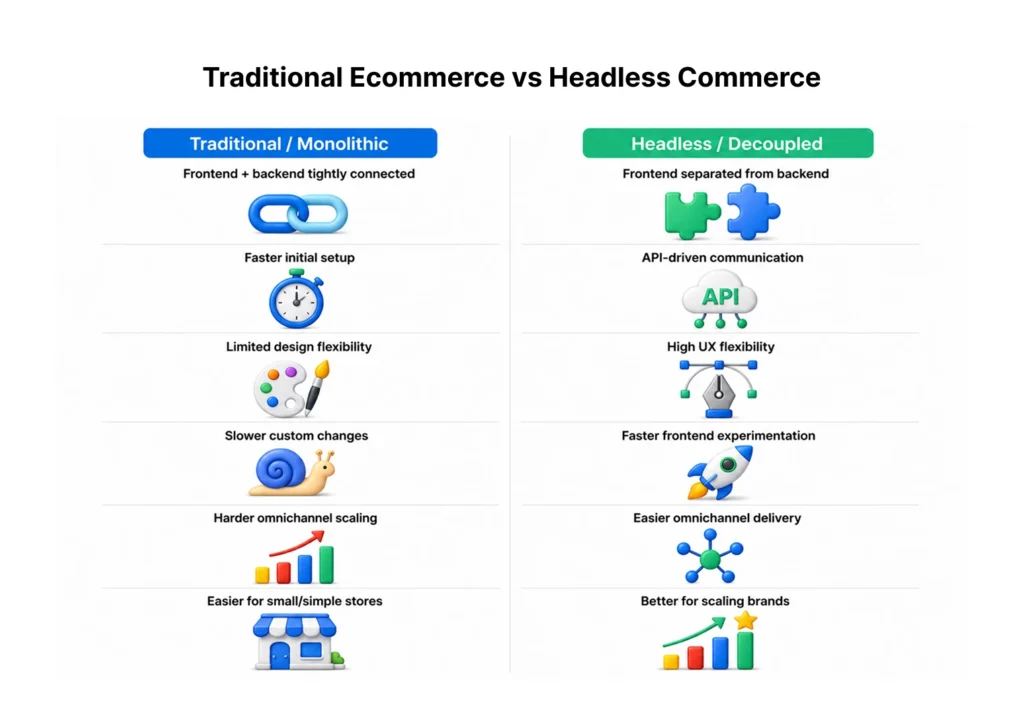
Comparing these two approaches helps clarify which model suits a specific business phase.
Where Traditional Platforms Work Well
Monolithic platforms are excellent for businesses needing a faster launch with lower initial complexity. They provide all-in-one solutions that are generally good for simpler catalogs and straightforward operational needs.
Where Headless Architecture Creates More Control
A decoupled approach offers significantly better UX flexibility and allows for faster experimentation with new features. It simplifies channel expansion, letting brands sell through smartwatches, voice assistants, or kiosks. Furthermore, it provides better integration freedom for third-party tools. Understanding this dynamic is crucial during custom website development to ensure the website development process aligns with long-term goals.
Key Benefits of Headless Ecommerce Architecture Explained for Growing Brands
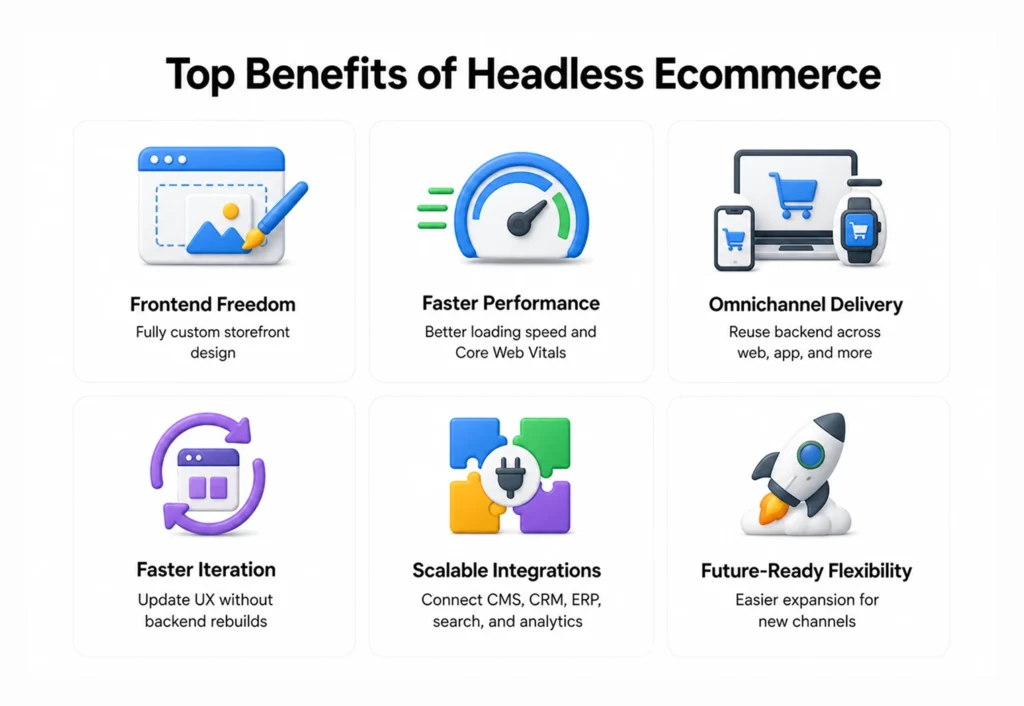
Adopting a decoupled strategy delivers distinct business advantages that directly impact revenue.
Better Frontend Freedom and Faster User Experience
Marketing and design teams gain complete custom UI/UX capabilities without backend constraints. This leads to performance optimization and highly conversion-focused storefronts. The positive impact on website loading speed is significant, which is why investing in Responsive website development and expert custom website design yields higher engagement rates.
Omnichannel Commerce Without Rebuilding the Backend
Because the backend logic is reusable, brands can easily support web, mobile apps, kiosks, B2B portals, and marketplace integrations. You manage the core data in one place and distribute it everywhere seamlessly.
Common Challenges and Trade-Offs Before Going Headless
Despite the benefits, this architectural shift is not without its hurdles.
Higher Initial Build Cost and Technical Complexity
Because there are more moving parts, projects demand meticulous planning and extensive vendor coordination. Your organization will require dedicated dev resource needs to manage the build effectively.
Maintenance, Governance, and Integration Risks
Decoupled systems create heavy API dependency. Teams must actively manage security, system monitoring, and API versioning. Content workflow complexity can also increase. When leaders ask How much does a custom website cost or calculate the exact Cost to develop a website, they must factor in these ongoing governance requirements.
Best Tech Stack Options for a Headless Ecommerce Build
Selecting the right technology dictates the long-term viability of your platform.
Frontend Framework Choices for Performance and Flexibility
Developers frequently choose React or Next.js, alongside Vue or Nuxt, to build lightning-fast interfaces. Teams must decide between Server-Side Rendering (SSR), Static Site Generation (SSG), or hybrid rendering to balance speed and dynamic content needs.
Backend and Infrastructure Decisions That Affect Scale
Your tech stack requires a robust commerce engine and a scalable headless CMS. You must also select a dedicated search layer, a reliable CDN, secure cloud hosting, and an API gateway. Evaluating options like React vs wordpress for business website setups or exploring Cloud based website hosting helps determine the best foundation for scale.
Is Headless Ecommerce Better for SEO and Performance?
Having headless ecommerce architecture explained strictly through a technical lens misses a massive marketing benefit: search visibility.
How Rendering Strategy Affects Crawlability
Search engines evaluate sites based on how easily they can read the content. SSR and static generation ensure crawlers see fully rendered pages immediately. Proper metadata handling and structured data integration become much easier when developers have full control over the markup.
Why Page Speed and Architecture Both Matter
Google’s Core Web Vitals directly influence rankings. Decoupled builds excel at asset delivery and aggressive caching, preventing API bottlenecks from slowing down the user experience. Utilizing the best tools for responsive web design ensures you stay ahead of current website development trends regarding performance.
When Should a Business Choose Headless Ecommerce Architecture?
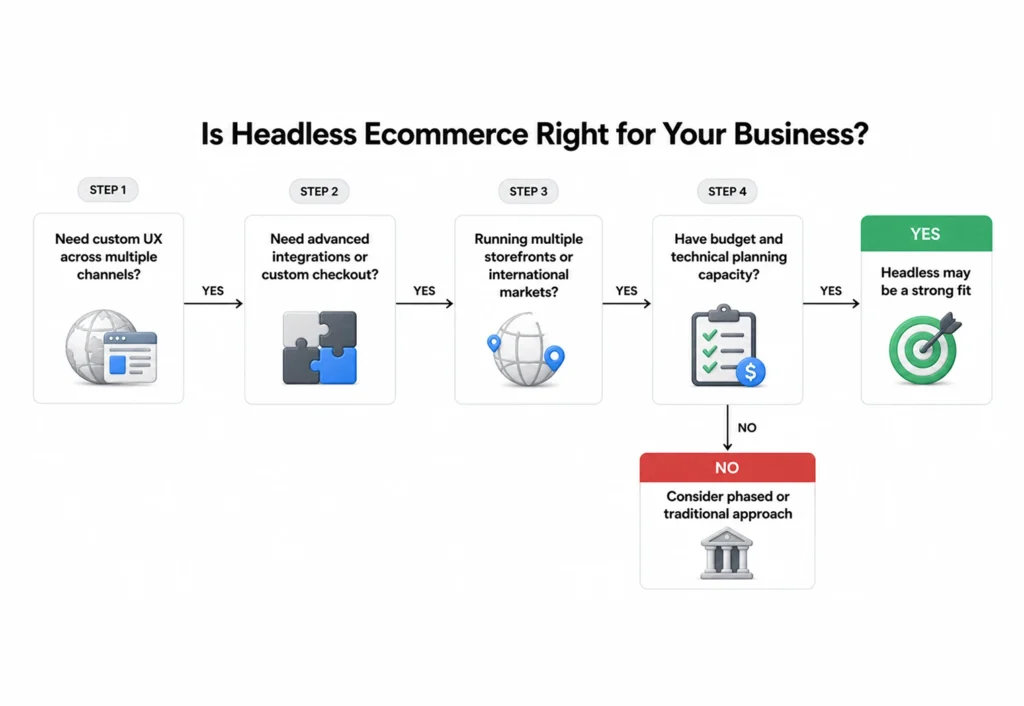
Not every business needs a decoupled system immediately.
Good Fit Scenarios
This architecture shines for multi-storefront brands, businesses with custom checkout requirements, and companies focused on internationalization. It is highly effective for content-heavy commerce and complex B2B + B2C hybrid models.
When a Simpler Ecommerce Setup May Be Smarter
If your company has a small catalog, a tight budget, or needs a fast MVP launch, a traditional platform is usually better. Low customization needs rarely justify the complexity of decoupled systems. This applies heavily to standard Business website development or a basic website redesign.
Cost Considerations: Headless Ecommerce Architecture Explained
Financial planning for a decoupled project requires looking beyond the initial software licenses.
What Drives Headless Commerce Project Costs
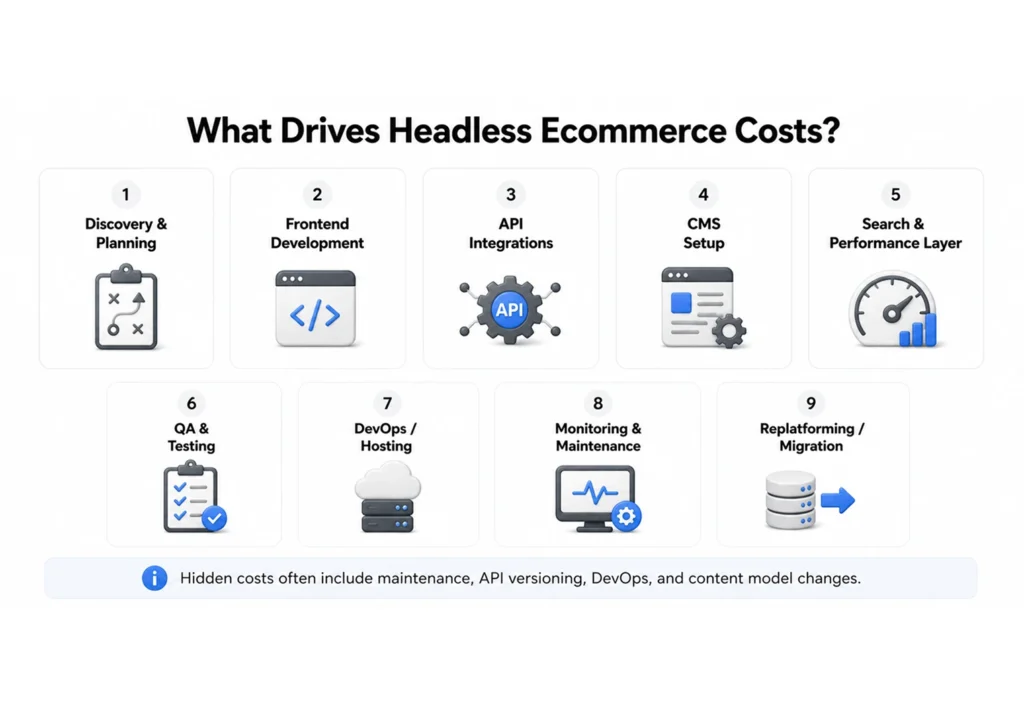
The bulk of the investment goes into the frontend custom build and complex API integrations. You must also budget for CMS setup, dedicated search implementation, infrastructure scaling, rigorous QA, and advanced analytics tracking.
Hidden Costs Teams Often Miss
Many teams fail to account for ongoing maintenance, dedicated DevOps, and continuous monitoring. Replatforming and content model migration also consume significant resources. Reviewing a detailed Ecommerce Website Cost Breakdown from providers offering ecommerce website development services helps prevent budget blowouts.
How to Plan a Headless Ecommerce Implementation Without Overbuilding
Strategic planning prevents companies from purchasing technology they do not actually need.
Start With Business Goals, Not Just Tech Preferences
Base your decisions on concrete conversion goals and clear UX blockers. Map out your channel roadmap and identify existing ops dependencies before writing a single line of code.
Build in Phases to Reduce Risk
Begin with a thorough discovery phase and define a strict MVP scope. Conduct an API audit, launch a pilot storefront, and execute an incremental rollout. Engaging specialized web development services in chennai, a reputable web development company in chennai, or a seasoned web development agency in chennai can provide the necessary guidance for phased deployments.
Final Thoughts on Headless Ecommerce Architecture Explained
Decoupled systems solve major flexibility and performance issues for scaling brands, but they are not universally the right fit. We highly encourage conducting a thorough architecture audit before finalizing your platform selection. If you need strategic guidance on navigating these technical decisions, partnering with an experienced ecommerce website development company in India, such as a specialized ecommerce website development company in Chennai, ensures your investment aligns with your growth targets.
Frequently Asked Questions About Headless Ecommerce Architecture
1. What is headless ecommerce architecture in simple terms?
Headless ecommerce architecture separates the storefront from the backend commerce engine, allowing both to work independently through APIs.
2. Is headless commerce better than traditional ecommerce?
It can be better for businesses that need flexibility, speed, omnichannel delivery, or complex integrations. For simpler stores, traditional platforms may still be more practical.
3. Does headless ecommerce improve SEO?
It can improve SEO if implemented correctly with proper rendering, structured data, metadata handling, and strong performance optimization.
4. Is headless ecommerce more expensive?
Usually yes at the start. It often requires custom frontend work, integrations, and infrastructure planning, which raises upfront cost.
5. Which businesses should consider headless ecommerce?
Fast-growing brands, multi-channel sellers, B2B/B2C hybrid stores, and businesses with advanced UX or integration requirements.
6. What are the biggest risks of going headless?
Higher implementation complexity, longer planning cycles, API dependency, governance challenges, and increased maintenance requirements.