Key Takeaways
- Fleet Management Software Development Cost typically ranges from $20,000 for an MVP to over $250,000 for enterprise-grade solutions.
- Feature complexity, integrations, and deployment requirements are the biggest factors influencing project budgets.
- Development team location can significantly impact costs, with offshore rates often lower than US-based development teams.
- Custom fleet management software offers greater flexibility and ownership but requires ongoing maintenance investment.
- Businesses should evaluate both upfront development costs and long-term operational expenses before choosing between custom software and SaaS platforms.
Managing a fleet with spreadsheets, disconnected tracking tools, and manual reporting often creates operational bottlenecks. As fleets grow, businesses need centralized systems that improve visibility, maintenance planning, driver management, and route execution.
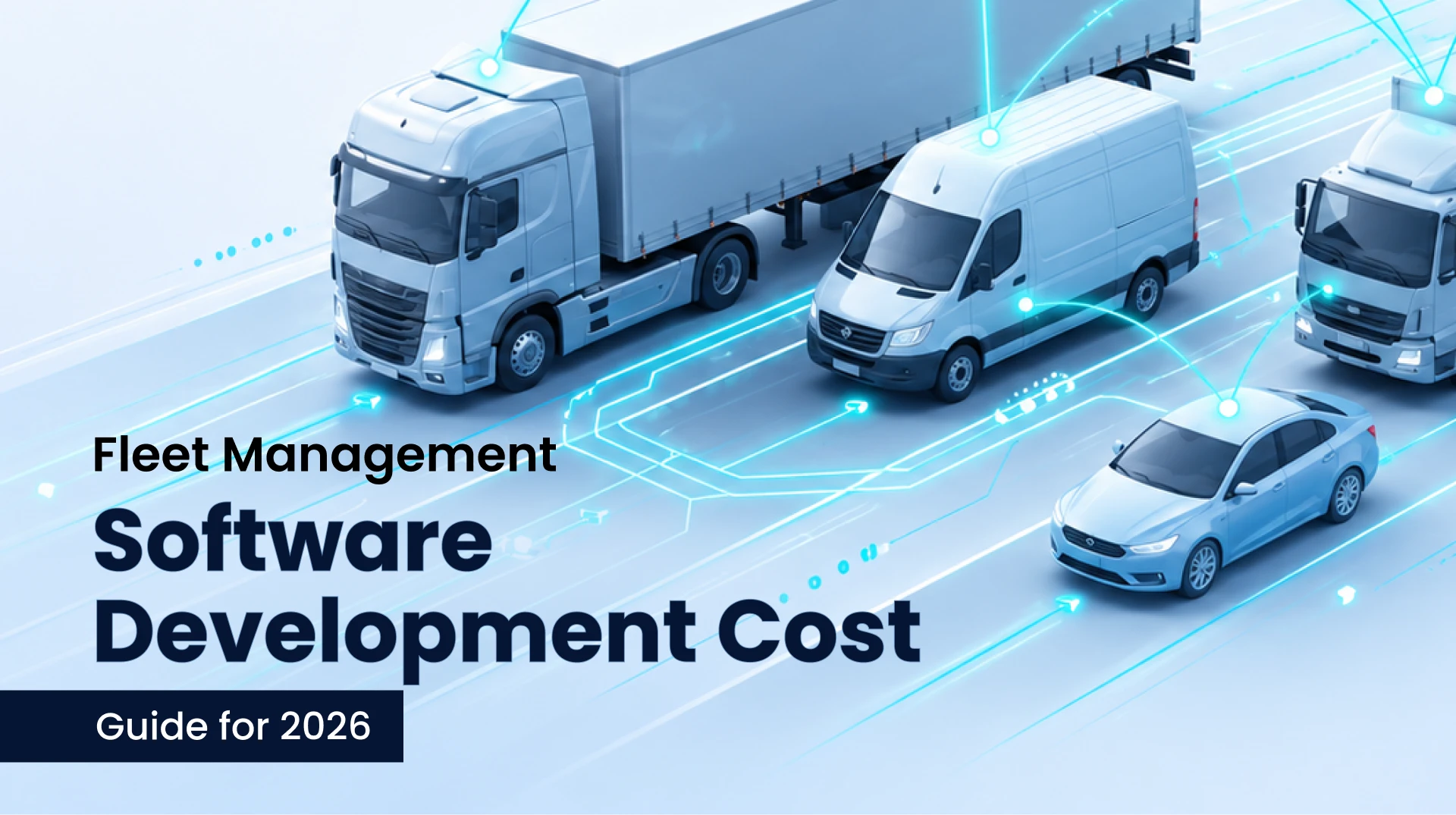
Understanding fleet management software development cost is essential before investing in a custom solution. Development budgets can vary significantly depending on feature requirements, integrations, deployment model, and long-term scalability goals.
Organizations evaluating custom software often weigh upfront development expenses against recurring subscription fees. During this evaluation, many companies rely on our development process to assess technical requirements, business objectives, and future growth plans before defining a realistic budget. This guide breaks down every cost factor so you can plan with confidence.
What Is Fleet Management Software and Why Do Businesses Build It?
What is the core purpose of a fleet management platform?
Fleet management software helps organizations monitor vehicles, drivers, fuel consumption, maintenance schedules, compliance requirements, and operational performance from a single centralized dashboard.
Common users include:
- Logistics providers
- Transportation companies
- Delivery businesses
- Construction fleets
- Field service organizations
- Manufacturing companies
Businesses seeking deeper operational visibility often combine fleet solutions with insights from logistics tracking software features to create end-to-end transportation monitoring capabilities.
When does custom fleet software development make sense?
Custom development becomes valuable when businesses:
- Operate unique workflows
- Need specialized compliance requirements
- Require ownership of operational data
- Want custom reporting structures
- Need integrations with internal systems
Companies already investing in custom web application development often prefer custom fleet platforms because they align more closely with existing business processes. Off-the-shelf tools rarely match the exact way a complex fleet operates.
Fleet Management Software Development Cost Breakdown
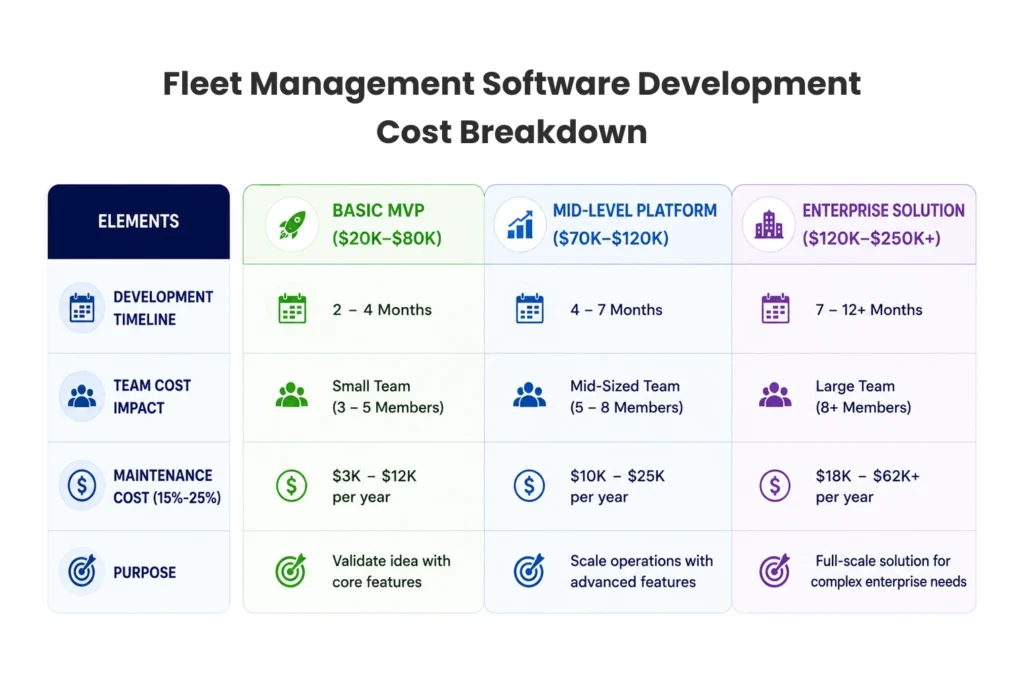
The overall fleet management software development cost depends primarily on project complexity and business requirements. Here’s how the numbers generally break down by scope.
| Software Scope | Estimated Cost Range |
| Basic MVP | $20,000 – $80,000 |
| Mid-Level Platform | $70,000 – $120,000 |
| Enterprise Solution | $120,000 – $250,000+ |
What does a basic fleet management system include?
A basic system typically includes:
- Vehicle registration
- GPS tracking
- Driver profiles
- Route history
- Notifications
- An administrative dashboard
This level suits startups and regional fleet operators who want to validate requirements before expanding functionality. It keeps the initial investment low while proving the value of a centralized system.
Businesses comparing software investments frequently benchmark these estimates against broader app development cost considerations across different industries.
What features do enterprise fleet platforms add?
Enterprise solutions often include:
- Multi-location management
- Advanced analytics
- Predictive maintenance
- Compliance modules
- ERP integrations
- Custom reporting engines
As functionality expands, fleet management software development cost rises due to additional architecture, testing, and integration work. Each new module also adds to long-term maintenance responsibilities.
Key Factors Affecting Fleet Management Software Development Cost
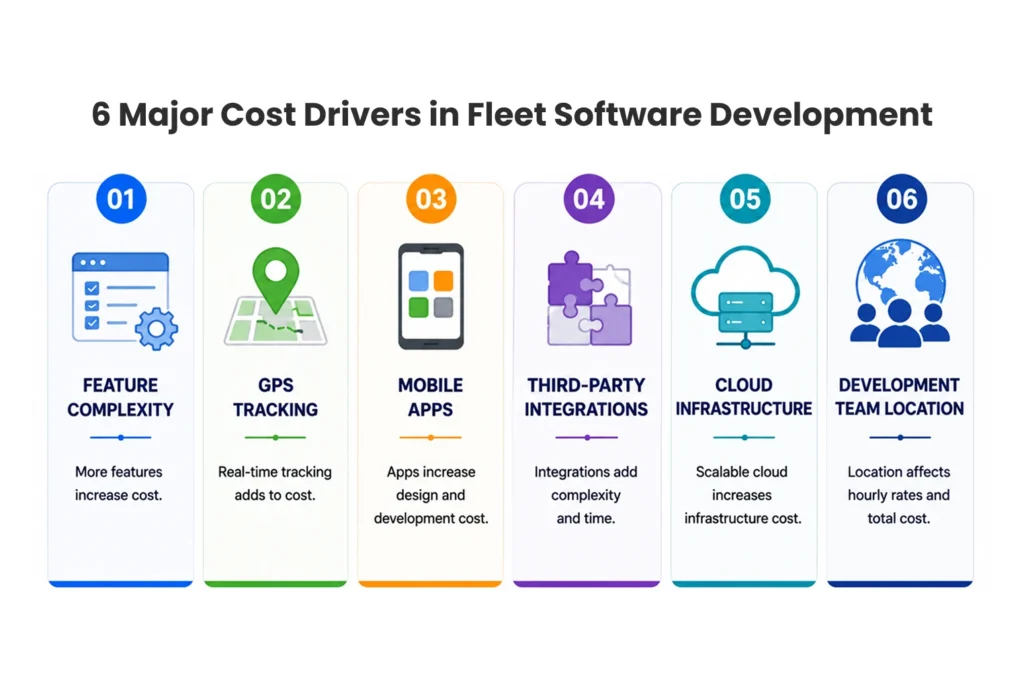
How does feature complexity drive cost?
Feature selection remains one of the largest cost drivers in any fleet project. The more advanced the capability, the more engineering hours it demands.
Examples include:
- Real-time vehicle tracking
- Driver behavior monitoring
- Fuel management
- Route optimization
- Maintenance scheduling
- Dispatch management
Organizations modernizing legacy systems often pair these capabilities with mobile apps digital transformation initiatives to improve workforce productivity in the field.
Integration Costs in Fleet Management Software Development
Many fleets require integrations with:
- ERP systems
- Accounting platforms
- Telematics hardware
- Payment gateways
- Fuel card providers
- Mapping services
Each integration adds development and testing time. Hosting decisions also influence overall expenses. Businesses choosing cloud-based app development typically gain flexibility, scalability, and easier maintenance management—which often lowers total cost of ownership over time.
Feature-Based Cost Estimation
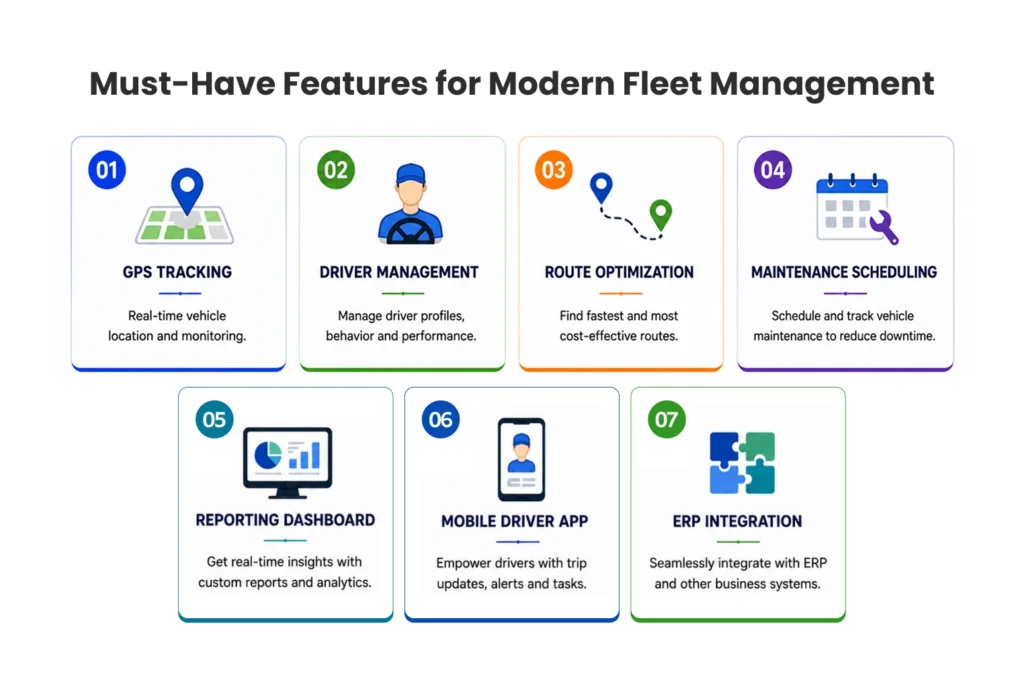
The following estimates show how individual modules contribute to total development expenses. Use them to prioritize features against your budget.
| Feature | Estimated Cost |
| GPS Tracking | $5,000 – $20,000 |
| Driver Management | $5,000 – $15,000 |
| Maintenance Module | $8,000 – $25,000 |
| Route Optimization | $10,000 – $35,000 |
| Reporting Dashboard | $8,000 – $20,000 |
| Mobile Driver App | $15,000 – $40,000 |
| ERP Integration | $10,000 – $50,000+ |
When combined, these modules significantly impact fleet management software development cost, especially for businesses operating across multiple regions.
Companies planning companion mobile experiences often partner with a Mobile App Development Company to ensure seamless communication between web dashboards and driver applications.
Development Team Location and Pricing Impact
How do regional development rates compare?
Developer costs vary considerably across regions, and this single factor can change a budget by a wide margin.
| Region | Hourly Rate |
| United States | $150 – $250 |
| Western Europe | $80 – $180 |
| Eastern Europe | $40 – $100 |
| Asia | $30 – $70 |
Because labor expenses account for a substantial portion of fleet management software development cost, team location can dramatically influence your overall budget.
Should you use an in-house or outsourced team?
In-house teams give you greater operational control, but they require:
- Recruitment costs
- Training expenses
- Infrastructure investment
- Employee benefits
Outsourcing reduces hiring overhead while providing access to specialized expertise. Choose an in-house team if tight daily control matters more than upfront savings. Choose outsourcing if speed and access to niche skills matter more than internal ownership. Businesses building customer-facing fleet portals may also review a Transportation website development company for that part of the project.
Fleet Management Software Development Timeline
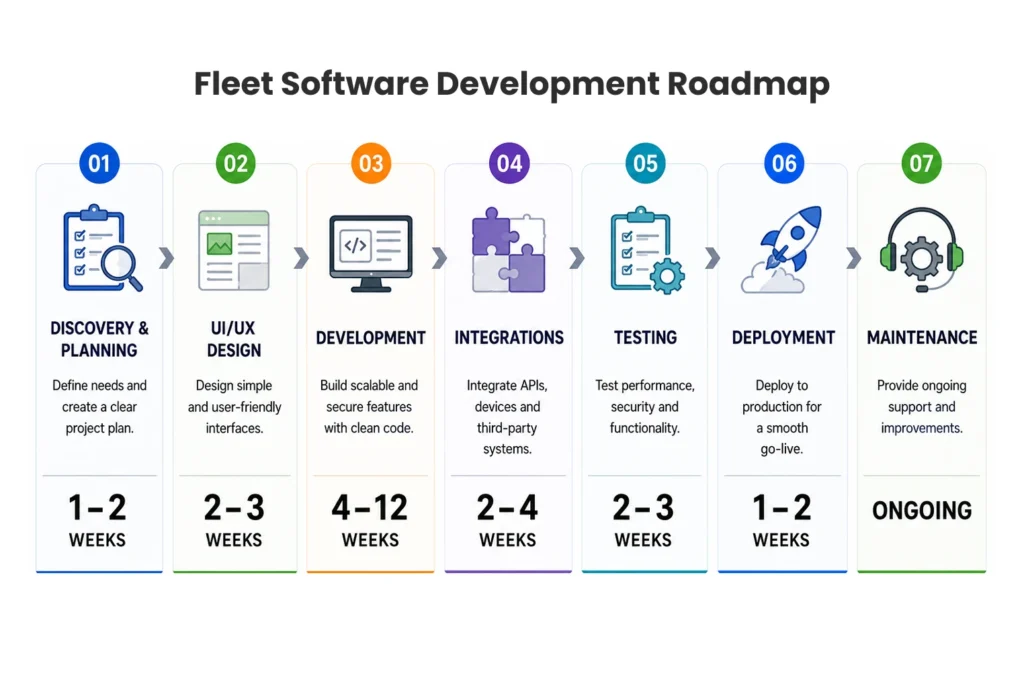
Project timelines generally correlate with complexity. The longer the build, the higher the engineering investment.
| Project Type | Estimated Timeline |
| MVP | 3–4 Months |
| Standard Platform | 4–8 Months |
| Enterprise Solution | 8–12+ Months |
The planning phase plays a major role in delivery success. Understanding the app development lifecycle explained helps stakeholders anticipate milestones, testing cycles, and deployment schedules. Longer timelines typically increase fleet management software development cost due to expanded engineering and quality assurance efforts.
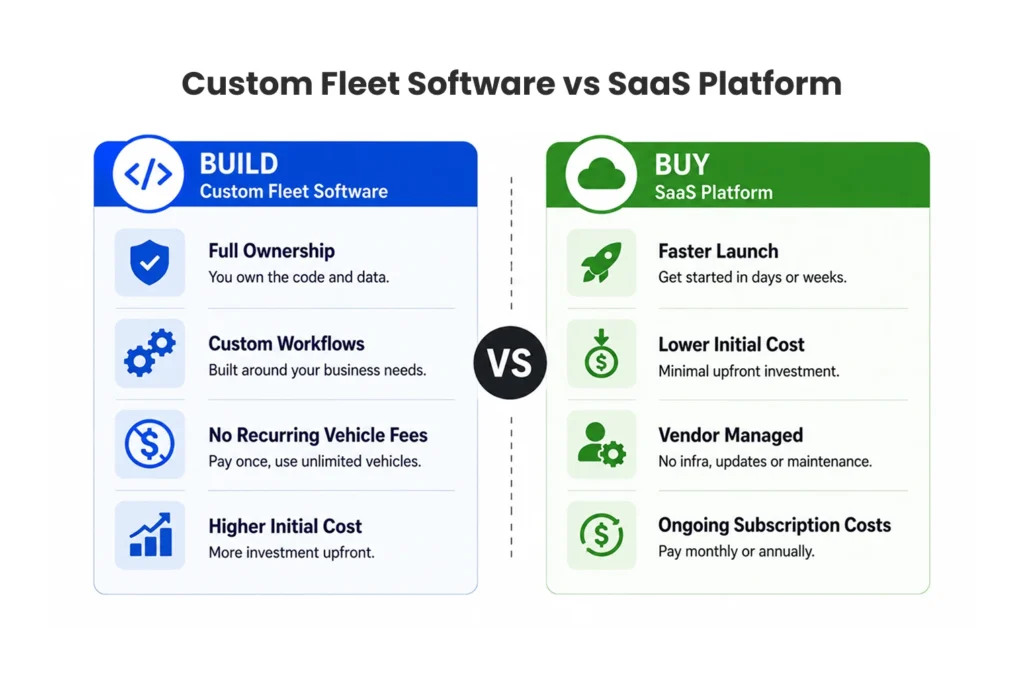
Build vs Buy: Which Option Delivers Better Value?
What are the pros and cons of buying a SaaS platform?
Advantages:
- Faster deployment
- Lower initial investment
- Vendor-handled maintenance
- Predictable subscription costs
Limitations:
- Recurring fees
- Limited customization
- Vendor dependency
- Integration restrictions
What are the pros and cons of building custom software?
Advantages:
- Full ownership
- Workflow customization
- Complete data control
- Long-term scalability
Limitations:
- Higher upfront investment
- Longer implementation timeline
- Ongoing maintenance responsibility
For large fleets, subscription expenses can eventually exceed custom development costs. This is one reason many organizations carefully analyze fleet management software development cost before committing to a long-term SaaS contract. Choose SaaS if you run a smaller fleet and need speed. Choose custom if you have unique workflows, strict compliance needs, or a large vehicle network.
Businesses operating complex logistics networks often compare these investments with supply chain management software development cost evaluations to identify broader digital transformation opportunities.
Technology Stack Commonly Used for Fleet Management Software
The right technology stack balances performance, scalability, and long-term support. Typical choices include:
- Backend: Node.js, Python, .NET
- Frontend: React, Angular
- Mobile Applications: Flutter, React Native
- Cloud Infrastructure: AWS, Microsoft Azure, Google Cloud
Many organizations also integrate operational data from use cases of AI in warehouse management to create more connected logistics ecosystems across transportation and warehousing operations.
Maintenance and Long-Term Ownership Costs
Many organizations focus only on development budgets and overlook post-launch expenses. That oversight can derail a long-term plan.
Annual maintenance generally ranges between 15% and 25% of initial development costs and may include:
- Security updates
- Performance monitoring
- Infrastructure management
- Feature enhancements
- Bug fixes
- Compliance updates
Businesses expanding digital operations often evaluate supporting technologies such as the best cloud automation tools to streamline infrastructure management and operational monitoring. Considering maintenance early creates a more realistic understanding of total fleet management software development cost across the software lifecycle.
Industry Trends Influencing Fleet Software Investments
Fleet operators continue investing in:
- Connected vehicle ecosystems
- Predictive maintenance systems
- Compliance monitoring
- Real-time operational visibility
- Fleet sustainability tracking
Many of these trends overlap with broader industrial modernization efforts discussed in AI in Manufacturing Industry Applications, where operational visibility and asset management remain critical priorities. As businesses expand fleet operations, fleet management software development cost increasingly becomes part of a larger technology investment strategy rather than a standalone software expense.

Making a Smart Investment Decision
Estimating fleet management software development cost requires more than selecting a feature list. Businesses must evaluate development scope, integration requirements, deployment strategy, maintenance obligations, and long-term ownership goals.
For smaller fleets, SaaS platforms may offer a practical starting point. But organizations with complex operations, unique workflows, or large vehicle networks often find that custom development delivers stronger long-term value. A structured cost assessment helps stakeholders make informed investment decisions while building a solution that supports future operational growth.
Start by mapping your must-have features, then match them to a realistic budget and timeline using the ranges above. From there, decide whether building in-house, outsourcing, or buying SaaS best fits your goals.
Frequently Asked Questions
1. How much does fleet management software cost to develop?
A basic solution may cost between $20,000 and $80,000, while enterprise-grade platforms can exceed $250,000 depending on features, integrations, and scalability requirements.
2. How long does it take to build fleet management software?
Most MVP solutions require 3 to 4 months. Enterprise systems typically take 8 to 12 months or longer, based on feature scope and integration needs.
3. What features are essential for an MVP?
Core features include GPS tracking, driver management, route monitoring, notifications, trip logs, and reporting dashboards. These prove value before you expand.
4. Is custom software better than SaaS fleet platforms?
Custom software is often better for organizations with unique workflows, strict compliance requirements, or large fleets where recurring subscription fees become expensive over time. SaaS works well for smaller fleets that need fast deployment.
5. What is the biggest factor affecting development cost?
Feature complexity, integrations, team location, cloud infrastructure, and maintenance requirements have the greatest impact on overall project cost.