
Ever visited a website that looked amazing but felt confusing to use? Or maybe one that worked fine but seemed dull and lifeless? That’s where UI and UX design come into play. These two aspects define how a digital product looks, feels, and functions. A strong UI (User Interface) makes a design visually appealing, while UX (User Experience) ensures that every interaction feels smooth and meaningful.
In the fast changing digital world, businesses are realizing that good design is not just about beauty. It’s about building trust and keeping users engaged from the first click. Whether you run an online store or a service platform, an effective UI and UX design can shape how people think about your brand. A confusing interface can drive them away, but a clear and pleasing design keeps them coming back.
Modern companies now treat design as a business asset, not just a visual layer. With the help of experts from a Top 10 Web Design Company in Chennai, even a small business can craft a digital experience that feels personal and professional.
If you’re new to this field and want to explore more about design ideas, platforms like Adobe XD Ideas offer creative insights that can inspire your next project.
Understanding UI and UX: The Core Difference
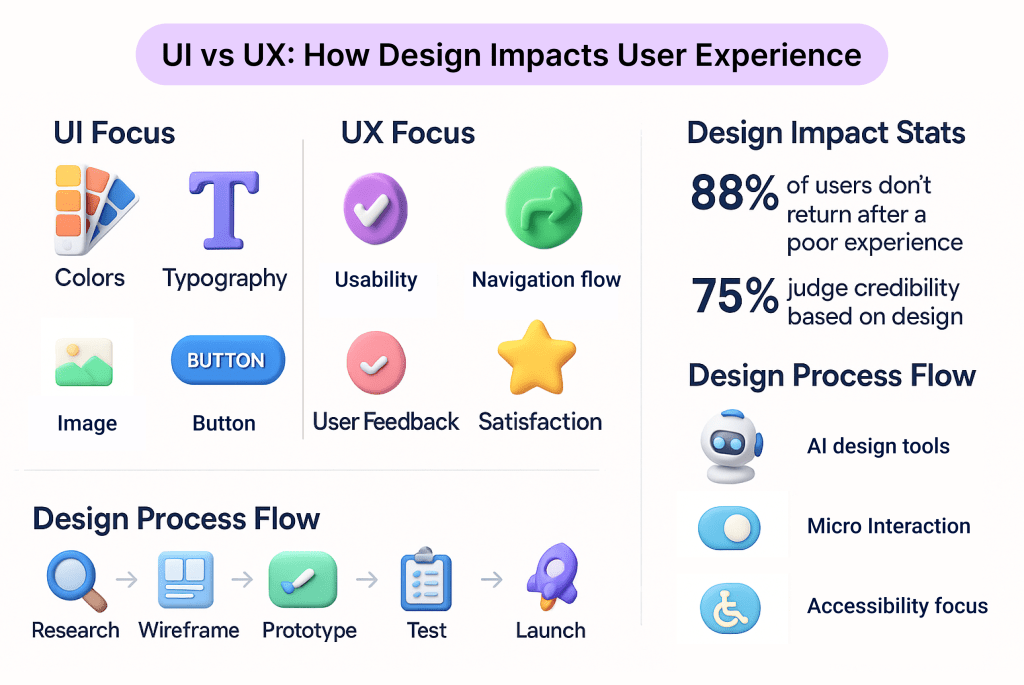
Many people confuse UI and UX design, but they play different roles in creating a digital experience. The UI (User Interface) focuses on how a website or app looks, including the buttons, icons, colors, spacing, and overall layout that guide users visually. In contrast, UX (User Experience) focuses on how users feel while interacting with the interface. It deals with comfort, clarity, and how easy it is for visitors to complete their goals.
You can think of it like visiting a restaurant. The UI is similar to the interior design, where the lighting, tables, and menu style set the mood. Meanwhile, the UX is everything that happens during your dining experience, such as the service, food quality, and overall satisfaction. A great UI attracts people to your product, while a smooth UX keeps them coming back.
The UI and UX design process usually starts with user research, followed by wireframes, prototypes, and testing to ensure a perfect balance between aesthetics and usability. Without that balance, even a stunning interface can frustrate users instead of delighting them.
Designers who stay aligned with the latest Website Development Trends can create digital experiences that feel modern and functional. For those who want to explore more about how design impacts human behavior, Nielsen Norman Group provides valuable studies and resources.
Why Good Design Matters for Modern Businesses
In the digital era, competition is fierce, and users form opinions in just a few seconds. That is why UI and UX design have become essential for every business that wants to succeed online. A beautiful interface is no longer enough, what truly matters is how easily users can navigate, explore, and achieve their goals. A product that is simple to use and pleasant to look at builds instant trust and credibility.
When customers interact with a website that feels natural and flows smoothly, they stay longer and engage more. This directly improves conversions and retention rates. On the other hand, if users face confusing layouts or slow navigation, they often leave within seconds. Every click, scroll, and tap shapes their opinion of your brand.
Many successful companies now focus on UI and UX design from the early stages of development because it directly affects how customers perceive their brand. Partnering with a Top Website Development Company in Chennai helps ensure that each element of design aligns with user behavior, accessibility, and conversion goals.
It is also important to remember that user experience affects performance metrics like Website Loading Speed, accessibility, and responsiveness. All of these factors work together to define how people experience your digital presence. For designers looking to explore professional insights, Smashing Magazine is a reliable place to learn and stay updated with expert advice.
Stages That Shape an Effective Design Process
Before starting any project, it is vital to know how to choose a website development company that understands both aesthetics and usability. A skilled team will blend design strategy with technical execution, ensuring your UI and UX deliver measurable results.
A well planned UI and UX design process helps turn ideas into smooth and interactive digital experiences. Each stage adds value, and skipping one often leads to weak or confusing results. Understanding how the process works makes it easier to see why good design takes time and thoughtful effort.
The first step begins with user research. Designers collect information about the audience, their habits, pain points, and expectations. This stage ensures that every design choice connects with real user needs rather than assumptions. Next comes wireframing and prototyping, which build the foundation of the layout and navigation. It is like creating a digital skeleton before adding colors and visual details.
After that, designers move into the visual design stage, where color palettes, typography, icons, and spacing come together to form a cohesive look. Testing follows soon after, which is a crucial part of the Website Development Process. User testing reveals what works and what confuses users, allowing the team to refine and improve before launch.
The process continues with iteration and feedback. A strong UI and UX design never stops evolving because user behavior keeps changing. Businesses that review and improve regularly stay ahead of the competition. This method not only enhances visual appeal but also ensures that the design aligns perfectly with both user goals and business objectives.
How Good UI and UX Design Improve User Engagement
Every business wants visitors to stay longer, explore deeper, and eventually convert into loyal customers. That goal starts with an engaging UI and UX design. When users land on a site that feels smooth, welcoming, and easy to use, they are more likely to interact with its content. A thoughtful design guides them step by step, keeping frustration out of the way.
A solid UI and UX design helps build emotional connections between users and digital products. For example, clear navigation, quick loading times, and responsive layouts give users confidence to continue. Even small design choices, such as button color or animation timing, can shape how enjoyable an experience feels.
When users enjoy the interaction, they return more often and share it with others. This simple pattern increases brand visibility and long term loyalty. Businesses that care about user experience often notice higher retention rates and better conversion outcomes.
Moreover, a good design ensures that engagement feels natural rather than forced. It allows users to complete actions without distractions or confusion. The same principle applies when building mobile products, where space is limited and clarity matters even more. Collaborating with an experienced Mobile App Development Company can help apply the same design logic across devices to maintain consistent experiences everywhere.
The relationship between engagement and design is simple: users stay where they feel comfortable. By focusing on meaningful interaction instead of just looks, brands can create trust that grows over time.
Key Elements That Make a Great UI and UX Design
A successful UI and UX design is never built by accident. It combines creativity, strategy, and user understanding. Each element, no matter how small, plays a role in making the overall experience smooth and visually appealing. When these components work together, users feel confident exploring your website or app.
One of the key factors in effective design is visual hierarchy. It helps users understand which elements are important and where to focus their attention. Typography is another vital aspect that shapes readability and tone. Fonts must be consistent, clean, and easy to read across all screen sizes.
Color selection also influences how people feel while using a product. Bright colors can create energy and excitement, while soft tones bring comfort and calmness. Accessibility is another important part of UI and UX design, ensuring every user can interact with the product easily, including those with visual or motor challenges.
Responsiveness is also critical. Since users switch between desktops, tablets, and phones, your design must adapt smoothly to every screen. Designers today rely on advanced Web Development Tools to speed up prototyping and testing. These tools make it easier to refine layouts, improve accessibility, and maintain consistency across different devices.
Businesses that focus on Custom Website Design can merge creative visuals with usability to create digital experiences that not only look modern but also perform effectively.
Common Design Mistakes That Hurt User Experience
Even the most talented designers can make mistakes that weaken user experience. These errors usually come from skipping the basics or focusing too much on visuals without understanding real user behavior. Recognizing and avoiding these mistakes helps brands create better digital products.
One major mistake in UI and UX design is clutter. Overloading screens with too many buttons, icons, or text often makes the interface confusing. Keeping layouts simple helps users focus on their goals. Another issue is neglecting mobile compatibility. A site that looks good on a desktop but breaks on a mobile device quickly loses credibility.
Designers sometimes forget to gather user feedback during the process. Without testing, you may end up with a design that looks appealing but frustrates users in practice. Testing at every stage helps identify small usability flaws early.
Consistency is another area where many projects fail. Fonts, buttons, and layouts should behave the same way on all pages. Inconsistent design breaks user trust. Neglecting Ecommerce Website Development principles is also a major oversight. Online stores need intuitive navigation and smooth checkout experiences so customers can finish purchases without friction.
Lastly, brands should not delay updates for too long. A timely Website Redesign keeps your product fresh, improves conversions, and aligns better with evolving customer expectations.
Future of UI and UX Design with AI and Modern Trends
The future of UI and UX design is changing quickly as technology continues to evolve. Artificial intelligence, voice based interaction, and personalization are becoming the foundation of user experience. Modern design is moving toward smarter systems that learn from user behavior and deliver what people need faster.
AI-based tools are now helping designers predict how users interact with websites and apps. This data helps refine layouts, navigation, and visuals to create smoother flows. Businesses working with an AI-Powered Website Development Company can integrate these innovations to deliver personalized experiences at scale.
As platforms become more complex, Custom Web Application Development is gaining importance. It allows companies to create dashboards, tools, and workflows tailored to their unique users. Personalized dashboards, analytics-driven layouts, and adaptive interfaces are now shaping the next generation of user experiences.
At the same time, trends such as minimal design, dark mode, and micro interactions continue to dominate. Designers who keep up with Top Web Development Frameworks and evolving tools can create flexible systems that look modern and perform well on all devices.
Ultimately, the future belongs to brands that merge creativity, technology, and empathy. The best designs will not just look great but will adapt intelligently to how people live, think, and connect.

Conclusion
A strong UI and UX design is no longer optional, it is a business essential. Whether you run a startup or an established brand, design defines how customers feel when they visit your website or use your app. It shapes trust, communicates value, and creates the emotional connection that keeps users coming back. A simple and thoughtful design not only looks appealing but also improves usability and conversion.
As digital competition grows, brands that invest in user centered design will always stand out. A good interface can make complex information simple, while a great experience can turn casual visitors into loyal customers. Every click, scroll, and tap matters when building meaningful engagement.
Working with professionals who understand the balance between visuals and usability helps achieve consistent results. Partnering with experts from a Top 10 Web Design Company in Chennai ensures that every project receives the right blend of creativity, technology, and strategy. Ultimately, the future of digital success depends on how much attention you give to your users. Businesses that listen, test, and adapt through thoughtful UI and UX design will continue to grow stronger online. Design is not just about how things look, it is about how they make people feel, and that is what truly defines an exceptional digital experience.